The story of Ghana’s slave trade routes is often told from the perspective of loss
The story of Ghana’s slave trade routes is often told from the perspective of loss—but beneath that narrative lies a complex web of enduring connections that still link the African diaspora back to its origins.
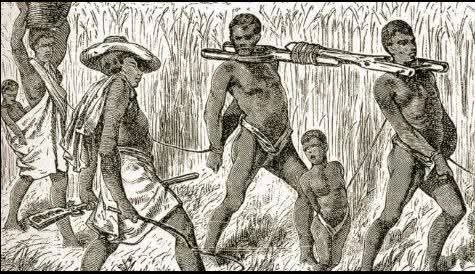
Along the coast of Ghana, powerful forts such as Cape Coast Castle and Elmina Castle once stood as holding points in a global system of forced migration. Captives from inland states, including the Ashanti Empire, were marched along established trade routes that had previously been used for gold and kola nuts. These routes did not disappear—they were repurposed, reshaping both Africa and the wider world.
As enslaved Africans were transported across the Atlantic, they carried more than labor—they carried language patterns, spiritual systems, agricultural knowledge, and social structures. In places like Brazil, Jamaica, and the United States, fragments of Akan culture began to take root in subtle but traceable ways.
Among these was the preservation of naming traditions. In diaspora communities, especially in Jamaica, the practice of naming children based on the day of the week—an Akan cultural system—survived centuries of displacement. Names like “Kwame,” “Ama,” and “Kofi” quietly endured, acting as coded links back to ancestral identity.
Spiritual continuity also formed a hidden bridge. Elements of Akan cosmology and reverence for ancestors can be identified in Afro-Caribbean religious systems such as Vodou and Santería. While these belief systems evolved under pressure and influence, they retained core African philosophies—particularly the idea that the physical and spiritual worlds are deeply connected.
In the Americas, enslaved Africans from the Gold Coast were often referred to as “Coromantee,” a term derived from the coastal trading port of Kormantine in present-day Ghana. These individuals were known for resistance and leadership. In Jamaica, Coromantee descendants played central roles in uprisings against plantation systems, carrying forward political traditions of autonomy and defiance rooted in their homeland.
Agricultural knowledge also crossed the ocean. Techniques in rice cultivation, soil management, and food preservation—developed in West Africa—were replicated in plantation economies in the Americas. This was not accidental; it was a direct transfer of expertise that shaped economic systems abroad.
Yet, the connection did not end with separation. Centuries later, descendants of the diaspora began to return—physically and culturally. Initiatives such as Year of Return symbolized a modern reconnection, inviting people of African descent to rediscover their heritage. For many, walking through the “Door of No Return” at Cape Coast Castle became a moment of historical closure—and, paradoxically, a new beginning.
Today, these connections are more visible. Cultural festivals, music, language studies, and DNA ancestry tracing continue to reveal the depth of the link between Ghana and its global diaspora. What was once a forced disconnection has evolved into a deliberate reconnection.
The untold truth is this:
The slave trade routes did not only scatter people—they extended Ghana’s cultural and historical presence across continents, creating a diaspora that, despite centuries of separation, never fully lost its roots.