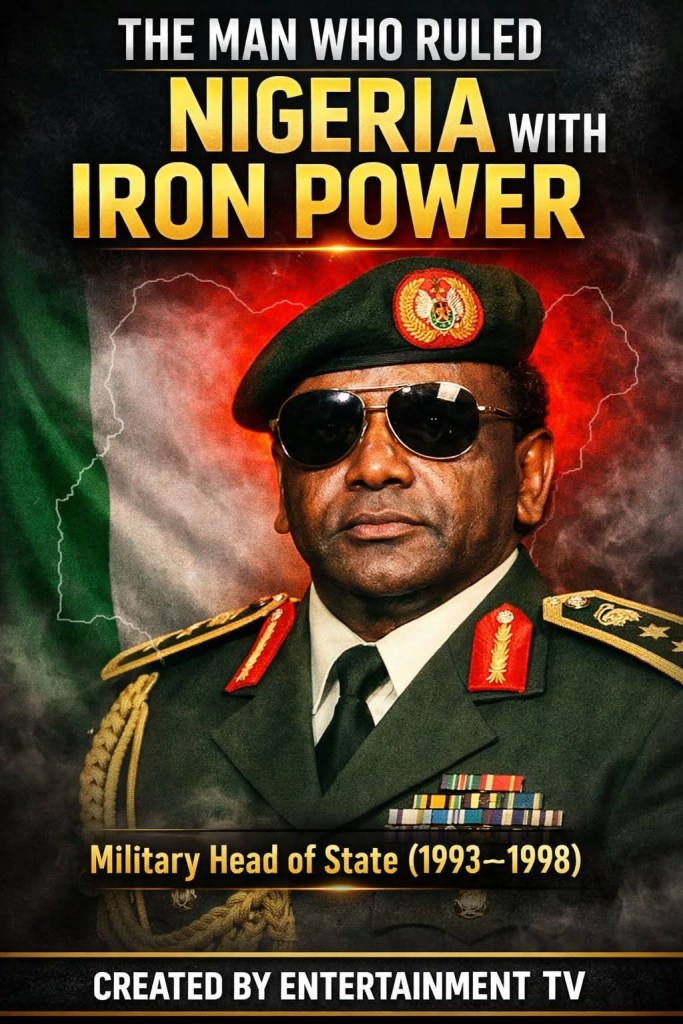
SANI ABACHA: HISTORICAL AND POLITICAL PROFILE.
🇳🇬 SANI ABACHA: HISTORICAL AND POLITICAL PROFILE.
Sani Abacha (20 September 1943 – 8 June 1998) was a Nigerian Army general and military Head of State who governed Nigeria from 1993 until his death in 1998. His regime is widely studied for its authoritarian structure, political transitions during military rule, and its impact on Nigeria’s democratic development.
🧬 EARLY LIFE AND ORIGIN
Full Name: Sani Abacha
Date of Birth: 20 September 1943
Place of Birth: Kano
Ethnic Group: Hausa
Religion: Islam
Abacha was born in Kano during the colonial era in Nigeria. He grew up in a modest household and received early education in northern Nigeria. His upbringing reflected strong discipline and religious influence, which later shaped his military personality.
🎖️ MILITARY TRAINING AND CAREER
Abacha enlisted in the Nigerian military and received formal training at:
Nigerian Defence Academy
Mons Officer Cadet School
He was commissioned into the Nigerian Army and rose steadily through the ranks, becoming known for discipline, operational efficiency, and loyalty to military command structures.
⚔️ MILITARY ROLES AND RISE TO POWER
Abacha held several key positions in the Nigerian Armed Forces, including:
Commander of the 2nd Mechanized Division
General Officer Commanding (GOC)
Member of the Supreme Military Council (during military administrations)
Chief of Army Staff (1985–1990)
Chief of Defence Staff (1990–1993, under military government structures)
Key Historical Context
He is historically associated with several military transitions, including:
The 1983 coup that removed civilian government under Shehu Shagari
The 1985 transition of power that brought Ibrahim Babangida into leadership
While his exact operational role in each coup varies across historical sources, he was consistently a central and influential figure within Nigeria’s military hierarchy.
👑 ASSUMPTION OF POWER (1993)
Following political instability after the annulled 1993 presidential election, widely believed to have been won by Moshood Abiola, Nigeria was governed briefly by an interim administration led by Ernest Shonekan.
On 17 November 1993, Abacha assumed power through a military takeover that dissolved the interim government and suspended democratic institutions, becoming Head of State of Nigeria.
🏛️ GOVERNANCE (1993–1998)
Abacha’s government was a military regime characterized by centralized authority.
🔒 Political Structure
Suspension of democratic processes
Ban on political parties and opposition activity
Governance through military decrees
Strong centralized executive authority
⚠️ Human Rights and Political Environment
His administration faced significant international scrutiny, including:
Detention of political activists and opposition figures
Restriction of press freedom
Execution of environmental activist Ken Saro-Wiwa in 1995
Following this event, Nigeria faced:
International sanctions
Suspension from the Commonwealth of Nations in 1995
💰 ECONOMIC MANAGEMENT
Official reports from the period indicate mixed economic outcomes:
Stabilization of certain fiscal indicators
Increased foreign reserves at some points
Continued reliance on oil revenues
However, the administration was widely criticized for lack of transparency in public finance management.
💵 ABACHA LOOT (INTERNATIONALLY DOCUMENTED CASE)
The “Abacha loot” refers to funds traced to his administration after his death.
Estimated range: $3 billion – $5 billion USD (varies by investigation)
Funds reportedly diverted into offshore accounts across multiple jurisdictions
Recovery efforts led by Nigerian governments and international partners have returned significant portions over time
This remains one of the most studied corruption recovery cases in modern African political history.
👨👩👧 PERSONAL LIFE
Abacha was married to Maryam Abacha and had multiple children, including Mohammed Abacha.
He was known for:
Maintaining a highly private family life
A controlled public image
Strong inner security circle during his rule
💀 D@ATH
Date: 8 June 1998
Place: Abuja
Age: 54
Official Report:
Cause of death: heart attack (myocardial infarction)
No officially verified evidence has confirmed alternative causes, though multiple theories exist in public discourse.
⚖️ HISTORICAL LEGACY
Sani Abacha remains a highly debated figure in Nigerian history:
Common Historical Assessments:
Strong military control and centralized governance
Severe political repression during his administration
Major influence on Nigeria’s transition and democratic struggles
Long-term impact due to corruption allegations and asset recoveries
His era is frequently referenced in discussions on governance, accountability, and military rule in 🌍Africa
📌 CONCLUSION
Sani Abacha remains one of the most significant and controversial leaders in Nigeria’s modern history. His life and rule continue to be studied for their political, economic, and historical impact.
This post is prepared strictly for educational and historical purposes. Readers are advised to conduct further independent research and consult multiple verified historical sources for deeper understanding.
NigeriaHistory