THE BIRTH OF AFRICAN UNITY: FROM OAU TO ECOWAS TO THE AFRICAN UNION — THE FULL HISTORICAL TIMELINE
🌍 THE BIRTH OF AFRICAN UNITY: FROM OAU TO ECOWAS TO THE AFRICAN UNION — THE FULL HISTORICAL TIMELINE
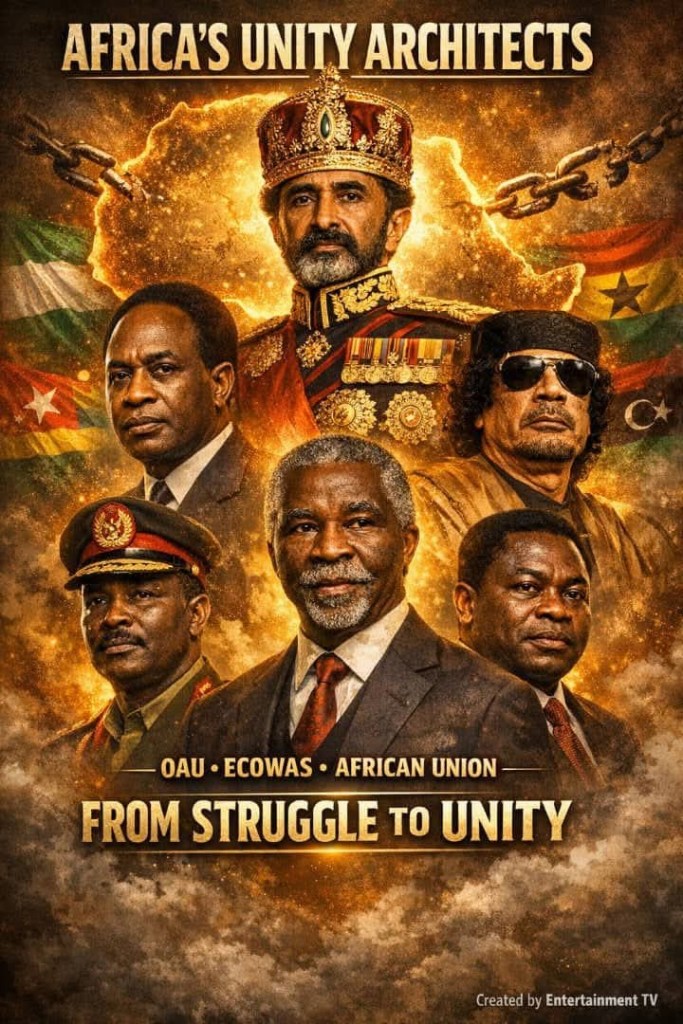
Africa’s journey toward unity was not created in one day. It was built through decades of struggle, visionary leadership, political sacrifice, and the dream of a united continent standing strong in the world. Below is the verified historical timeline of Africa’s major unity organizations, their founders, locations, and purposes.
1️⃣ THE ORGANISATION OF AFRICAN UNITY (OAU)
Organisation of African Unity
📅 Founded:
25 May 1963
📍 Location:
Addis Ababa, Ethiopia
🎯 Purpose of Creation:
The OAU was created during the early wave of African independence to:
End colonial rule across Africa
Support liberation movements still fighting for freedom
Protect the sovereignty of newly independent African states
Promote unity and cooperation among African nations
👥 Key Founding Architects:
The OAU was established by 32 independent African nations, led by some of Africa’s most influential Pan-African leaders:
🇪🇹 Haile Selassie (Emperor of Ethiopia) – host of the historic summit and symbolic leader of African unity
🇬🇭 Kwame Nkrumah (Ghana) – strongest voice for a politically united Africa (Pan-Africanism advocate)
🇹🇿 Julius Nyerere (Tanzania) – supporter of African socialism and continental cooperation
🇬🇳 Sékou Touré (Guinea) – early independence revolutionary leader
🇰🇪 Jomo Kenyatta (Kenya) – key East African independence leader
🇩🇿 Ahmed Ben Bella (Algeria) – represented North African liberation movements
👉 These leaders are widely recognized as the foundational architects of modern African unity ideology.
2️⃣ ECONOMIC COMMUNITY OF WEST AFRICAN STATES (ECOWAS)
ECOWAS
📅 Founded:
28 May 1975
📍 Location:
Lagos, Nigeria
🎯 Purpose of Creation:
ECOWAS was established to strengthen regional cooperation in West Africa, with goals such as:
Promoting economic integration among member states
Allowing free movement of people, goods, and services
Encouraging regional trade and development
Strengthening peace, stability, and political cooperation
Reducing dependence on external economic systems
👥 Key Founding Architects:
🇳🇬 General Yakubu Gowon (Nigeria) – principal initiator and driving force of ECOWAS
🇹🇬 Gnassingbé Eyadéma (Togo) – strong supporter and co-founder
👉 They worked alongside leaders from 15 West African nations, making ECOWAS one of Africa’s earliest successful regional economic blocs.
3️⃣ THE AFRICAN UNION (AU)
African Union
📅 Official Launch:
9 July 2002
📍 Location:
Durban, South Africa
🔄 Replaced:
Organisation of African Unity
🎯 Purpose of Creation:
The African Union was created to replace the OAU and address its limitations. Its goals include:
Strengthening continental peace and security
Promoting faster political and economic integration
Supporting democracy, governance, and human rights
Responding effectively to civil wars and conflicts
Positioning Africa competitively in global affairs
👥 Key Architects and Influential Figures:
🌍 Foundational Ideological Leaders (OAU era thinkers)
🇬🇭 Kwame Nkrumah (Ghana) – visionary of a “United States of Africa”
🇪🇹 Haile Selassie (Ethiopia) – institutional founder of African unity
🇹🇿 Julius Nyerere (Tanzania) – strong advocate of unity through cooperation
🇰🇪 Jomo Kenyatta (Kenya) – supported continental solidarity
🇩🇿 Ahmed Ben Bella (Algeria) – revolutionary Pan-African voice
⚡ Modern Reform Architects (AU formation period)
🇱🇾 Muammar Gaddafi (Libya) – major advocate for deeper African integration and continental transformation
African leaders at the Sirte Declaration (1999, Libya) – pushed for institutional reform
African Heads of State at the 2002 Durban Summit (South Africa) – officially launched the AU
📊 COMPLETE HISTORICAL ORDER
Order Organization Year Location Main Purpose
1️⃣ OAU 1963 Addis Ababa, Ethiopia Political unity & decolonization
2️⃣ ECOWAS 1975 Lagos, Nigeria West African economic integration
3️⃣ AU 2002 Durban, South Africa Stronger continental governance & unity
🧠 FINAL INSIGHT
Africa’s unity journey shows clear evolution:
From freedom and independence (OAU)
To regional economic cooperation (ECOWAS)
To a modern continental institution (AU)
Each stage was built on the sacrifices and vision of African leaders who believed in a stronger, united Africa.
📌 This content is for educational and historical purposes only. Readers are strongly encouraged to conduct personal research and explore multiple academic and historical sources to gain deeper understanding of African history and political development.


I like this
LikeLiked by 1 person