
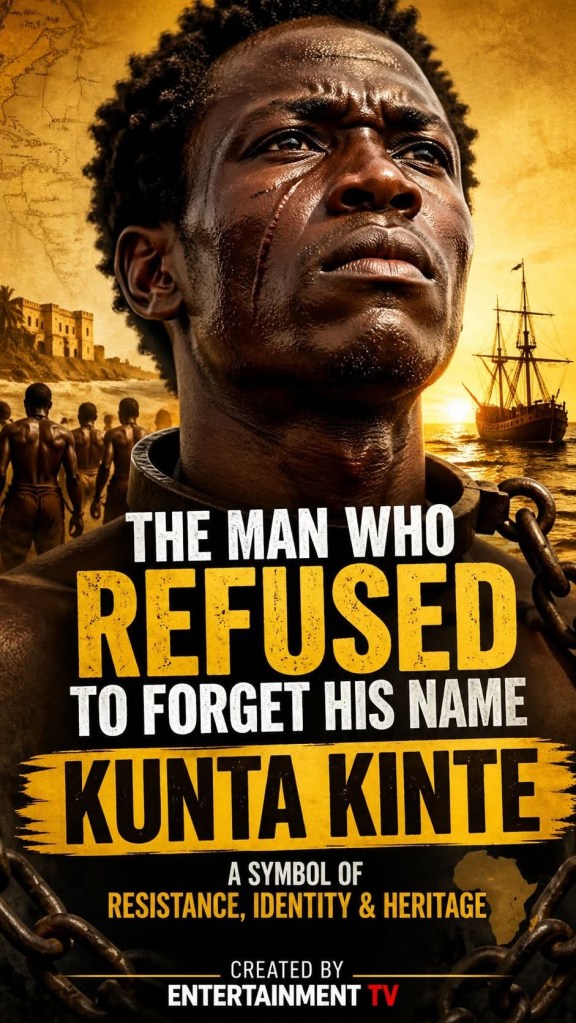
THE MAN WHO REFUSED TO FORGET HIS NAME
THE MAN WHO REFUSED TO FORGET HIS NAME 🌍
The story of Kunta Kinte remains one of the most powerful symbols of African identity, resistance, and survival during the era of the Transatlantic Slave Trade.
Kunta Kinte is believed to have been born around 1750 in the Mandinka village of Juffureh, located along the Gambia River in present-day The Gambia. Raised in a Muslim Mandinka family by his father Omoro Kinte and mother Binta Kinte, he grew up learning discipline, cultural traditions, and the values of his people.
Around 1767, at about 17 years old, Kunta Kinte was reportedly captured by slave traders and forced onto a ship during the brutal Transatlantic Slave Trade. He endured the horrific journey known as the Middle Passage before arriving in colonial America, where he was sold into slavery in Maryland.
Enslavers attempted to erase his identity by renaming him “Toby.” But Kunta Kinte resisted. According to accounts passed down through generations, he repeatedly insisted:
“My name is Kunta Kinte.”
He attempted to escape several times, refusing to accept the loss of his freedom and identity. After one escape attempt, he was brutally punished to prevent him from running again. Despite the suffering, he continued to preserve his heritage and passed the story of his African roots to his daughter Kizzy Waller, ensuring that his lineage would remember where they came from.
Generations later, his story reached the world through the book Roots: The Saga of an American Family by Alex Haley, which later became the globally influential television series Roots. The story brought worldwide attention to the history and human impact of slavery.
Today, the memory of Kunta Kinte is honored in Kunta Kinteh Island, a historic location connected to the slave trade and recognized as a symbol of remembrance.
His story stands as a reminder of resilience, cultural identity, and the enduring human spirit in the face of oppression.
Note: This post is shared for educational and historical purposes. Readers are encouraged to conduct further research and explore historical sources to gain a deeper understanding of the life and legacy of Kunta Kinte.
 Hi welcome to my website