The 1959 Nigerian One Penny Coin: Currency in the Late Colonial Era
The 1959 Nigerian One Penny Coin: Currency in the Late Colonial Era
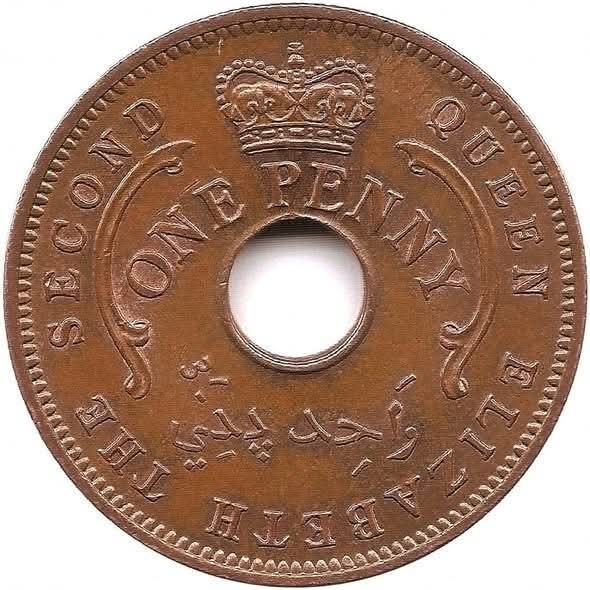
This image features the 1959 Nigeria One Penny coin, one of the circulating coins used in the final years of British colonial currency in Nigeria. It is an important numismatic artifact that reflects Nigeria’s monetary system just before independence and early post-colonial reforms.
Historical Context
The coin was issued in 1959, a critical period in Nigerian history:
Nigeria was still under British colonial administration, but independence was imminent (achieved in 1960).
The currency system was managed within the British West African monetary framework, transitioning toward a national system.
Coins of this period typically featured Queen Elizabeth II, symbolising colonial authority at the time.
The 1959 penny represents one of the last generations of pre-independence coinage before Nigeria developed its own distinct monetary identity.
Design and Physical Features
The coin is notable for its distinctive design and composition:
Denomination: One Penny (₤0.01 in pre-decimal currency system)
Year of Issue: 1959
Composition: Bronze
Weight: 7.56 grams
Diameter: 27.94 mm
Design Feature: Circular central hole
The holed design was common in several colonial-era coins, making them easy to distinguish and stack.
Obverse and Symbolism
Like many colonial coins of the era, the obverse typically features:
Portrait of Queen Elizabeth II
Inscription identifying the issuing authority under the British Crown
This reflected Nigeria’s status as a British colony within the Commonwealth monetary system at the time.
Transition to Nigerian Currency
Shortly after independence, Nigeria gradually moved toward its own currency system:
1960: Independence from Britain
1973: Introduction of the naira and kobo system, replacing the pound-based currency structure
Colonial-era coins, including the 1959 penny, were phased out from circulation
This shift marked a key step in Nigeria’s economic sovereignty.
Significance in Nigerian Monetary History
The 1959 penny is significant because it represents:
the final phase of colonial coinage in Nigeria
the transition toward national currency independence
and the broader shift from imperial monetary systems to domestic economic control
Today, such coins are primarily collected as historical and numismatic items, valued for their link to Nigeria’s colonial and early independence history.
Sources
Central Bank of Nigeria (historical currency archives)
British West African currency records
Numismatic catalogues of colonial Nigerian coinage
Historical studies on Nigeria’s transition to the naira (1960–1973)