Untold African Migration and Trade Stories Connected to Ghana and West Africa
Untold African Migration and Trade Stories Connected to Ghana and West Africa
Long before borders were drawn and maps divided Africa into modern states, movement defined life across West Africa. People did not stay fixed in one place—they migrated, traded, built alliances, and reshaped entire regions. In what is now Ghana, these movements were not random journeys; they were deliberate decisions tied to survival, opportunity, and expansion.
Many Akan-speaking groups, for example, are believed to have migrated gradually into the forest zones of present-day Ghana. These movements were often driven by the search for fertile land, security, and access to trade routes. Over time, small settlements grew into organized states, eventually contributing to the rise of powerful entities such as the Ashanti Empire. What is often overlooked is that these kingdoms were built on generations of movement—people carrying language, customs, and knowledge with them as they relocated.
Trade followed these same paths.
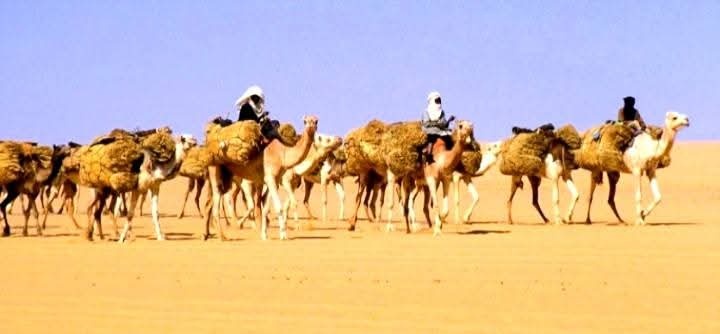
Ghana’s position made it a natural link between the forest regions and the wider West African and trans-Saharan networks. Gold, kola nuts, and other goods moved across long distances, connecting local communities to markets far beyond their immediate environment. Traders were not just merchants; they were messengers of culture. As they traveled, they exchanged ideas, beliefs, and technologies, shaping societies along the way.
The Kingdom of Dagbon in northern Ghana illustrates this connection clearly. Linked to trans-Saharan routes, it served as a meeting point between West African communities and North African traders. These interactions were not one-sided—they influenced governance, commerce, and cultural practices within the region.
What makes these stories particularly human is the reality behind them. Migration meant leaving familiar environments, adapting to new landscapes, and negotiating relationships with other communities. Trade required trust, risk, and long journeys across challenging terrain. These were not abstract systems—they were lived experiences shaped by individuals and families over time.
Yet, many of these narratives remain underrepresented. Historical discussions often focus on later events, especially the transatlantic slave trade, while earlier systems of movement and exchange receive less attention. This creates an incomplete picture, one that overlooks Africa’s long-standing networks of connection and mobility.
Understanding these untold stories changes that perspective.
It reveals a region that was dynamic and interconnected, where people actively shaped their environment through movement and exchange. Ghana was not an isolated space—it was part of a larger system that linked communities across West Africa and beyond.
In this context, migration and trade are not just historical processes. They are part of a deeper story about how societies grow, adapt, and connect. And in Ghana’s case, they form a foundation for understanding both its past and its place within the wider African narrative.
 Hi welcome to my website
Interesting read.
LikeLiked by 1 person
Thanks big brother
LikeLike
Hello! In the last days I have got a lot of interest in Ghana, I think it is such a beautiful country, I would like to visit some day. Regards!
LikeLiked by 1 person
Wow good
LikeLike