THE CONGO HORROR: WHEN HUMAN HANDS PAID FOR RUBBER
THE CONGO HORROR: WHEN HUMAN HANDS PAID FOR RUBBER
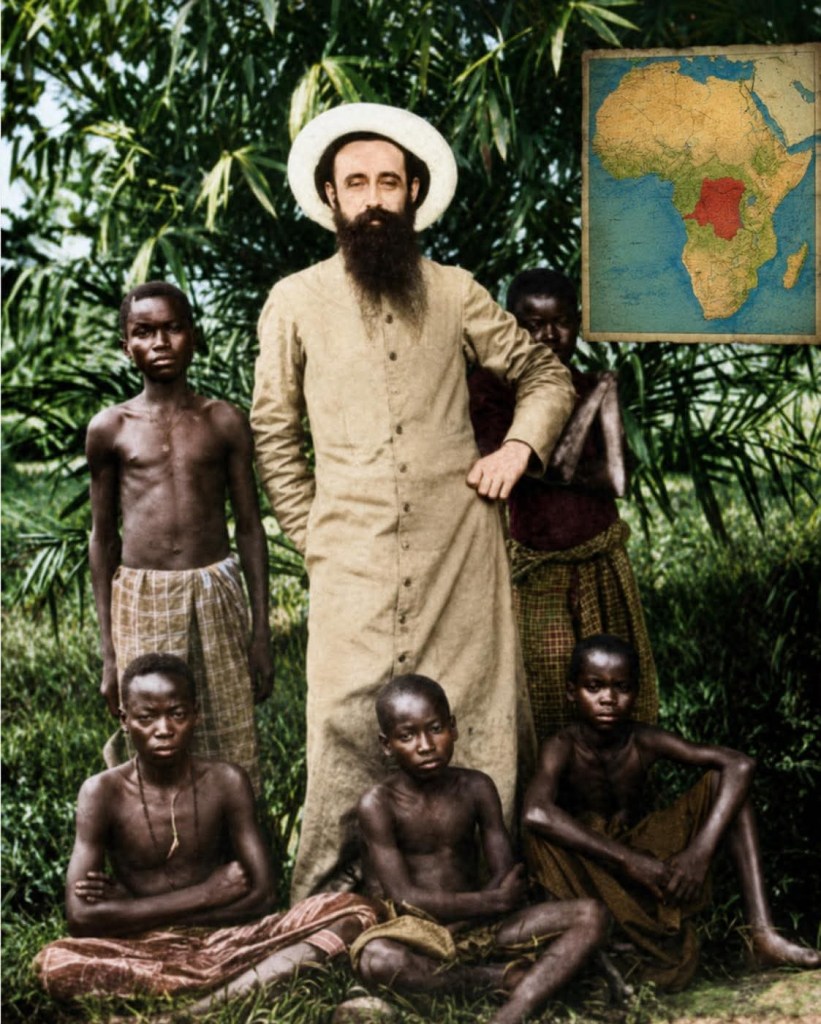
In the late 1800s, one of the most brutal systems of exploitation in modern history was unfolding in Central Africa. It happened in the Congo under the rule of King Leopold II of Belgium, and for millions of Africans, it turned daily life into terror.
What makes the story even more disturbing is this: the Congo was not officially a Belgian colony at first. It was effectively the private possession of one man.
King Leopold II presented himself to Europe as a humanitarian interested in trade, anti-slavery campaigns, and “civilizing” Africa. Through diplomacy and political maneuvering during the Berlin Conference era, he secured international recognition over a vast territory known as the Congo Free State in 1885. Publicly, the project was framed as charitable and progressive. In reality, it became a machine for extraction.
At the center of that extraction was rubber.
The late 19th century saw exploding global demand for rubber because of bicycles, industrial machinery, electrical insulation, and later automobiles. Congo’s forests contained large quantities of wild rubber vines, and Leopold’s administration moved aggressively to exploit them. Entire communities were forced into rubber collection under impossible quotas. Villages that failed to meet demands faced severe punishment.
This is where the horror deepened.
Armed forces known as the Force Publique were used to enforce production. Historical accounts, missionary reports, diplomatic investigations, and survivor testimonies described killings, hostage-taking, village burnings, forced labour, whippings, and mutilations. One of the most infamous practices involved severed hands. Soldiers were reportedly required to account for ammunition usage, and severed hands became evidence that bullets had not been wasted. Over time, the image of Congolese people with missing hands became one of the darkest symbols of the Congo Free State.
Families were torn apart. Women were sometimes held hostage until men returned with enough rubber. Entire villages fled into forests to escape raids. Starvation spread because people spent more time collecting rubber than farming food. Disease, exhaustion, violence, and collapsing birth rates devastated local populations.
The true death toll remains debated by historians because record-keeping was incomplete and many deaths were indirect. But major historical estimates suggest that millions of Congolese died during Leopold’s rule, with some writers and researchers placing the demographic decline as high as ten million people between the late 19th and early 20th centuries. Even where exact numbers are debated, there is broad agreement among historians that the human suffering was catastrophic.
What makes this story especially important is that the world did not immediately react. For years, the brutality remained hidden behind propaganda about civilization and progress. But eventually, missionaries, travelers, journalists, and activists began exposing what was happening. Photographs, eyewitness testimonies, and reports started reaching Europe and America.
One of the key figures in exposing the atrocities was Edmund Dene Morel, a British journalist and activist who noticed something suspicious in shipping records connected to the Congo. Ships going into Congo carried weapons and military supplies, while ships leaving returned with massive quantities of rubber and ivory. To Morel, this did not look like normal trade. It looked like organized extraction backed by violence.
Another important figure was Roger Casement, the British consul whose investigation documented abuses in detail. The Casement Report shocked many people internationally and became one of the major documents fueling global outrage against Leopold’s regime.
International pressure eventually grew so intense that in 1908, Belgium formally took control of the territory from Leopold, ending his personal rule. But by then, the damage had already scarred generations.
The Congo story matters because it destroys one of the biggest myths about colonialism: the idea that European powers came mainly to develop Africa. In the Congo, the priorities were brutally clear. Extraction came first. Human life came second.
The story also forces difficult questions about memory. Millions suffered, yet many people around the world know little about the Congo Free State compared to other historical atrocities. Some historians argue that part of the reason is that African suffering was often minimized in global narratives for decades.
And even today, echoes of the old scramble remain visible. Congo continues to attract outside interest because of its enormous natural resources, from rubber in the past to cobalt, coltan, copper, gold, and rare minerals today. The pattern of foreign appetite for African wealth did not disappear. It evolved.
This is why the Congo horror is not just a colonial story from the past. It is a warning about what happens when profit becomes more important than human dignity, and when powerful nations treat African lives as secondary to resources.
Part 2 will examine the Force Publique itself, the global campaign that exposed Leopold’s regime, and why some historians consider the Congo Free State one of the deadliest colonial systems in African history.
Do you think the world talks enough about the crimes committed during colonial rule in Africa?