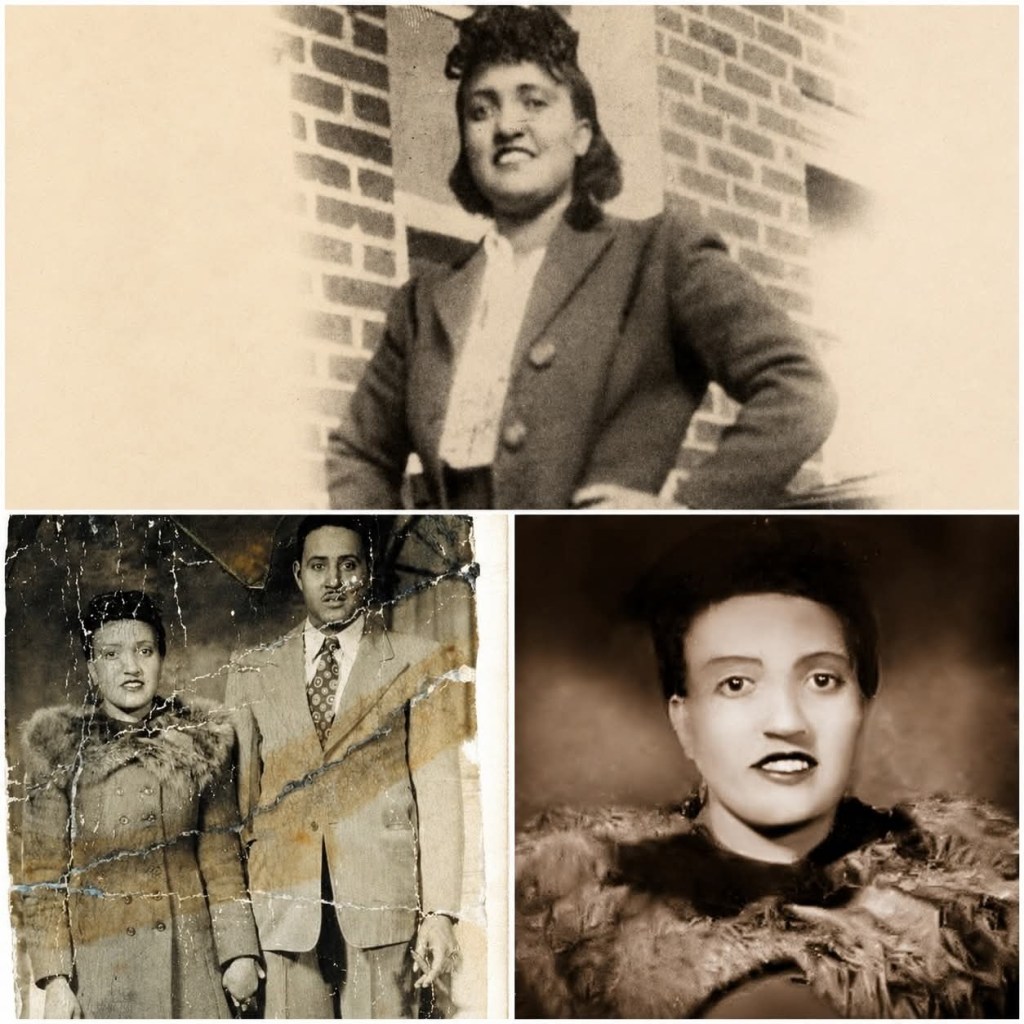
Doctors took pieces of Henrietta Lacks’s body in 1951 and never asked her permission. She died eight months later. Her cells built the polio vaccine, AIDS research, and the COVID-19 vaccine. Her family didn’t see one dollar until 2023.
Doctors took pieces of Henrietta Lacks’s body in 1951 and never asked her permission. She died eight months later. Her cells built the polio vaccine, AIDS research, and the COVID-19 vaccine. Her family didn’t see one dollar until 2023.
Seventy-two years before her own family got paid.She called it a knot.
Before any doctor opened their mouth, before any chart got filled out, before any tube got labeled, Henrietta Lacks had her own word for the thing growing inside her. She walked into the colored entrance of Johns Hopkins Hospital on a January morning in 1951, jacket pulled over her head against the cold, and told the receptionist exactly what she had come to say.
“I got a knot on my womb. The doctor need to have a look.”
That sentence is in her hospital record. It is one of the only times in this entire story that you get to hear her actual voice, in her own words, the way she put it.
Knot. Like the kind you tie with rope.
Before she was Henrietta she was Loretta. Loretta Pleasant, born August 1, 1920, in a shack at the end of a dead-end road in Roanoke, Virginia.
Nobody alive today knows how Loretta became Henrietta. The name change happened somewhere along the way, and the woman it belonged to never wrote down why.
Her mother died when she was four, giving birth to a tenth baby. Her father could not raise ten children alone, so he sent them out to relatives in Clover, Virginia, and a little girl who would change the world ended up sleeping in a log cabin that used to be slave quarters on the plantation her ancestors had worked.
She woke up at four in the morning to milk cows and feed chickens. She picked tobacco beside her cousin Day, the boy she would later marry, and the two of them would dive off muddy banks into water they had already cleared of cottonmouth snakes.
By fourteen she had a son. By twenty-one she was a wife.
In 1941, she and Day left Clover for Turner Station, a Black community outside Baltimore where the steel mills were hiring. They had three more children there.
Her oldest son Lawrence still remembers waking up in that house to the smell of fresh bread, because his mother baked bread the way some women breathed. The family called her Hennie.
She painted her nails red. She kept her polish perfect, and walked into every room like she had every right to be there.
She was barely five feet tall.
In January of 1951, she felt a knot. Not a lump in clinical language, not a mass, not a nodule.
A knot. Her word.
She told her cousins about it first. One of them said maybe it was from the baby she had just delivered, Joseph, her fifth and last.
She shook her head and said the words that should have been a warning sign to anyone listening.
“It was there before the baby. It’s somethin else.”
Hopkins was the only hospital in the city that would treat her. That single fact tells you what the medical system looked like for Black people in 1951, and it tells you why she had no real choice about where to go.
She parked under a towering oak tree outside the hospital with Day and three of her children waiting in the car. She pulled her jacket up over her head and hurried past the segregated bathroom that was the only one she was allowed to use.
Inside the next building, under a domed copper roof, stood a ten-and-a-half-foot marble statue of Jesus with his big toe rubbed smooth. Every Black family that had ever come through those doors looking for help had stopped to lay flowers and pray first.
She walked past Jesus that morning without stopping. She went straight to the gynecology waiting room, sat down on a long wooden bench that looked like a church pew, and told the receptionist about the knot.
A doctor took a sample. A week later he called her back and said the knot was cancer.
She did not cry in front of him. She did not call Day from the hospital.
She went home and went on with her day, as if nothing had happened. That was just how she was, her cousins would say later, no sense upsetting people over something she could handle herself.
On February 6, 1951, she came back for her first round of radiation. Before they started, while she was lying on a table in the colored ward, a surgeon named Lawrence Wharton Jr. shaved two dime-sized pieces of tissue off her cervix.
One from the tumor. One from the healthy tissue next to it.
She was not told. She was not asked.
She had signed a general consent form for treatment, and somebody at Hopkins had decided that was enough.
The two pieces of tissue went up to a laboratory on the sixth floor, to a man named George Gey who had been trying for years to grow human cells in a glass dish. Every sample he had cultured before that one had died within days.
He took the cells off Henrietta’s tumor, dropped them into a culture medium, and labeled the tube with the first two letters of her first name and the first two letters of her last.
Four letters. HeLa.
He had her actual name on the chart. He used four letters.
By the time he came back the next morning, the cells were doubling. Every twenty-four hours, they doubled again.
They did not die. They were the first human cells in recorded history that simply would not die.
Henrietta did. She came back to Hopkins in agony that summer, her body covered in tumors that had spread to nearly every organ.
The radiation burned her abdomen black.
On October 4, 1951, at twelve fifteen in the morning, she died. She was thirty-one years old.
Before she died, she made her sister Gladys promise something.
“Don’t you let anything bad happen to them children when I’m gone.” Those were among her last words.
Her cousin Sadie came to the funeral home before they put Henrietta in the wooden box. Sadie had loved her like a sister.
She walked up to the body to say goodbye, and the thing that broke her was not the face, not the stillness, not the cancer that had taken everything.
It was the toenails.
The polish was chipped. Henrietta would have died before she let anyone see her with chipped polish, and now she had, and Sadie stood there and wept over a woman so meticulous about her appearance that even her toes had been kept perfect, now lying in a box with the color rubbed off.
They buried her in Clover, in a wooden box, in an unmarked grave on the family land. Day said it rained so hard that day it felt like heaven was crying for her.
There was no headstone. There would not be one for almost sixty years.
Up at Hopkins, her cells kept dividing.
George Gey started shipping them out, free at first, to any researcher who asked. The cells went to a lab in Tuskegee where they were mass-produced.
They went to Jonas Salk, who used them to test the polio vaccine that saved millions of children. They went up into space inside the Soviet and American programs, to see what zero gravity did to human tissue.
They sat in the petri dishes of nearly every major breakthrough in modern medicine for the next seven decades, from gene mapping to AIDS research, from in vitro fertilization to the COVID-19 vaccine.
To hide the woman behind the cells, scientists started telling the public that HeLa stood for Helen Lane, or sometimes Helen Larson, or anything but her actual name.
Her real name stayed buried with her, and a fake one took its place in the scientific record. She did not just lose her cells, she lost her name twice.
Once when Hopkins reduced her to four letters. Once when the rest of the world replaced even those four letters with a fiction.
Her family did not know any of this for twenty-four years. In 1975, researchers showed up at the Lacks home wanting to draw blood from her children, to track genetic markers, and that was the first time anyone in that family heard the name HeLa.
They did not understand. Nobody explained it to them.
Some of her children would die without ever fully grasping what had been taken from their mother. For decades, while pharmaceutical companies built fortunes on the cells from Henrietta’s tumor, her descendants struggled to afford basic medical care.
Thermo Fisher Scientific, one of the largest distributors of HeLa cells, has reported annual revenues approaching thirty-five billion dollars. The Lacks grandchildren went without health insurance.
Then in 2021, the family’s estate, represented by civil rights attorney Ben Crump, filed its first lawsuit.
In 2023, the family won their first settlement, against Thermo Fisher Scientific. The terms are sealed.
A week later, they filed against Ultragenyx Pharmaceutical.
In August 2024, they filed against Novartis and Viatris.
In February 2026, Novartis settled. In March 2026, Viatris settled.
Three of the largest pharmaceutical companies in the world have now quietly paid the family of a Black tobacco farmer they never asked for permission to begin with. The case against Ultragenyx is still moving through federal court in Maryland, and the family’s lawyers have said more lawsuits may follow.
Three settlements. Seventy-five years late.
She called it a knot. Doctors called it HeLa, and the world has known the label for seventy-five years and is just now learning the word she used herself.
She had a word for what was inside her. She used it once, out loud, in a hospital that had no use for it, and her family has spent three quarters of a century making sure that word, and her name, and her face, never disappear again.
In 2010, her grandchildren finally placed a headstone over her grave in Clover, Virginia. The marker calls her a phenomenal woman, ends with the line “Her immortal cells will continue to help mankind forever,” and carries her real name beside the four letters that almost erased her.
A small stone bench sits beside the grave now, on the family land, in the quiet of that little patch of Virginia dirt.
I’m building Daily Black History with love, patience, and real research, because our people deserve accurate stories told the right way.
If you’d like to help me continue: