THE ABURI ACCORD, PART 2: WHAT REALLY WENT WRONG AFTER GHANA?
THE ABURI ACCORD, PART 2: WHAT REALLY WENT WRONG AFTER GHANA?
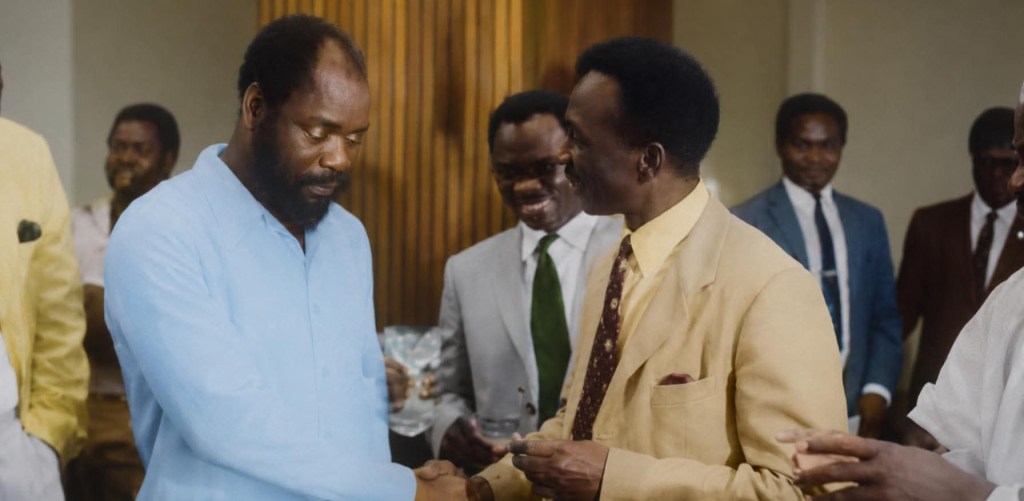
When Nigerian military leaders left Aburi, Ghana, in January 1967, many people believed the country had stepped back from the edge of disaster. The atmosphere at the meeting had reportedly been calmer than expected. Officers who only months earlier had been divided by coups, killings, and suspicion sat together, talked, joked, shook hands, and discussed a possible path forward.
But beneath the smiles and diplomacy, a dangerous problem was already growing.
Both sides may have left Ghana with completely different understandings of what had actually been agreed. That misunderstanding would become one of the most important turning points in Nigerian history.
For the Eastern Region under Chukwuemeka Odumegwu Ojukwu, the Aburi discussions appeared to establish a loose arrangement in which the regions would hold far greater powers and major national decisions would require collective agreement through the Supreme Military Council. After the massacres of Easterners in the North and the collapse of trust in federal authority, Ojukwu wanted guarantees that no central government could again dominate or endanger the regions without their consent.
To many Easterners, this was no longer just politics.
It was survival. The Eastern leadership believed Aburi created a structure closer to a confederation than a strong federation. In their interpretation, each region would exercise substantial autonomy while cooperating on limited national matters. Ojukwu reportedly saw this as the minimum condition necessary to keep Nigeria together peacefully.
But in Lagos, the federal military government viewed the situation differently.
Yakubu Gowon and many officials around him feared that excessive regional autonomy could weaken the country beyond repair. Some northern officers were also uncomfortable with arrangements that appeared to reduce federal authority at a time when Nigeria was already unstable. There were fears that if every region became too powerful, the federation itself might quietly collapse.
This is where the real crisis began. The language used during the Aburi discussions was broad in some areas and highly sensitive in others. Once both sides returned home, lawyers, civil servants, military advisers, and political actors began interpreting the resolutions differently. What sounded acceptable inside a closed conference room suddenly became dangerous once officials tried turning it into constitutional and legal reality.
Then came one of the most controversial moments after Aburi: Decree No. 8. The federal government presented the decree as the legal implementation of the Aburi Accord. But the Eastern Region rejected that interpretation almost immediately. Ojukwu’s side argued that the decree altered the original spirit of the agreement and restored powers to the federal government that Aburi was supposed to limit.
This disagreement became explosive because both sides now believed the other was acting dishonestly.
The East increasingly felt Lagos was retreating from the promises made in Ghana. The federal side increasingly believed Ojukwu was interpreting Aburi in ways that could eventually destroy Nigeria’s unity.
Trust, which had already been fragile, began collapsing completely.
Another major issue involved control of the military itself. After the coups of 1966, military command had become an extremely sensitive matter. Ojukwu reportedly wanted stronger regional control over troops stationed within each region because Eastern officers no longer trusted centralized military authority. Federal authorities, however, feared that weakening central command could accelerate disintegration and make future rebellion easier.
At the same time, pressure inside the Eastern Region was rising rapidly. Refugees who had fled violence in the North returned with horrifying stories of massacres, abandoned properties, and fear. Many Easterners no longer believed coexistence inside Nigeria was safe. Ojukwu himself was under growing pressure from people who wanted stronger action and viewed compromise with suspicion.
Meanwhile, Gowon faced pressure from officers and political actors who believed the country had to remain united under a functioning central authority. Any arrangement seen as giving too much independence to regions risked backlash from those who feared national breakup.
Then came another decisive move. On 27 May 1967, Gowon announced the creation of twelve states, replacing the old four-region structure. Officially, the move was presented as a way to protect minority groups and reduce regional domination. In the old Eastern Region, new states were carved out, including Rivers State and South-Eastern State.
But in the East, the announcement was viewed very differently. Many supporters of Ojukwu believed the state creation was designed to weaken Eastern political power and separate oil-producing minority areas from the Igbo heartland. To them, it confirmed fears that Lagos no longer intended to honor the spirit of Aburi.
Three days later, on 30 May 1967, Ojukwu declared the Republic of Biafra. War followed soon after.
This is why the Aburi Accord still remains one of the most emotionally debated political moments in African history. Some historians argue that Aburi was Nigeria’s last genuine opportunity for peace and that mutual distrust destroyed it. Others believe the country had already moved too far toward confrontation and that war had become almost unavoidable regardless of what happened in Ghana.
Even today, former soldiers, political writers, historians, and surviving witnesses continue debating the same question: did both sides genuinely misunderstand each other, or did each side already have deeper political goals that made conflict inevitable?
The tragedy of Aburi is not simply that negotiations failed. It is that Nigeria came close enough for people to imagine another future. A future where the country did not descend into one of Africa’s deadliest civil wars.
Part 3 will examine the final days before war broke out, the declaration of Biafra, and the events that pushed Nigeria from political crisis into full military conflict.
Do you believe Nigeria could still have remained united peacefully if the Aburi Accord had been implemented differently?