SCREWED TO DEATH: FATHER, HUSBAND, AND HUMANITY CRUSHED UNDER COLONIAL BOOTS
SCREWED TO DEATH: FATHER, HUSBAND, AND HUMANITY CRUSHED UNDER COLONIAL BOOTS
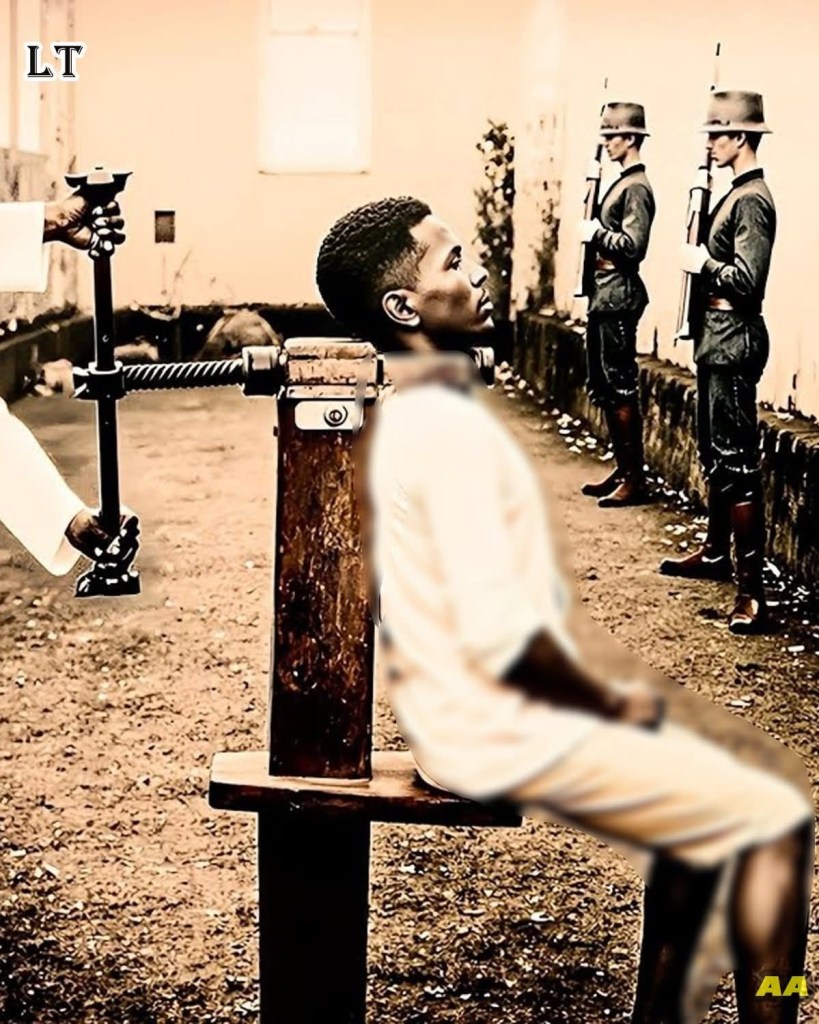
In the suffocating haze of a late 18th-century African coastal fortress, where the red earth whispered of countless forgotten souls, Kofi sat bound to a crude wooden bench. The iron jaws of the neck clamp hovered inches from his throat, a merciless instrument of control wielded by the man in the pristine white suit. With cold precision, the overseer turned the screw, each click echoing like a death knell across the dusty courtyard. Behind them, colonial soldiers stood rigid, rifles gleaming under the brutal sun, their eyes devoid of mercy.
Kofi, once a proud Ashanti father and storyteller, felt the weight of his shattered world crashing down. Captured in a night raid that tore his village apart, he had been ripped from his beloved Afia and their children, their desperate hands slipping from his grasp amid smoke and screams. Marched through unforgiving forests and barracoons, he had endured the agony of family separation—the mothers collapsing in despair, the children’s cries fading into the void. In the silent bonds forged with fellow captives like Esi and Kwame, he found fragile threads of resilience: whispered stories of ancestral rivers, shared scraps of sustenance, and glances that affirmed their unbroken human dignity.
Yet as the clamp tightened against his neck, Kofi’s mind became a storm of torment and defiance. Memories flooded him—the laughter of his children around evening fires, Afia’s gentle touch, the rhythms of freedom now silenced by chains.
The mental anguish clawed deeper than any iron: the uncertainty of their fate, the haunting possibility that they too suffered under distant skies. Hope flickered like a dying ember, sustaining him through the long marches, but it also sharpened the blade of loss. In this cinematic tableau of suffering, the landscape itself bore witness—the ancient walls stained with history, the distant ocean roaring its indifference.
The screw turned further. Pain bloomed, but Kofi refused to break. His eyes locked on the horizon, holding the gaze of the man in white with quiet fury. In that frozen moment, as the iron pressed mercilessly and his breath grew shallow, a profound climax surged within him—a vision of seeds scattered by the wind, destined to root in distant lands, carrying the unquenchable fire of his people.
Would this be the end of Kofi’s spirit, or the spark of something eternal?
To discover the full harrowing tale of resilience, loss, and the haunting endurance of the human soul,