The Zong Massacre: One of the Most Horrific Crimes of the Transatlantic Slave Trade
The Zong Massacre: One of the Most Horrific Crimes of the Transatlantic Slave Trade
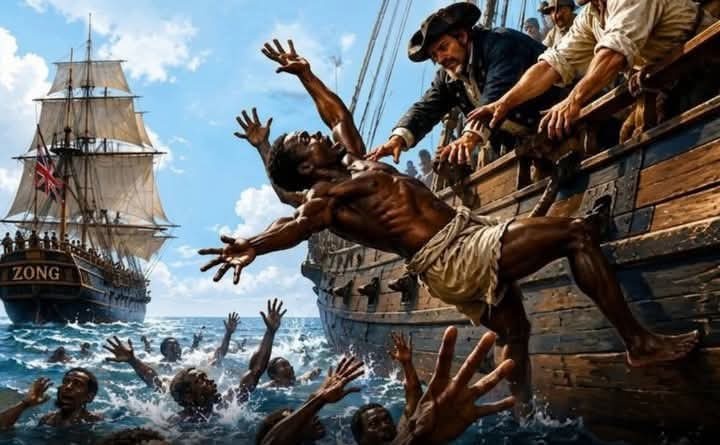
On November 29, 1781, one of the most horrifying atrocities in human history unfolded aboard the British slave ship Zong. In an act of unimaginable cruelty, more than 130 enslaved African men, women, and children were deliberately thrown overboard into the Atlantic Ocean by the ship’s crew. Their lives were not viewed as sacred human lives but as commercial property, and the murders were carried out so that the ship’s owners could file an insurance claim for the loss of what they called “cargo.”
The Zong had departed from the West African coast carrying hundreds of kidnapped Africans destined for enslavement in the Caribbean. Like many slave ships operating during the era of the Transatlantic Slave Trade, the vessel was overcrowded far beyond humane capacity. Africans were packed tightly into the ship’s hold, chained together in deplorable and unsanitary conditions. Disease, malnutrition, dehydration, and abuse were common realities during the Middle Passage—the brutal ocean voyage that transported millions of Africans from their homeland to the Americas.
As the voyage progressed, the crew of the Zong made a series of navigational mistakes that prolonged the journey and depleted the ship’s water supply. Faced with dwindling resources, the captain and crew made a decision that exposed the depravity of a system built upon greed and racial exploitation. Rather than accepting financial losses due to their own errors, they chose to murder enslaved Africans and then seek reimbursement from insurance companies.
Over several days, more than 130 Africans were shackled and cast into the sea. Some were thrown overboard while still alive. Others, witnessing the horror unfolding around them, chose to jump into the ocean rather than endure further suffering. The victims included men, women, and children whose names, stories, dreams, and families were largely erased from historical records. Yet their humanity remains undeniable, and their memory deserves to be honored.
What makes the Zong massacre especially chilling is what happened afterward. When the ship eventually reached its destination, the owners filed an insurance claim seeking compensation for the Africans who had been murdered. Under the legal and economic framework of slavery, enslaved people were treated as property rather than human beings. The ship’s owners argued that the deaths were necessary to save the rest of the cargo and crew, much as one might dispose of goods during a maritime emergency.
The resulting court case, known today as the Zong case, did not initially focus on the morality of murdering over 130 Africans. Instead, it centered on whether the insurance company was obligated to pay for the financial loss. This shocking legal dispute revealed the brutal realities of the slave economy and exposed how deeply dehumanization had become embedded within the laws and institutions of the British Empire.
However, news of the massacre spread throughout Britain and became a rallying point for abolitionists. Among those who brought public attention to the case was Olaudah Equiano, a formerly enslaved African whose writings and activism helped expose the horrors of slavery. Working alongside abolition advocates such as Granville Sharp, Equiano helped ensure that the tragedy would not remain hidden from public view.
The Zong massacre became powerful evidence for the growing abolitionist movement. It forced many people to confront the true nature of the slave trade and challenged attempts to portray slavery as a benign or necessary institution. The massacre demonstrated that when human beings are reduced to commodities, profit can become more important than life itself.
Although centuries have passed since the tragedy, the Zong massacre remains a symbol of the immense suffering endured by Africans during the Transatlantic Slave Trade. Historians estimate that millions of Africans were forcibly removed from their homelands, transported across oceans, and subjected to generations of enslavement. The victims of the Zong represent not only those who perished aboard one ship but also the countless others whose lives were shattered by a global system of exploitation.
Today, remembering the Zong massacre is an act of historical truth and collective memory. It reminds us of the resilience of African people in the face of unimaginable oppression. It challenges us to preserve the stories of those who were silenced and to honor the ancestors whose sacrifices helped shape the modern world.
The men, women, and children who were thrown into the Atlantic Ocean on that tragic voyage were not cargo. They were human beings. They had names, families, languages, cultures, and dreams. Their lives mattered. Their memory matters. Their story must continue to be told.
As we reflect on the Zong massacre, we honor the ancestors who endured the horrors of slavery and affirm our commitment to justice, truth, remembrance, and human dignity. May the victims never be forgotten, and may future generations continue to learn from this painful chapter of history so that such atrocities are never repeated.
Long live the memory of the ancestors.
Long live the spirit of resistance.
Long live the truth.