𝐓𝐇𝐄 𝐀𝐅𝐑𝐈𝐂𝐀𝐍 𝐐𝐔𝐄𝐄𝐍 𝐖𝐇𝐎 𝐅𝐎𝐔𝐆𝐇𝐓 𝐓𝐇𝐄 𝐏𝐎𝐑𝐓𝐔𝐆𝐔𝐄𝐒𝐄 𝐅𝐎𝐑 𝟒𝟎 𝐘𝐄𝐀𝐑𝐒
👑 𝐓𝐇𝐄 𝐀𝐅𝐑𝐈𝐂𝐀𝐍 𝐐𝐔𝐄𝐄𝐍 𝐖𝐇𝐎 𝐅𝐎𝐔𝐆𝐇𝐓 𝐓𝐇𝐄 𝐏𝐎𝐑𝐓𝐔𝐆𝐔𝐄𝐒𝐄 𝐅𝐎𝐑 𝟒𝟎 𝐘𝐄𝐀𝐑𝐒
In the 17th century, when European powers were expanding their influence across Africa, one woman stood in their way.
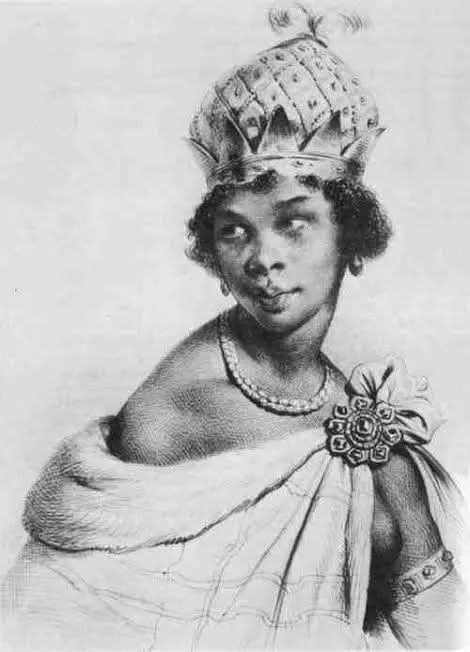
Her name was Nzinga Mbande.
She ruled the kingdoms of Ndongo and Matamba in what is now Angola.
At a time when many rulers were being pressured by the Portuguese, Queen Nzinga refused to submit.
She was a brilliant strategist, diplomat, and military leader.
One famous story tells of a meeting with Portuguese officials.
When they offered her no chair, intending to humiliate her, Nzinga ordered one of her attendants to kneel and used the person’s back as a throne.
She would negotiate as an equal—or not at all.
For decades, she led resistance against Portuguese expansion and the slave trade.
She formed alliances, commanded armies, and outmaneuvered opponents who underestimated her because she was a woman.
Again and again, she returned to the battlefield.
Again and again, she survived.
By the time of her death in 1663, Queen Nzinga had become one of the most respected rulers in African history.
Today, she is remembered not only as a queen but as a symbol of courage, intelligence, and resistance.
⚔️ They tried to intimidate her.
👑 She became a legend.
🌍 Africa still remembers her name.


Interesting read.
LikeLiked by 1 person