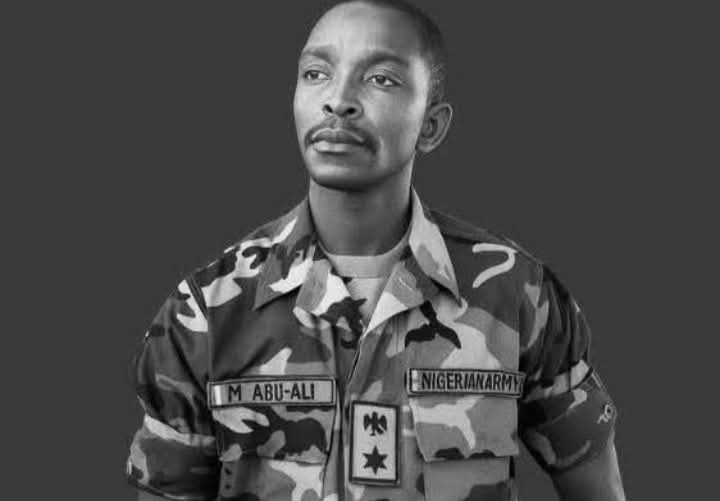
Lieutenant Colonel Muhammad Abu Ali, CON (1980–2016): A Study of Courage, Military Leadership, and Sacrifice in Nigeria’s Counterinsurgency Campaign
Lieutenant Colonel Muhammad Abu Ali, CON (1980–2016): A Study of Courage, Military Leadership, and Sacrifice in Nigeria’s Counterinsurgency Campaign
Abstract
Lieutenant Colonel Muhammad Abu Ali remains one of the most celebrated military officers in contemporary Nigerian history. His name became synonymous with bravery, professionalism, and selfless service during the Nigerian Army’s campaign against Boko Haram insurgents in the North East. As Commanding Officer of the 272 Tank Battalion, Abu Ali played a significant role in the recapture of several strategic communities that had fallen under insurgent control. His exceptional battlefield performance earned him accelerated promotion, national recognition, and widespread admiration among both military personnel and civilians. His death in combat on 4 November 2016 at Malam Fatori, Borno State, marked the loss of one of Nigeria’s most distinguished counterinsurgency commanders. This article examines his life, military career, contributions to national security, and enduring legacy.
Early Life and Educational Background
Lieutenant Colonel Muhammad Abu Ali was born on 15 August 1980 in Kogi State, Nigeria. He hailed from the royal family of the Bassa Nge Kingdom, a prominent traditional institution in present day Kogi State. His father, Brigadier General Abu Ali Mopa III, later became the Etsu of Bassa Nge Kingdom and was a respected military officer and statesman.
Muhammad Abu Ali received his secondary education at Command Secondary School, Jos, Plateau State, one of Nigeria’s leading military secondary schools. He graduated in 1997 and subsequently gained admission into the Nigerian Defence Academy, Kaduna, in 1998 as a member of the prestigious 50th Regular Course.
Upon successful completion of his military training, he was commissioned into the Nigerian Army Armour Corps as a Second Lieutenant in September 2003. From the beginning of his military career, he displayed qualities of discipline, courage, and professionalism that would later define his service record.
Military Career and International Service
As an officer of the Nigerian Army Armour Corps, Abu Ali developed expertise in armored warfare and mechanized operations. His professional competence led to his participation in several international peacekeeping missions under the United Nations.
He served in the United Nations Mission in Liberia (UNMIL), which was established to support peace and stability following Liberia’s civil conflict. He also participated in the United Nations Mission in Darfur, Sudan, where he gained valuable experience in multinational peacekeeping operations and conflict management.
These international assignments strengthened his leadership abilities and exposed him to complex security environments, experiences that later proved invaluable during Nigeria’s campaign against Boko Haram insurgents.
The Boko Haram Insurgency and Rise to Prominence
The Boko Haram insurgency emerged as one of the greatest security challenges in Nigeria’s post independence history. By 2014 and 2015, the insurgent group had seized significant territories across Borno State and parts of neighboring states, displacing millions of civilians and threatening Nigeria’s territorial integrity.
During this critical period, Muhammad Abu Ali was deployed to the North East as Commanding Officer of the 272 Tank Battalion. His leadership became instrumental in several offensive operations aimed at reclaiming territories occupied by insurgents.
Military reports and testimonies from fellow officers indicate that Abu Ali personally led numerous combat operations that resulted in the liberation of strategic communities including Gamboru Ngala, Baga, Monguno, Mallam Fatori, Bama, and several surrounding settlements. His battlefield effectiveness earned him the nickname “Sarkin Yaki,” meaning “Chief Warrior” in Hausa, while some colleagues also referred to him as the “Lord of War.”
The success of these operations significantly weakened insurgent control in parts of Northern Borno and contributed to the restoration of government authority in previously occupied territories.
Recognition for Gallantry and Accelerated Promotion
In recognition of his extraordinary bravery and leadership, the Chief of Army Staff, Lieutenant General Tukur Yusuf Buratai, awarded Muhammad Abu Ali the Chief of Army Staff Award for Exceptional Bravery and Excellence during an operational visit to Gamboru Ngala on 9 September 2015.
The award was accompanied by an accelerated promotion from the rank of Major to Lieutenant Colonel, a rare honor within the Nigerian military establishment. This recognition reflected the Army’s appreciation of his remarkable contributions to the counterinsurgency campaign and his consistent display of courage under fire.
His reputation extended beyond military circles. To many Nigerians, he became a symbol of resilience and patriotism during one of the country’s most difficult security crises.
The Battle of Malam Fatori and Death in Action
On 4 November 2016, Boko Haram fighters launched an attack on military positions around Malam Fatori, a strategic border town in northern Borno State near the Niger Republic frontier.
During the confrontation, Lieutenant Colonel Abu Ali led troops defending the area against the insurgent assault. Although Nigerian forces successfully repelled the attack and reportedly inflicted significant casualties on the attackers, Abu Ali and several other soldiers were killed during the engagement. Military reports stated that troops killed at least fourteen insurgents and recovered weapons and ammunition during the encounter.
His death shocked the nation and generated widespread tributes from military authorities, political leaders, civil society organizations, and ordinary Nigerians. The Minister of Defence described him as a major pillar in the fight against terrorism, while President Muhammadu Buhari praised his sacrifice and dedication to national service.
Burial and National Mourning
Lieutenant Colonel Muhammad Abu Ali was buried with full military honors on 7 November 2016 at the National Military Cemetery in Abuja.
The funeral ceremony was attended by senior military officers, government officials, family members, and citizens who gathered to honor his memory. Alongside Abu Ali, other soldiers who lost their lives in the battle were also laid to rest as heroes who made the ultimate sacrifice in defense of their nation.
Legacy and Historical Significance
The legacy of Lieutenant Colonel Muhammad Abu Ali continues to occupy a significant place in Nigeria’s military history. His life represents the ideals of courage, patriotism, and selfless service. Within military circles, he is remembered as a skilled armored warfare commander who inspired confidence among his troops and demonstrated exceptional leadership in combat.
Historians studying Nigeria’s counterinsurgency efforts regard Abu Ali as one of the defining military figures of the campaign against Boko Haram. His leadership contributed to the recovery of important territories and helped restore hope to communities devastated by insurgent violence.
Today, his story serves as an important reminder of the sacrifices made by Nigerian soldiers in safeguarding national security and preserving the country’s territorial integrity. His name remains a symbol of honor and duty, inspiring future generations of military officers and citizens alike.
Conclusion
Lieutenant Colonel Muhammad Abu Ali’s military career was marked by courage, professionalism, and unwavering commitment to Nigeria. From his early training at the Nigerian Defence Academy to his service in international peacekeeping missions and his leadership in the fight against Boko Haram, he consistently demonstrated exceptional dedication to duty. His death at Malam Fatori in 2016 deprived Nigeria of one of its most capable military commanders, yet his legacy continues to inspire both the armed forces and the nation he served. In the broader history of Nigeria’s struggle against insurgency, Muhammad Abu Ali stands as a lasting symbol of sacrifice, resilience, and patriotism.
References
- Akinrujomu, A. President Buhari Salutes Late Army Commander Lt. Col. Abu Ali.
- Ahmadu-Suka, M. Abu Ali: Family Recounts Life of Gallant Hero. Daily Trust.
- Nigerian Army Headquarters. Chief of Army Staff Award for Exceptional Bravery, Gamboru Ngala, September 2015.
- Usman, S. K. (2016). Military Statement on the Attack at Mallam Fatori. Nigerian Army Public Relations.
- Abayomi, J. (2016). Soldiers Mourn Gallant Col. Abu Ali Killed in Boko Haram Ambush. Punch Newspapers.
- Dan-Ali, M. (2016). Defence Minister Mourns Late Lt. Col. Abu Ali. Punch Newspapers.
- Theatre Command, Operation Lafiya Dole. Official Statement on the Death of Lt. Col. Muhammad Abu Ali.
- Daily Post Nigeria. Army to Probe Death of Commander, Other Soldiers Killed by Boko Haram.
- News Agency of Nigeria (NAN). One Officer, Four Soldiers and Fourteen Boko Haram Terrorists Die in Attack.
- Umar, B. U. et al. Military Heroism and Counterinsurgency Narratives in Nigeria. Nigerian Journals Online.
- Thurston, A. (2017). Boko Haram: The History of an African Jihadist Movement. Princeton University Press.
- Zenn, J. (2020). Unmasking Boko Haram: Exploring Global Jihad in Nigeria. Lynne Rienner Publishers.
- International Crisis Group. (2016). Nigeria: Women and the Boko Haram Insurgency. Brussels: International Crisis Group.
- Campbell, J., & Page, M. (2018). Nigeria: What Everyone Needs to Know. Oxford University Press.