
Thomas Sankara was killed before history could test
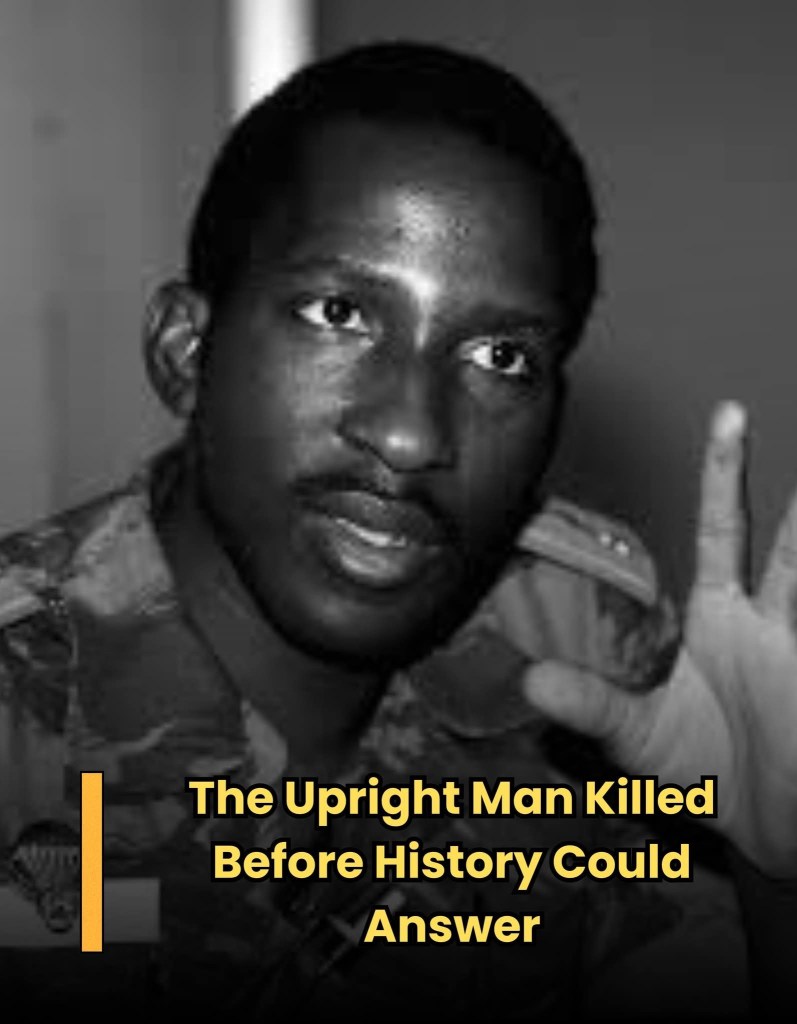
Thomas Sankara was killed before history could test whether a poor country could stand upright without asking permission. He ruled Burkina Faso for only four years, yet those years became a wound because they looked like a road not taken. His story is not only about a coup. It is about an unfinished experiment.
🔴 The conflict began in Upper Volta, a country marked by poverty, drought, military instability, and old dependence on foreign power. Sankara, a young army captain, came to power on August 4, 1983, after a leftist coup supported by close allies, including Blaise Compaoré. He was thirty-three, austere, impatient, and convinced that independence meant little if a nation still imported its dignity.
One year later, he renamed the country Burkina Faso, usually translated as the land of upright people. The gesture was symbolic, but Sankara tried to make symbolism practical. He sold government luxury cars, reduced official privileges, promoted local production, encouraged vaccination campaigns, planted trees against desertification, and placed women’s emancipation at the center of his revolution. Forced marriage, female genital mutilation, and polygamy were challenged by the state. For many, it felt like a door opening.
🔴 The turning point was that Sankara’s revolution demanded speed from a society carrying centuries of hierarchy and decades of weakness. Traditional chiefs lost authority. Civil servants and unions resisted some policies. Revolutionary committees could mobilize people, but they could also intimidate them. The government achieved visible change, yet it also narrowed political space and punished dissent harshly. The dream was real. So were the methods that made some citizens afraid of it.
His strongest challenge went beyond Burkina Faso. In 1987, at the Organisation of African Unity summit in Addis Ababa, Sankara attacked foreign debt as a mechanism of domination and called for a united African refusal to pay it. He warned that one country alone could not resist. The speech made him larger than his borders, but also more isolated. He had turned poverty into a political accusation.
On October 15, 1987, Sankara was killed in Ouagadougou during a coup that brought Blaise Compaoré to power. He was thirty-seven. For decades, the official silence around the killing was almost as heavy as the event itself. Compaoré ruled until 2014, when popular protests forced him out. In 2022, a Burkina Faso military court sentenced him in absentia to life imprisonment for complicity in Sankara’s murder, alongside other senior figures.
🔴 The final image is not the coup, but the reburial years later, when Sankara and the twelve people killed with him were returned to the site of their death. A country placed its unfinished question back into the ground: what might Burkina Faso have become if the experiment had not been cut short? Sankara left no completed model, no simple paradise, and no harmless myth. He left something harder to bury: the memory of a leader who asked a poor nation to stand upright, and died before anyone could know how far it might walk.


One thought on “Thomas Sankara was killed before history could test”