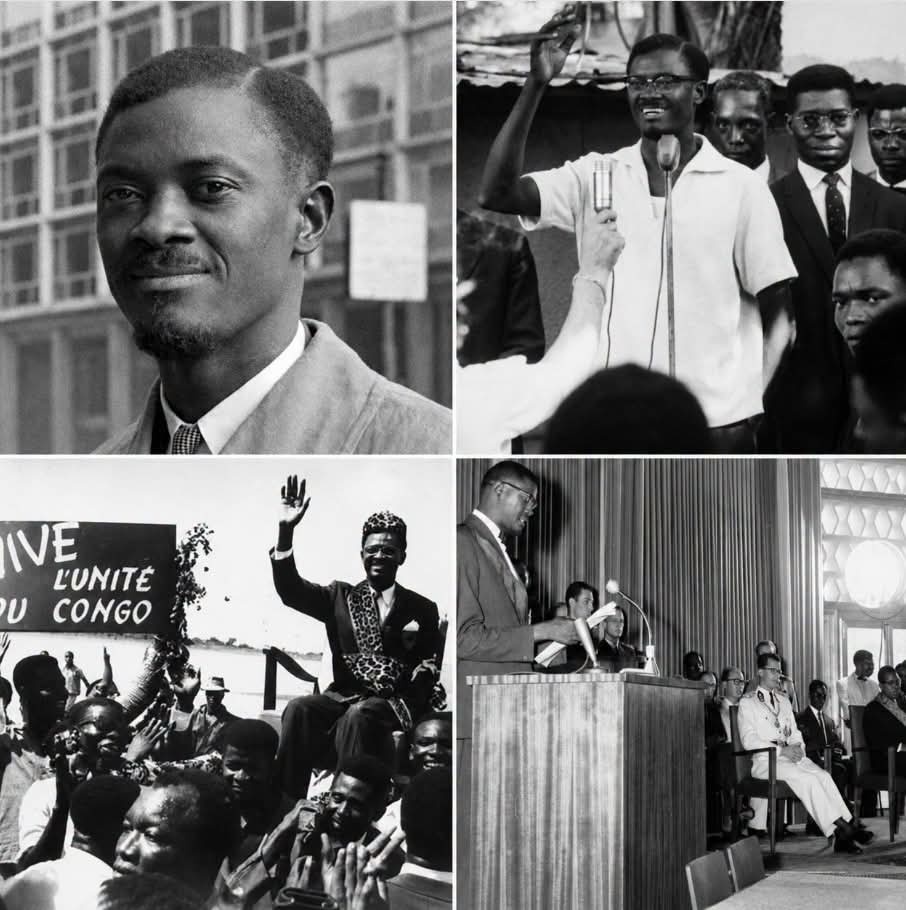
On June 30, 1960, Lumumba told Belgium the truth about colonial rule, and history never forgot the cost.
On June 30, 1960, Lumumba told Belgium the truth about colonial rule, and history never forgot the cost.
The room had been prepared for ceremony, not confession.
It was supposed to be a clean handover, a polished stage where empire could step away wearing white gloves and call itself generous.
There were dignitaries, uniforms, speeches, flags, and the kind of formal language that can make even suffering sound tidy. Congo was becoming independent from Belgium, but the old power still sat in the room, still watched the microphones, still expected gratitude.
King Baudouin spoke of Belgium’s colonial past in a way that praised the so-called civilizing mission, the old European lie that turned conquest into charity and extraction into progress.
For many Congolese people listening, that kind of speech must have carried a familiar sting.
It was the sound of someone describing your wound without naming the hand that made it.
Then Patrice Émery Lumumba rose, and the air changed.
He did not stand there as a man asking permission to be free.
He stood like someone carrying the memory of forced labor, insults, beatings, prison cells, stolen wealth, broken families, and villages made to pay for Belgium’s comfort.
His words did not bow.
Lumumba reminded Congo and the world that independence had not been handed down as a Belgian gift, but won through struggle, sacrifice, and the suffering of the Congolese people under colonial rule.
That was the truth Belgium did not want spoken in public.
Not on that day.
Not in that room.
Not with the world listening.
For a colonized people, there is a special kind of violence in being asked to smile at the ceremony after generations of humiliation.
Lumumba refused that performance.
He refused to let Congo begin its independent life with a lie placed gently on the table like a centerpiece.
The people had already paid too much for freedom to have the story rewritten in front of them.
Think about what that moment meant for an African leader only 35 years old.
He was not speaking from the safety of old age.
He was young, alive, exposed, and standing between a newborn nation and the powers that still wanted to shape its future.
Congo was not an empty prize.
Its soil held copper, cobalt, diamonds, uranium, gold, and other resources that made foreign governments and companies watch its independence with nervous hunger.
Lumumba understood what many Black nations have had to learn the hard way: a flag can rise while the chains move underground.
Independence is not the same as control.
A country can have an anthem and still not own its mines.
It can have a president and still not control its army.
It can have a parliament and still be strangled by foreign money, foreign fear, and foreign appetite.
Lumumba wanted more than the symbol of freedom.
He wanted sovereignty, the kind of freedom that reaches into the mine, the school, the farm, the bank, the barracks, and the future of a child not yet born.
That is what made him beloved.
That is also what made him dangerous.
Before the world turned him into a symbol, Lumumba had been a worker, reader, organizer, and political fighter from the Belgian Congo.
He rose through public life and became the leader of the Mouvement National Congolais, a movement that argued for a united Congo, not a country divided into pieces easy for outsiders to control.
That unity mattered because a divided Congo could be weakened.
A broken Congo could be managed.
A mineral-rich province separated from the rest of the country could become a doorway for old power to keep walking in.
Soon after independence, the crisis began closing around him.
The army mutinied, Belgium sent troops back into Congo, and Katanga, one of the country’s richest provinces, declared secession under Moïse Tshombe with Belgian support.
To outsiders, it could be described as chaos.
To Lumumba, it was the old theft trying to survive under a new name.
He asked the United Nations for help, but when that help did not protect Congo’s unity the way he believed was necessary, he looked toward the Soviet Union for assistance.
In the Cold War world, that decision gave his enemies the label they had been waiting for.
They called him unstable.
They called him dangerous.
They called him communist.
But many African people saw something else.
They saw a man trying to stop a newborn nation from being pulled apart before it could even learn to stand.
That is one of the most painful parts of Lumumba’s story.
He was not given time.
He was not given the grace that powerful nations often demand for themselves.
Congo had been wounded for generations, then expected to become stable overnight while the same forces that helped wound it kept reaching into its politics.
In September 1960, President Joseph Kasa-Vubu dismissed Lumumba, and Lumumba challenged the dismissal.
Then Joseph-Désiré Mobutu, once close to Lumumba, moved against him and pushed him from power.
The betrayal was not only political.
It was the kind of betrayal that shows how liberation can be attacked from outside and cracked from within at the same time.
Lumumba was placed under house arrest.
He tried to reach his supporters, but he was captured, mistreated, and eventually sent to Katanga, the place where his enemies had every reason to want him gone.
That transfer carried death inside it.
On January 17, 1961, Patrice Lumumba was killed along with Maurice Mpolo and Joseph Okito.
Belgium’s later parliamentary inquiry found that Belgian officials bore moral responsibility for the events leading to his death, and reporting has described his killing as carried out by Katangan separatists with Belgian involvement and support.
The United States was also deeply involved in efforts against Lumumba during the crisis, including CIA plotting and support for anti-Lumumba forces, though the exact lines between plotting, encouragement, and direct execution must be handled with care.
That careful truth matters.
Lumumba’s memory does not need exaggeration.
What happened was already brutal enough.
A young African prime minister told the truth in June.
By January, he was dead.
And even death was not enough for those who feared what he might become in memory.
After Lumumba was killed, his body was destroyed, and decades later Belgium returned a tooth to his family, one of the only remains left after the attempt to erase him physically.
That detail still feels almost impossible to carry.
They did not only take the man.
They tried to take the grave.
They tried to deny his wife, his children, his people, and his nation a place to kneel.
They tried to make mourning itself homeless.
But some people become larger when the powerful try to disappear them.
Lumumba became one of those people.
His name traveled beyond Congo, across Africa, the Caribbean, Europe, and Black America, because people recognized the pattern.
A Black leader speaks clearly.
A Black leader demands land, resources, unity, dignity, and control.
A Black leader says freedom must mean more than a flag.
Then the world calls him dangerous.
This is why his story still reaches into the chest.
It is not only about Congo.
It is about every Black nation, every Black movement, every Black leader, and every Black community that has learned how quickly power becomes afraid when oppressed people stop asking softly.
Lumumba’s crime was not hatred.
His crime was love without obedience.
He loved Congo enough to embarrass Belgium with the truth.
He loved Congo enough to say that colonial rule was not a benevolent project, but a system of domination that left scars on bodies, villages, and memory.
He loved Congo enough to insist that independence had to belong to the people, not to foreign companies, foreign armies, or local men willing to serve outside interests.
That kind of love is not sentimental.
It is dangerous love.
It is the love that refuses to let history be cleaned up for the comfort of the guilty.
It is the love that says a people cannot build a future on a lie.
For the Congolese people who heard him that day, his speech must have felt like a door opening.
Not because pain disappeared, but because someone finally spoke it in a room where power could not pretend not to hear.
There is a pride in that kind of moment.
A pride deep enough to survive sorrow.
A pride that says: we were not silent, we were not grateful for chains, we were not children waiting for civilization, we were a people fighting to stand in our own name.
That is what Lumumba gave Congo on June 30, 1960.
Not just a speech.
A spine.
Some speeches decorate history.
Lumumba’s disturbed it.
Some speeches are remembered because they were beautiful.
Lumumba’s is remembered because it told the truth where truth was not welcome.
More than six decades later, his words still carry weight because the questions he raised never died.
Who owns Africa’s wealth?
Who benefits when African nations are called unstable?
Who decides which Black leaders are acceptable and which ones must be removed?
Who gets to write the story after the blood is dry?
These are not old questions.
They are living questions.
That is why we must keep teaching Patrice Lumumba, not as a perfect man, but as a necessary one.
A man can have flaws and still stand at the center of history with courage that deserves to be remembered.
Black history is not only the safe stories that fit on school posters.
It is also the stories of leaders who paid with their lives because they refused to let the world mistake ceremony for justice.
Lumumba was killed at 35, but his enemies miscalculated something eternal.
They thought removing his body would remove the burden of his truth.
They thought destroying his remains would leave Congo with silence.
But the truth he spoke on June 30 kept walking without a body, crossing oceans, entering classrooms, rising in movements, and returning to every generation that needs to remember what real freedom costs.
And that is the haunting lesson Lumumba left behind: empire can kill a man, hide the grave, delay the apology, and return only a fragment of bone, but it cannot bury the moment when a colonized people heard their pain spoken aloud and realized their dignity had survived everything meant to destroy it.
I invest a lot of time researching and sharing these important stories. If you’d like to support the work behind them, here’s the link: