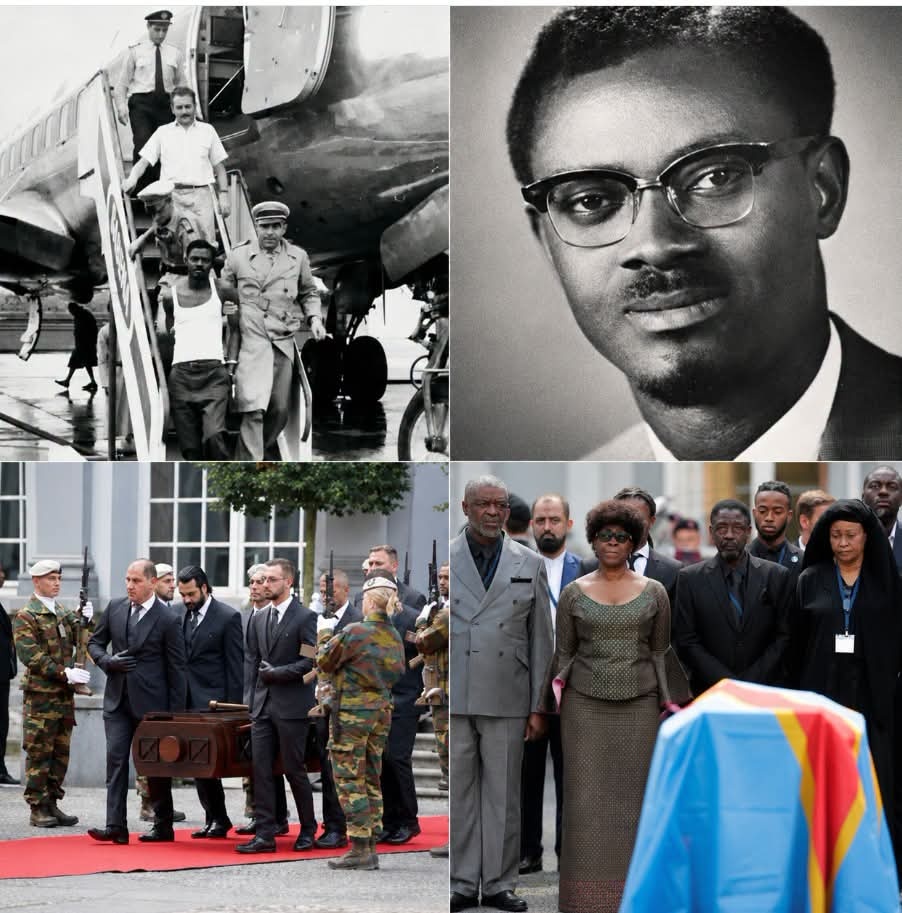
On January 17, 1961, Patrice Lumumba was executed because Congo’s independence threatened more than colonial pride.
On January 17, 1961, Patrice Lumumba was executed because Congo’s independence threatened more than colonial pride.
It threatened the old bargain that said Africa could have flags, speeches, and ceremonies, as long as the wealth beneath African soil still answered to someone else.
By the time Lumumba was taken to Katanga with Maurice Mpolo and Joseph Okito, the young prime minister had already been stripped of power, beaten down by crisis, and trapped inside a world that feared what he represented.
He was only 35 years old, but powerful men had already decided that his dream was too dangerous to leave alive.
Lumumba did not frighten them because he wanted chaos.
He frightened them because he wanted Congo to belong to Congolese people, not just in song or symbol, but in land, mines, government, money, and future.
That was the line empire could not forgive.
A Congo that controlled its own uranium, copper, cobalt, diamonds, rubber, and labor would not remain the same old colony wearing a new name.
For generations, outsiders had looked at Congo and seen treasure before they saw families.
They saw mines before they saw mothers, rivers before they saw villages, and profit before they saw a nation trying to stand upright after decades of colonial violence.
So when Congo became independent on June 30, 1960, the ceremony carried both joy and danger.
The Belgian flag came down, the new Congo rose before the world, and the air was full of the kind of hope only a newly freed people can understand.
But hope was not the only thing in that room.
There was also the heavy presence of Belgium, still trying to shape how the story would be remembered.
King Baudouin spoke as if colonial rule had been a gift, as if the Congolese people had been led gently into civilization.
Then Lumumba stood up and refused to let the lie pass into history untouched.
He spoke with the fire of a man carrying the memory of forced labor, insult, humiliation, and the long suffering of people treated as strangers in their own homeland.
He reminded the world that independence had not been handed to Congo out of kindness.
It had been won through struggle, sacrifice, and the refusal of Congolese people to remain subjects forever.
That speech traveled beyond the room because it said what colonized people everywhere already knew.
Freedom was not a gift from the oppressor; it was something the oppressed had to force the world to recognize.
To Africans across the continent, Lumumba sounded like courage.
To Belgium, Western intelligence agencies, foreign companies, and Cold War strategists, he sounded like a problem.
He had done something dangerous.
He had named the wound in public.
Congo entered independence wounded and surrounded.
The country had been drained for decades, denied serious preparation for self-rule, and then expected to function calmly while foreign interests still pulled at its richest province.
Within days, the army mutinied.
Belgian troops returned under the language of protection, while the mineral-rich province of Katanga broke away under Moïse Tshombe with Belgian support and foreign business interests close behind.
That secession was not just a local political crisis.
Katanga held wealth, and whoever controlled Katanga controlled a piece of Congo’s future.
Lumumba appealed to the United Nations, hoping international law would defend Congo’s sovereignty.
But the help he needed came slowly, carefully, and with limits that left him cornered.
When he turned toward the Soviet Union for assistance, the Cold War powers quickly recast him in their own language of suspicion.
To Washington, Lumumba became a possible opening for Moscow.
To Belgium, he became the man who might finally break the colonial chain.
To Congolese rivals hungry for power, he became the leader whose popularity had to be destroyed before it became permanent.
That is how fast a freedom fighter can be renamed unstable when his freedom threatens powerful interests.
The machinery closed in with cold precision.
On September 5, 1960, President Joseph Kasavubu dismissed Lumumba, and Lumumba rejected the dismissal as illegitimate.
The crisis opened the door for Joseph-Désiré Mobutu, then an army colonel, to seize control through a coup.
Lumumba was placed under house arrest, guarded, watched, and cut off from the people who still believed in him.
He escaped and tried to reach Stanleyville, where his supporters were gathering, but he was captured by Mobutu’s soldiers before he could get there.
The public humiliation that followed was part of the violence.
Lumumba was not only being removed from power; his enemies wanted to break the image of a Black leader who had stood before kings and spoken without apology.
They wanted Africa to see him bound.
They wanted Congo to see him beaten.
They wanted his body to carry the message that independence had limits if it challenged the wrong people.
Still, even in that humiliation, the meaning of Lumumba did not shrink.
A beaten man can still be dangerous when the truth he spoke remains larger than the hands holding him.
On January 17, 1961, Lumumba, Mpolo, and Okito were flown to Katanga.
They were tortured and executed, with Belgian officers and Katangan authorities deeply implicated in the events surrounding their deaths.
Belgium would later acknowledge moral responsibility, and United States investigations later revealed that the CIA had plotted against Lumumba, including assassination plans involving poison.
Claims about direct British involvement have also been made, but that part of the record remains disputed and should be handled carefully.
What cannot be softened is the larger truth.
Patrice Lumumba was destroyed inside a storm created by colonial greed, Cold War fear, Congo’s mineral wealth, and the refusal of powerful nations to accept African sovereignty when it threatened their control.
His killing was not only the murder of a prime minister.
It was the attempted murder of a possibility.
It told Africa that independence would be tolerated only if it stayed obedient.
It told newly freed nations that speeches, flags, parliaments, and presidents were acceptable, but real control over resources could bring punishment.
Then came the cruelty that still chills the heart.
After Lumumba was killed, his body was dug up, cut apart, and dissolved in acid.
A Belgian police officer, Gérard Soete, later admitted involvement in destroying the remains and keeping teeth taken from the body.
That was not only an effort to hide evidence.
It was an effort to deny Congo a grave.
His enemies understood something powerful about memory.
They knew a grave could become a gathering place, a shrine, a classroom, a place where children would be brought and told, this is where the man who loved Congo is buried.
They feared what a resting place could teach.
So they tried to leave his family with no body, his people with no tomb, and Congo with no sacred ground to hold its grief.
Imagine the cruelty of that absence.
His children had to grow up with a father stolen not once, but twice.
First, his life was taken.
Then, the right to bury him was taken.
For a family, that kind of loss has no clean ending.
For a nation, it becomes a wound that keeps speaking through every generation.
But memory does not need permission from killers.
A body can be hidden, acid can destroy flesh, governments can deny, documents can be sealed, and officials can speak in careful language, but a name can still move through the world.
Lumumba’s name traveled through Congo, across Africa, through the Caribbean, through Black America, and everywhere people understood what it meant for empire to call a free Black mind dangerous.
He became more than a leader removed from office.
He became a symbol of the future Congo was not allowed to test.
His death helped clear the path for Mobutu’s long rule, a dictatorship supported for years by Western powers because it served Cold War interests.
Congo’s people were left to live with the consequences: extraction, instability, corruption, foreign influence, and the bitter knowledge that the leader who spoke most clearly about sovereignty was gone before his vision could breathe.
That is why Lumumba’s story does not feel old.
It still lives wherever Congo’s minerals are discussed without Congo’s children being remembered.
It lives whenever powerful nations lecture Africa about democracy while protecting the systems that keep African wealth flowing outward.
It lives whenever a country rich beneath the ground is made poor above it.
Lumumba saw that danger before many wanted to name it.
He knew political freedom without economic control could become another kind of captivity.
He knew a new flag could still fly over old chains if the mines, the banks, the army, and the decisions remained under foreign pressure.
That is why he had to be made an example.
He was not perfect, and honest history does not need him to be perfect.
He was young, forceful, sometimes impatient, and trapped inside a crisis built long before he took office.
But his clarity was unforgettable.
Congo had the right to stand up straight.
Congo had the right to own what lived beneath its soil.
Congo had the right to choose its own friends, shape its own government, and imagine its own future without being punished for refusing foreign permission.
In 2022, more than sixty years after his assassination, Belgium returned a gold-capped tooth to Lumumba’s family.
After all the waiting, all the denial, all the years his children had lived without a grave to visit, what returned was not a body.
It was a tooth.
A small relic had to carry the grief of a family, the shame of a colonial power, and the sorrow of a nation.
It was placed in a casket and brought home to Congo, where people could finally mourn something physical, even if what came back was only a fragment.
That return mattered.
But it could never be enough.
A tooth cannot replace a father.
A ceremony cannot undo an execution.
An apology cannot rebuild the Congo that might have existed if Lumumba had been allowed to live.
Still, that tooth forced the truth into daylight.
It made the world look again at the violence that had been hidden behind diplomacy.
It reminded everyone that the nations calling themselves civilized had once treated an African leader’s remains like something they had the right to keep.
The killers thought they had solved the problem by destroying the body.
But they misunderstood the power of a people who remember.
They thought acid could finish what bullets began.
They thought a missing grave would weaken the story.
They thought time would make Congo forget.
Instead, Lumumba became harder to bury.
His face still appears in murals, books, protests, classrooms, and the hearts of people who know that liberation is never handed down by the powerful.
His name is spoken with grief, but also with pride, because he reminds Africa that there was always another path, even if that path was violently blocked.
He reminds the Black world that sovereignty is not a slogan.
It is land, food, minerals, schools, borders, memory, and the right to decide what happens to the wealth your ancestors bled over.
Patrice Lumumba did not live long enough to become the elder his country needed.
He never got to watch his children grow old beside him.
He never got to sit back and see whether his dream for Congo could survive the storms around it.
But history still has to answer to him.
Every mine still asks his question.
Every foreign deal still asks his question.
Every Congolese child born in a land rich enough to feed the world but wounded by extraction still asks his question.
What would Congo have become if its freedom had not been punished?
That is the haunting truth of January 17, 1961.
They killed Patrice Lumumba because they feared the living man, then destroyed his body because they feared what the dead man could still teach.
But the grave they denied him became larger than soil.
It became memory, it became accusation, it became a question that still stands over Congo like unfinished thunder: what kind of world calls itself civilized while stealing a nation’s future and keeping a father’s tooth?
I invest a lot of time researching and sharing these important stories. If you’d like to support the work behind them, here’s the link: