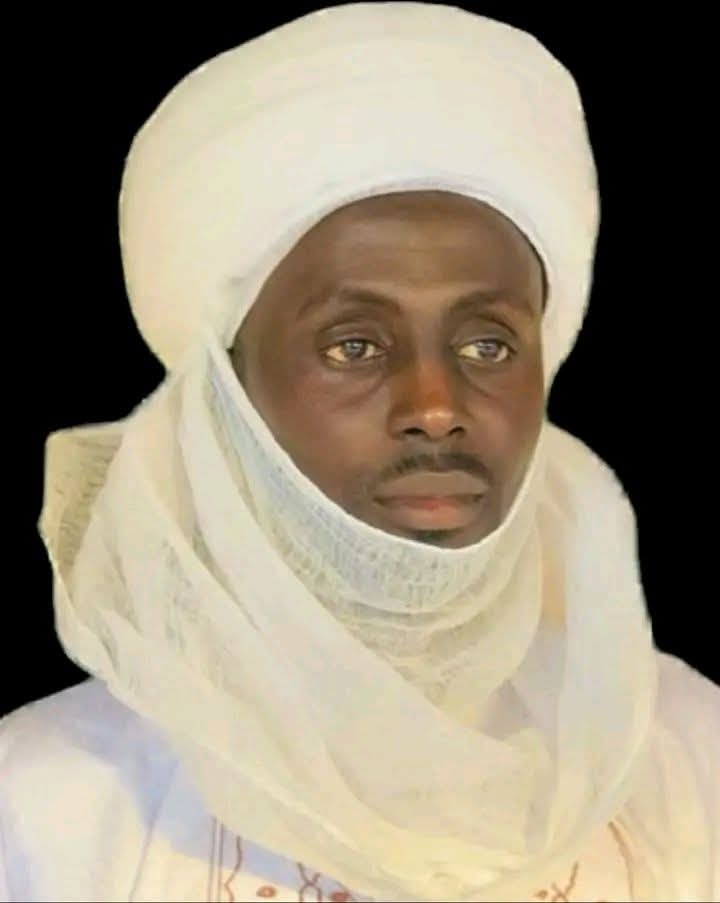
The Hausa and the Right to Associate: A Look at Hausa Zalla Through the Lens of the 1999 Constitution .
The Hausa and the Right to Associate: A Look at Hausa Zalla Through the Lens of the 1999 Constitution .
Introduction
Nigeria is a country of unions. Nearly every major ethnic group has a recognised socio-cultural body that speaks for it, organises its people, and defends its interests in the public square. For a long time, the Hausa, the largest ethnic group in Nigeria and West Africa as a whole, stood out as one of the few major groups without a single, clear socio-cultural body speaking specifically for them as Hausa. That gap has often been raised as a puzzle, even a weakness, in northern Nigerian political life. It is now beginning to close, with the emergence of Hausa Zalla, a socio-cultural association formed to bring Hausa people together under one roof, purely as Hausa. This article examines the legal foundation for forming such a body, drawing on the Constitution of the Federal Republic of Nigeria 1999 (as amended) and relevant court decisions, and situates the birth of Hausa Zalla within that wider legal and historical context.
A Country of Associations
It helps to first see how widespread this pattern really is, because it is not only the “big three” who have organised themselves. The Yoruba have Afenifere. The Igbo have Ohaneze Ndi Igbo. The Fulani have Miyetti Allah Kautal Hore. But alongside Miyetti Allah, many other groups across northern and central Nigeria have long had their own dedicated socio-cultural bodies. The Tiv have Mzough U Tiv (MUT), headquartered in Gboko, Benue State, with sister bodies such as the Tiv Cultural and Social Association (TICSA) in Taraba and the Tiv Development Association (TIDA) in Nasarawa, plus diaspora chapters like Mzough U Tiv UK and the Mutual Union of Tiv in America. The Idoma have Ochetoha K’Idoma, the apex socio-cultural body working alongside the Och’Idoma (the traditional paramount ruler) to coordinate Idoma affairs. The Nupe have several active development associations, including the Niniji Nupe Development Association, which represents Nupe communities in Kogi State and has publicly defended Nupe unity in recent state-creation debates. The Ngas (Angas) of Plateau State have the NGAS Development Association, which speaks for the Ngas nation on matters of culture and public recognition. Beyond these, similar bodies exist for the Kanuri, the Berom, the Jukun, the Bachama, and dozens of other groups across the North. Set against this landscape, the historical absence of an equivalent Hausa-specific body was genuinely an outlier, not the norm.
Why the Hausa Never Had One Voice
Given how many of their neighbours, the Tiv, Idoma, Nupe, and Ngas among them had already organised themselves this way, it is worth asking why the much larger Hausa nation took longer. To understand why this gap existed, it helps to understand how Hausa identity has traditionally been expressed. Unlike the Igbo, whose modern ethnic consciousness was sharpened by the trauma of the civil war and channelled into Ohaneze Ndi Igbo, or the Yoruba, whose Egbe Omo Oduduwa and later Afenifere grew out of a strong pre-independence political tradition, the Hausa historically expressed their collective identity through the structures of the Hausa states and, later, the Sokoto Caliphate and the emirate system. After independence, that role was in many ways absorbed by pan-northern platforms such as the Arewa Consultative Forum (ACF), which represented the wider “Arewa” identity, Hausa, Fulani, and dozens of other northern ethnic groups together, rather than the Hausa specifically. In other words, the Hausa were never without organisation; they simply organised through structures that were either traditional (the emirate system) or regional (pan-northern bodies), not through a dedicated Hausa ethnic association in the mould of Ohaneze or Afenifere. Hausa Zalla is significant precisely because it attempts to fill that specific space, a body for the Hausa, as Hausa.
Whatever the historical reasons for the delay, there was never any legal barrier to the Hausa forming such an association. The right to do so is guaranteed in plain terms by Section 40 of the 1999 Constitution, which provides that every person is entitled to assemble freely and associate with other persons, and may in particular form or belong to any political party, trade union, or any other association for the protection of their interests.
This is the same constitutional provision under which Afenifere, Ohaneze Ndi Igbo, and Miyetti Allah exist. None of these bodies were created by an Act of the National Assembly or granted any special legal status beyond what any citizen can claim under Section 40. They are voluntary associations, and their legitimacy flows entirely from the constitutional freedom to associate. The same is true of Hausa Zalla. Its formation needed no special permission from government; it needed only the willingness of Hausa people to come together, which is exactly what the Constitution protects.
Nigerian courts have had several opportunities to interpret this freedom, and their decisions reinforce the point.
In Fawehinmi v. Nigerian Bar Association (No. 2) (1989) 2 NWLR (Pt. 105) 558, the Supreme Court, per Karibi-Whyte JSC, held that the right to form an association for the protection of the interests of its members is a guaranteed and entrenched constitutional right. The Court did note that forming an association does not automatically give it the legal status of an incorporated body, for that, registration under the Companies and Allied Matters Act (CAMA) is required, but the underlying right to form the association in the first place is untouchable.
In Agbai v. Okogbue (1991) 7 NWLR (Pt. 204) 391, the Supreme Court went further and clarified the other side of the same coin: freedom of association also means freedom not to associate. The case involved a man who refused to join a traditional age-grade association in his community and was pressured to pay levies as though he were a member. The Court held that no custom, tradition, or group pressure can compel a person to join an association against their will. This is a useful principle for Hausa Zalla itself to bear in mind as it grows, its legitimacy, like that of Ohaneze and Afenifere, rests on voluntary membership. No Hausa person can be forced to join it, and its authority to speak for “the Hausa” will always be a function of how many Hausa people genuinely choose to stand behind it, not a legal compulsion.
In Inspector-General of Police v. All Nigeria Peoples Party (2008) 12 WRN 65, the Court of Appeal affirmed that denying citizens the ability to assemble or organise, for instance, by refusing police permits for lawful meetings, amounts to a breach of the constitutional rights to freedom of expression and association. This is directly relevant to Hausa Zalla’s own engagement with the Nigeria Police Force in the course of its formation: such engagement is not a request for permission to exist, but the ordinary, lawful conduct of a group exercising its rights while keeping security agencies informed, exactly as the law contemplates.
Hausa Zalla as an Exercise of a Settled Right
Read together, these authorities make one thing clear: nothing about the formation of Hausa Zalla is legally novel or precarious. It is simply Hausa people exercising a right that has existed since 1999 (and indeed since the 1979 Constitution before it, under the equivalent Section 37) a right that Yoruba, Igbo, and Fulani citizens have long exercised through their own associations. The only thing that has changed is that the Hausa have now chosen to exercise it in the same organised, ethnic-specific form.
This matters beyond the legal technicalities. An association like Hausa Zalla gives the Hausa a structured platform to speak on matters that affect them specifically, cultural preservation, welfare, education, and advocacy, the same way Ohaneze speaks for the Igbo and Afenifere for the Yoruba. It does not replace or compete with pan-northern bodies like the ACF; it simply completes a picture that had, for historical rather than legal reasons, been missing a piece. Whether Hausa Zalla grows into a body of the stature of Ohaneze or Afenifere will depend on organisation, leadership, and the willingness of Hausa people across Nigeria to genuinely embrace it, but the constitutional and judicial road for it to do so is already fully open.
Conclusion
The old observation that “even the Fulani have Miyetti Allah, but the Hausa have nothing” was always a statement about history and organisation, never about law. Section 40 of the 1999 Constitution has always given every Nigerian, Hausa included, the unqualified right to form and belong to any association for the protection of their interests, and the courts from Fawehinmi v. NBA to Agbai v. Okogbue to IGP v. ANPP have consistently protected that right and clarified its boundaries. With the emergence of Hausa Zalla, the Hausa are simply stepping, fully within their rights, into a space that was always constitutionally available to them.