The story: How slave masters touched Nigeria’s coast, 1500s-1800s
The story: How slave masters touched Nigeria’s coast, 1500s-1800s
1. First contact on the coast
In the 1400s Portuguese ships arrived at Benin, Warri, and the Bight of Biafra looking for pepper, ivory, and gold. By the 1500s their focus shifted. Slave masters from Portugal, Britain, France, Netherlands, and Spain built forts and “slave factories” along what’s now Lagos, Calabar, Bonny, and Badagry.
These forts like Cape Coast Castle and Fort James weren’t in Nigeria, but British masters built similar posts at Badagry and Calabar. That’s where they “touched” Nigeria – physically anchoring ships, trading guns and cloth for captives.
2. How they operated with local rulers
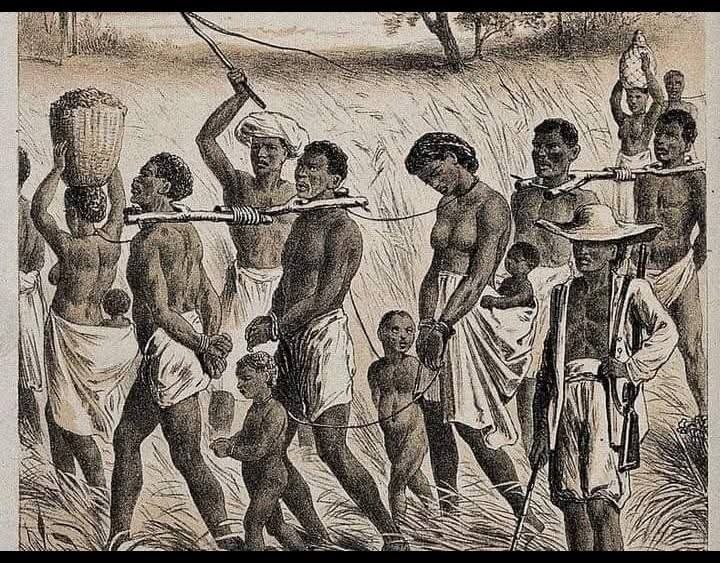
Slave masters didn’t walk into villages themselves. They touched Nigeria mostly through trade. European ship captains would anchor offshore. Local chiefs, merchants, and middlemen brought captives to the coast. At “barracoons” – holding pens near the beach – European agents inspected, branded, and shackled people before loading.
So their “touch” was at ports: counting, branding with hot iron, chaining, and forcing people onto ships. Calabar and Bonny became the busiest slave ports in Africa. Over 1.5 million people left from Bight of Biafra alone.
3. The Middle Passage
Once on the ship, masters’ control got brutal. Men were chained in rows below deck, women and children separate. The “touch” here was chains, whips, and forced feeding. Ships left Lagos/Bonny for Brazil, Jamaica, Virginia, etc. The trip took 6-12 weeks. About 15% died on the way.
4. End of the trade
Britain abolished its slave trade in 1807. Royal Navy ships started patrolling Nigeria’s coast to stop other masters. In 1851 Britain bombarded Lagos and forced King Kosoko out – partly to end slave exports. By 1861 Lagos became a British colony, and the legal trade ended. But illegal smuggling continued into the 1880s.
The impact on Nigeria
Wars increased because some kingdoms raided others for captives to sell. Towns like Badagry grew rich from the trade, then collapsed after it ended. Families were broken. Many Nigerians today in Brazil, Cuba, US, and Jamaica trace roots to Calabar, Bonny, and Lagos ports.
Key point: The “masters” who touched Nigeria were mostly ship captains and coastal agents. They didn’t conquer the interior like later colonizers. They stayed at the coast and used trade + guns to get access.