Kiambaa: The Church That Became a Symbol of Kenya’s Darkest New Year’s Day
Kiambaa: The Church That Became a Symbol of Kenya’s Darkest New Year’s Day
History is not only about celebrating victories. Sometimes, it is about remembering painful moments so that future generations never repeat them.
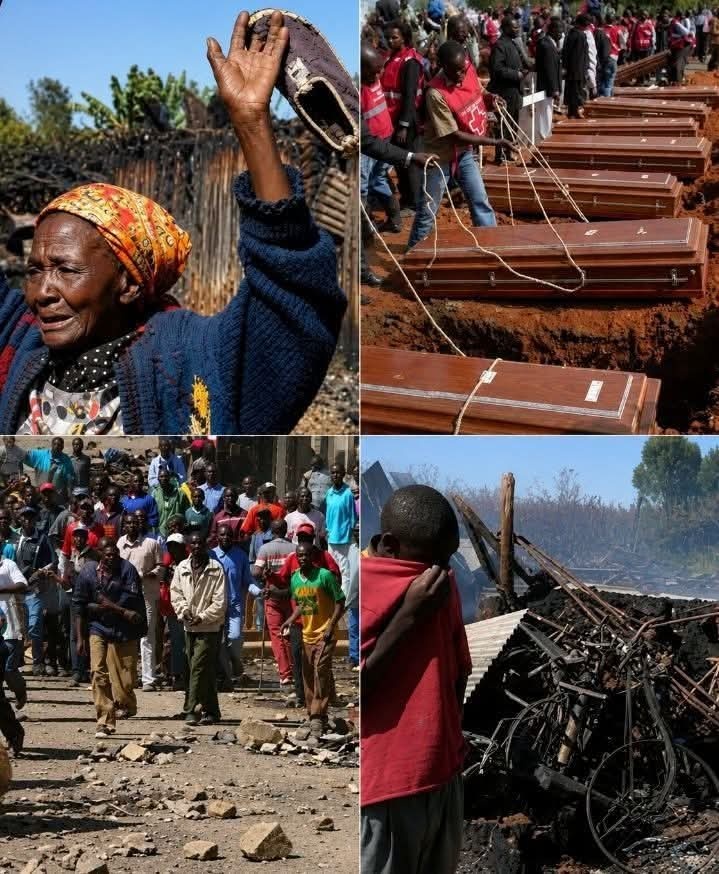
On 1 January 2008, as much of the world welcomed a new year with hope, tragedy unfolded at the Kenya Assemblies of God (KAG) Church in Kiambaa, just outside Eldoret. More than 200 frightened civilians—mostly women, children, the elderly, and other vulnerable people—had taken refuge inside the church after fleeing violence that erupted following Kenya’s disputed 2007 general election.
They believed a church would be a place of safety.
Instead, it became the scene of one of the most horrific incidents of Kenya’s 2007–2008 post-election violence. The church was attacked and set ablaze, claiming the lives of more than 35 people, while many others suffered severe burns and lifelong injuries. Across the country, the crisis displaced hundreds of thousands of people, destroyed homes and businesses, and left deep emotional scars that are still felt today.
The tragedy did not begin with fire. It began with political disagreement, mistrust, inflammatory rhetoric, and the failure to resolve disputes peacefully. As tensions escalated, neighbours who had lived together for years found themselves divided by fear and ethnic polarization. Ordinary families became the greatest victims of a conflict they neither started nor controlled.
The Kiambaa tragedy reminds us that elections should never become a battlefield and that political competition must never outweigh the value of human life. It also reminds us that behind every historical statistic is a mother, a child, a father, a grandparent, or an entire family whose future was forever changed.
Kenya has since made important reforms, strengthened institutions, and continued efforts toward reconciliation. While challenges remain, the memory of Kiambaa serves as a powerful reminder of why peace, dialogue, justice, and national unity must always come before political rivalry.
As we remember those who lost their lives, let us also remember the lesson they left behind: hatred destroys, but reconciliation rebuilds. The strongest nations are not those that never face conflict—they are those that learn from their history and choose unity over division.
May the victims of Kiambaa, and all those who lost their lives during Kenya’s 2007–2008 post-election violence, never be forgotten. May their memory continue to inspire peace, compassion, and harmony for generations to come.