THE DAY NIGERIA BLED: The Final Moments of Major General Illiya Bisalla
THE DAY NIGERIA BLED: The Final Moments of Major General Illiya Bisalla
(A Forgotten Chapter of Nigerian History)
13 February 1976. Lagos.
It began like any other Friday morning.
People were heading to work.
Markets were opening.
Traffic crawled through the streets.
Within hours, Nigeria would lose its Head of State.
That morning, General Murtala Ramat Mohammed left his residence for his office with a relatively small security detail, reflecting his personal style of leadership.
As his convoy drove through Ikoyi, armed soldiers struck.
Gunfire echoed through the streets.
General Murtala Mohammed was assassinated.
The attack was led by Lieutenant Colonel Buka Suka Dimka, who soon announced over the radio that he had overthrown the government.
But the coup collapsed almost as quickly as it began.
Most senior military commanders rejected it, and loyal troops regained control within hours.
The Arrest of Major General Illiya Bisalla
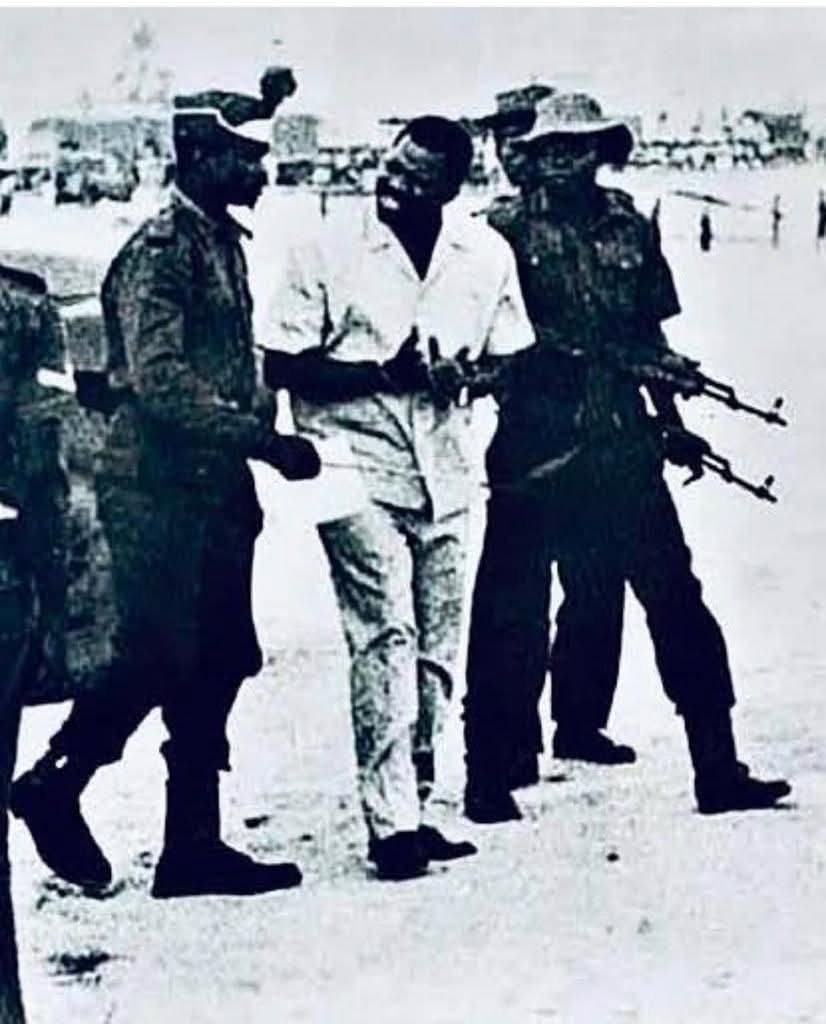
As investigations unfolded, the government arrested Major General Illiya D. Bisalla, Nigeria’s Commissioner (Minister) of Defence under General Murtala Mohammed.
Before serving in government, Bisalla had held several important military appointments, including General Officer Commanding (GOC) of the 1st Division and Commandant of the Nigerian Defence Academy.
The military government accused him of involvement in the failed coup.
Bisalla denied participating in the plot.
A Special Military Tribunal later convicted him of conspiracy and concealment of treason.
Because the proceedings were held in secret and there was no right of appeal, historians have continued to debate the extent of his involvement.
On 11 March 1976, Major General Illiya Bisalla was executed by firing squad at Bar Beach, Lagos, alongside 31 others convicted in connection with the failed coup.
Nearly fifty years later, his case remains one of the most debated in Nigeria’s military history.
Some historians accept the tribunal’s findings.
Others question whether the available evidence conclusively proved his role, noting that much of the case relied on statements made during the investigation.
Whatever the full truth may be, Major General Illiya Bisalla’s execution became one of the defining moments of the aftermath of the 1976 coup attempt.
History is often remembered for its victories but sometimes, its greatest lessons come from its controversies.
Had you heard of Major General Illiya Bisalla before today?
What lessons should Nigeria continue to learn from the events of 1976?


Great piece! Really enjoyed this one. I’d love for you to check out my latest piece at storefrontsubway.com!
LikeLiked by 1 person
Alright I will
LikeLiked by 1 person