After World War II, with much of Europe in ruins, FIFA chose Brazil to host the 1950 World Cup.
After World War II, with much of Europe in ruins, FIFA chose Brazil to host the 1950 World Cup.
No doubt, the home team were the favourite, and they eventually advanced to the final, where they faced the inaugural champions, Uruguay. The entire nation anticipated a Brazilian triumph, making preparations for an immense celebration.
However, Uruguay won the match 2-1 and were crowned world champions for the second time on July 16, 1950. This stunning defeat surprised Brazil to the point of shock and is known as the Maracanazo (Maracanã blow).
No one felt the blow more deeply than a former rural club footballer who could not bear the loss. This man was Pelé’s father, Dondinho, a former professional football player himself. Witnessing his father’s tears and anguish, the nine-year-old Pelé made a heartfelt promise to him: he would win the World Cup for Brazil.
“Dad,” Pelé said, his voice filled with conviction, “one day, I’ll win the World Cup for Brazil, and you’ll see it happen.”
Though it may have seemed like a naive pledge, Pelé’s words held weight. As a teenager, he caught the attention of Santos, and in 1957, at the age of 16, he made his debut for Brazil against Argentina.
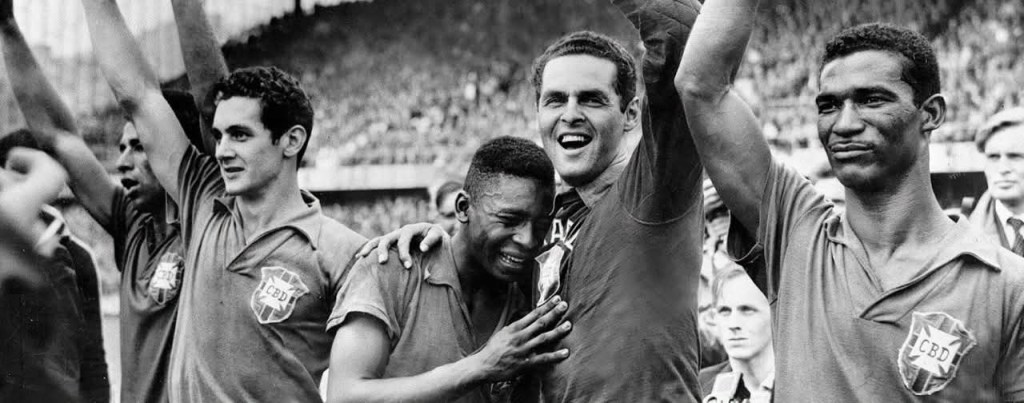
Pele secured a spot in the 1958 World Cup squad, becoming the youngest participant at 17. His breakthrough came in the semifinal against France, where he scored three goals in just 20 minutes. It was a defining moment for the teenager.
But he was not finished yet. In the final showdown against a formidable Swedish team, Pelé scored twice, leading Brazil to victory.
As the final whistle blew, Brazil claimed their first of five World Cup titles and became the first nation to win the World Cup outside of its own continent. Pelé, at 17, became the standout player of the tournament, netting six goals in three games. It was the first FIFA World Cup to be played in a Nordic country.
Pelé’s legacy as the greatest player of his time was cemented. His 77 international goals in 92 games stand as a testament to his greatness.
While the spark ignited in 1958, the fire had been kindled eight years earlier, fueled by a heartbreaking defeat, a grieving father, and an unwavering determination that propelled a young boy to fulfil his promise and become the world’s finest footballer. #HistoryVille