HISTORY BEHIND ONITSHA MAIN MARKET you should know.
HISTORY BEHIND ONITSHA MAIN MARKET you should know.
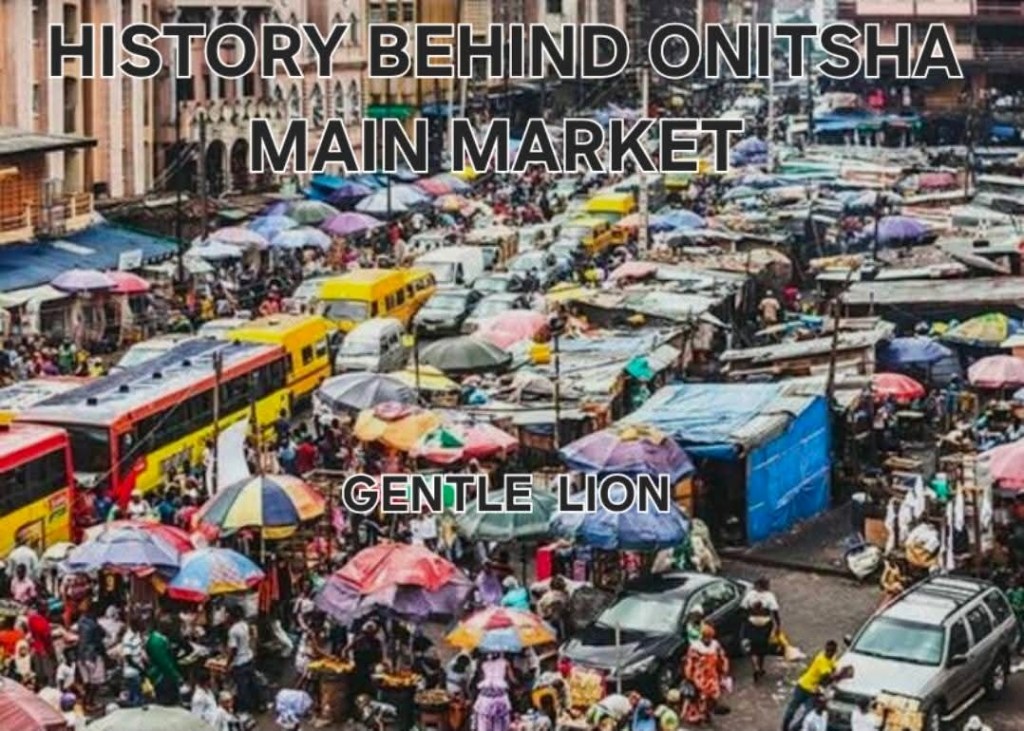
Do you know that the biggest market in Nigeria—and widely recognized as the largest open-air market in West Africa—is the Main Market, Onitsha (popularly known as Onitsha Main Market), located in Anambra State.
Because of its massive size, sheer volume of goods, and strategic position along the River Niger, it serves as the commercial heartbeat of Nigeria and the wider West African sub-region.
Here is the history and evolution of this iconic commercial hub.
1. Pre-Colonial Origins: The River Niger Trading Post
Long before the concrete structures of today were built, Onitsha was already a natural trading hub due to its geographic location.
The Waterfront Advantage: In the pre-colonial era, the market began as a riverside trading post called Otu Onicha. The local community traded with neighbors from across the River Niger and Delta regions.
The Items of Trade: Early trade relied heavily on the barter system and local currencies like cowries.
People traded agricultural produce, fish, earthenware, and locally woven fabrics.
The 1857 Turning Point: In 1857, British traders established a permanent trading post in Onitsha following the Macgregor Laird expedition. This transformed Onitsha from a regional market into a major hub for palm oil and European manufactured goods.
2. Colonial Era & The Architectural Boom (1950s)
As Nigeria moved toward independence, the market grew too large for the riverbanks. The local government and colonial authorities recognized the need for a modern, structured market.
The £5O0,000 Investment: In the mid-1950s, the Eastern Regional Government, led by Dr. Nnamdi Azikiwe, authorized the construction of a state-of-the-art market. It cost roughly £5O0,000 (a massive fortune at the time).
The 1956 Commissioning: The market was officially opened in 1956. It featured concrete stalls, well-laid-out streets, and administrative offices. It was widely regarded as the most modern and largest indoor/outdoor market structure in West Africa at the time.
3.The Civil Wär and Devastation (1967–1970)
The Nigerian Civil Wãr brought a tragic halt to the market’s golden era.
Total Destruction: Because Onitsha was a strategic gateway to the Biafran heartland, it saw fierce military battles. During the war, the magnificent 1956 market structure was completely bombed and burnt down.
The Rebirth: When the wär ended in 1970, traders returned to a landscape of ruins. Displaying incredible resilience, local traders began rebuilding out of pocket. They erected temporary structures and shanties to kickstart commerce immediately, which slowly evolved into the massive concrete network seen today.
4. The Modern Era: An Economic Empire
Today, Onitsha Main Market is not just a single building; it has spilled over into an entire commercial district, spawning specialized sub-markets like the Relief Market, Ochanja Market, and the Ogbo Ogwu (Patent Medicine) Market.
The Hub for Everything: The market handles imports from all over the globe, particularly from Asia and Europe. Goods bought here in bulk are distributed daily to markets across Nigeria, Cameroon, Niger, Chad, and Benin Republic.
The “Onitsha Market Literature”: Historically, the market was also famous for a unique cultural phenomenon in the 1950s and 60s—Onitsha Market Literature.
This was a thriving industry of cheaply printed, locally written pamphlets, novellas, and how-to guides sold right in the market, which played a massive role in early West African popular culture.
 Hi welcome to my website