
UNTOLD HISTORY OF NDỊ IGBO
UNTOLD HISTORY OF NDỊ IGBO
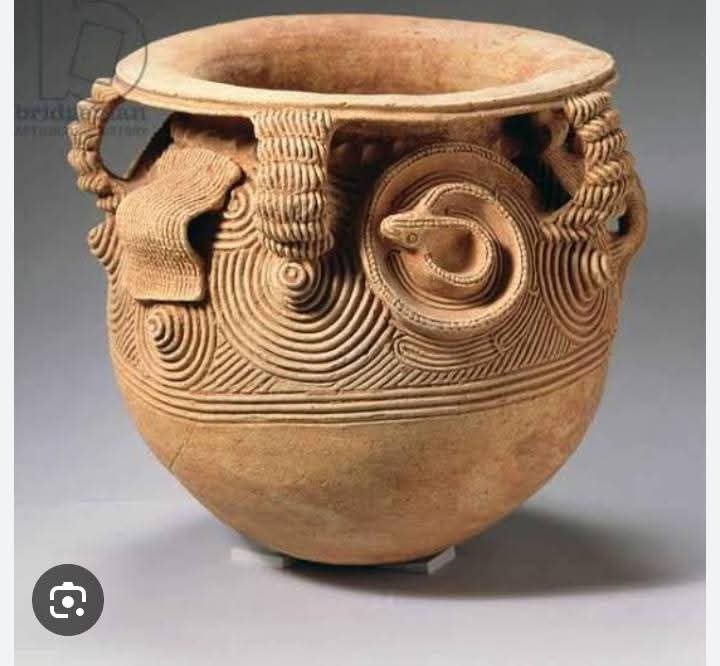
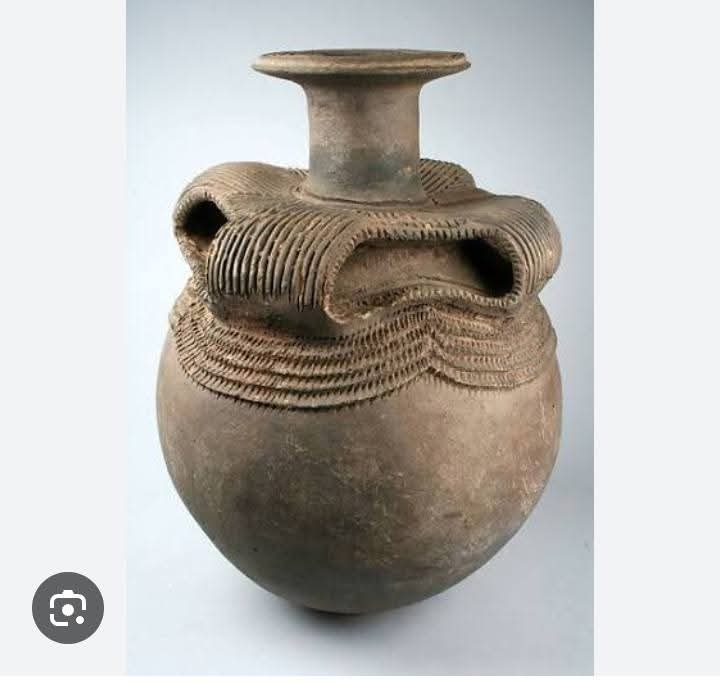
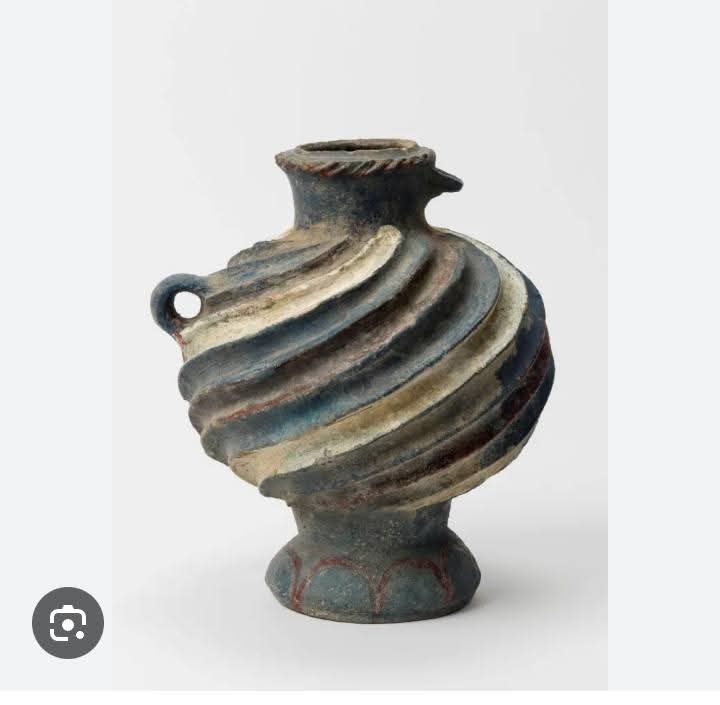
I present to you Afikpo Pottery 5000 year ago
Afikpo (Ehugbo), in Ebonyi State, Nigeria, has one of West Africa’s oldest pottery traditions, dating back ~5,000 years to the Neolithic era.
Archaeological evidence shows pottery production in the Afikpo area dates back roughly 5,000 years to the Neolithic period. Excavations, notably at the Ezi-Ukwu (or Ukpa) rock shelter by Prof. D.D. Hartle in 1966, uncovered sherds and vessels with radiocarbon dates around 2935 B.C. (or broadly 3,000–5,000 B.C.)
Later excavations (e.g., at Ugwuagu rockshelter and village sites in 1975) confirm continuity from Late Stone Age hunting/gathering to early agriculture, with pottery styles showing similarities between ancient finds and modern Afikpo wares.
Oral traditions link early pottery skills to the Egu (or Ego) settlers, one of the foundational groups in Afikpo alongside the Nkalu. These early inhabitants were agriculturists and craftspeople.
Afikpo pottery shows stylistic influences extending to nearby areas like Ishiagu and even broader Igbo sites such as Igbo-Ukwu.
Afikpo is recognized as one of the earliest centers of pottery (and crop domestication) in West Africa/Sub-Saharan Africa.
Traditional Practices and Techniques
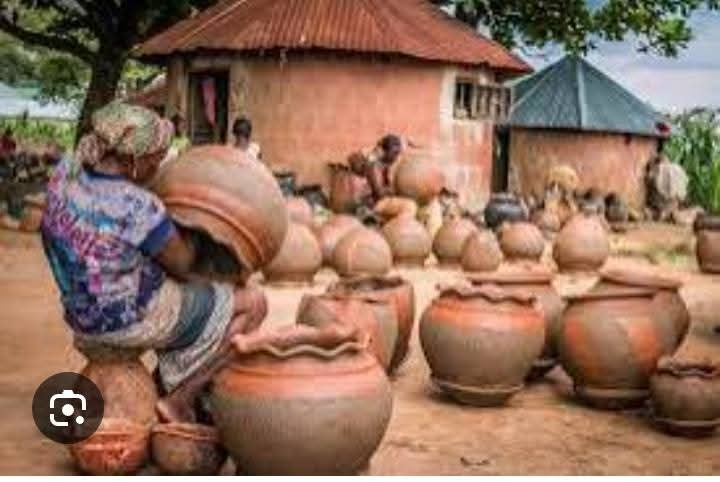
Pottery-making in Afikpo is a female-dominated craft, passed down matrilineally from grandmothers to mothers to daughters. It relies on abundant local clay deposits exposed by the area’s undulating terrain and streams.
Clay types: Potters distinguish varieties like uroro (dark, highly plastic, from streams), uhe (brown, less plastic, from drier areas), and ezi-ura (fine yellowish grog).
Techniques: Coiling and drawing/pulling methods (no potter’s wheel traditionally). Pots start with a base shaped on a leaf or stool, then built up. Decoration includes embossing (prominent on large ceremonial pots like mgbere), incisions, and other motifs with cultural/ritual significance.
Economy: A source of income through local trade, markets, and exchange with neighbors. In pre-colonial times, it was part of broader crafts (alongside mat-making, etc.) in Afikpo’s agricultural economy.
Afikpo’s history (detailed in works like Raph Oko Aja’s A History of Afikpo Circa 1600) ties pottery to pre-colonial industries and migrations.
Modern Challenges and Continuity
Modernity, colonialism, western education, and competition from plastics, aluminum, enamelware, and factory ceramics have led to a decline. Fewer young people apprentice, and some potters have shifted professions due to the labor-intensive nature.
Despite this, the tradition persists in Afikpo and nearby areas, with efforts to sustain it for cultural identity, tourism, and small-scale entrepreneurship. Contemporary interest in authentic African crafts offers potential revival.
In summary, Afikpo pottery represents one of African’s deepest indigenous ceramic traditions—spanning millennia, tied to women’s expertise, and resilient amid change. For deeper reading, key sources include archaeological reports by Hartle/Chikwendu and ethnographic works on Igbo pottery.
Many of you here on social media did not know about this our ancient sophisticated history that has was slept under the carpet;
Share this history widely that many will learn
 Hi welcome to my website