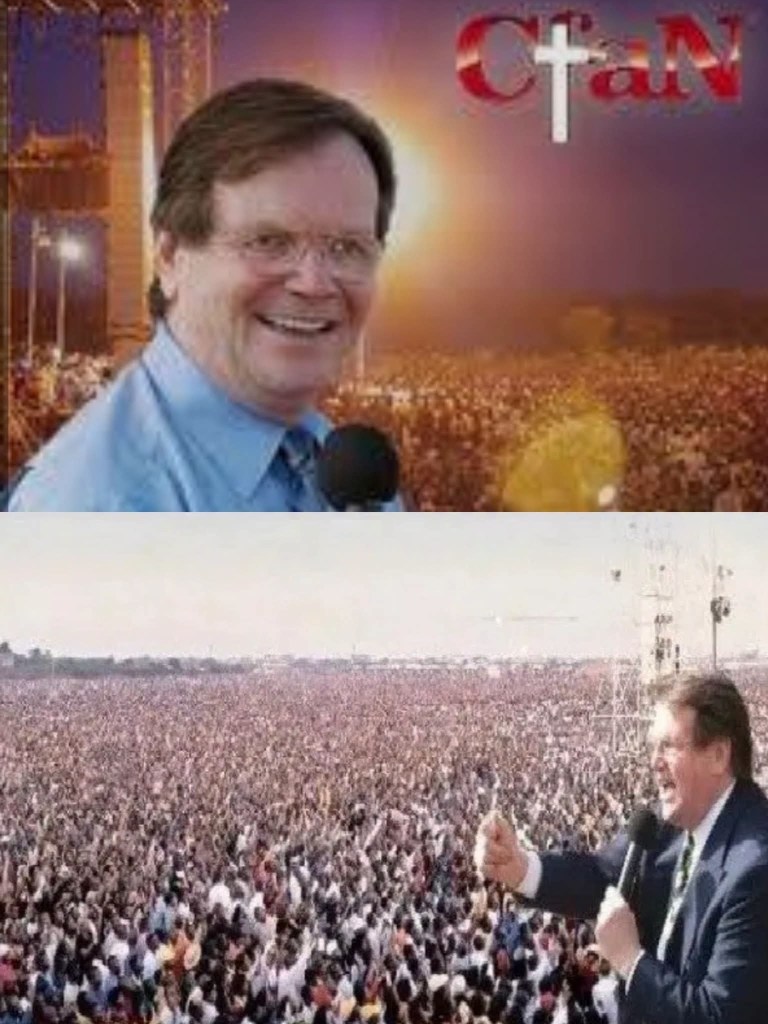
BLOOD IN KANO THE 1991 BONNE CRUSADE THAT IGNITED DEADLY RIOTS
In October 1991, the northern Nigerian city of Kano, a major commercial and cultural center with a predominantly Muslim population, erupted in deadly religious violence.
Reason?
The planned Christian revival crusade by German Pentecostal evangelist Reinhard Bonnke, organized under the auspices of the Christian Association of Nigeria (CAN).
Reinhard Bonnke, known for his large-scale evangelistic crusades across Africa through his ministry Christ for All Nations (CfAN), had successfully held events in other parts of Nigeria. After a crusade in Kaduna, plans advanced for a major outreach in Kano.
Muslim leaders and activists in Kano strongly opposed the event. They viewed it as provocative in a city considered a stronghold of Islam. They spread false rumors that Bonnke intended to “lead an invasion” or blaspheme Islam.
On or around October 13–14, 1991, as Bonnke arrived or preparations intensified, Muslim youths mobilized. Thousands gathered at sites like the Kofar Mata Eid ground and the Emir’s palace. Clerics addressed the crowds, stoking anger. After afternoon prayers, the situation boiled over into widespread riots
The Riots
Mobs attacked Christian neighborhoods, churches, homes and businesses owned by non-indigenes (often perceived as Christian or southern). Reports indicate dozens of churches were burned or damaged and many Christians were killed, with some bodies reportedly thrown into wells. Properties were looted and set ablaze sending plumes of smoke over the city.
Estimates, including later accounts, placed the death toll much higher—potentially up to 200 or even around 500
The federal military government under President Ibrahim Babangida responded swiftly. Babangida cut short an international trip, and Defense Minister Sani Abacha was dispatched to Kano.The two strongmen were Muslims from the north with Abacha being a Kano native.The crusade was canceled, and Bonnke was evacuated for safety. The evangelist was later denied entry to Nigeria for years afterward, though he returned after the return to civilian rule in 1999.
Police boss k1!!ed
Amid the chaos, one particularly poignant and tragic incident involved a senior police officer named Usman Mustapha. According to accounts from his relatives, Mustapha—a devoted Muslim took a principled stand during the riots. He reportedly sheltered innocent civilians (including Christians or non-indigenes seeking refuge) at his police station, positioning himself between the mob and potential victims.
Despite identifying as a Muslim, Mustapha was targeted by extremists. They viewed him as an “outsider” because of his southern Nigerian origins, questioning the authenticity of his faith. He was brutally killed. His death underscored the indiscriminate and frenzied nature of the violence, where even fellow Muslims enforcing law and order or protecting lives could become victims if perceived as not aligning with the mob’s agenda.
Family members, such as nephew Taoheed Abdulwasiu Mustapha(he posted on this a day ago), have shared this story publicly to highlight the human cost of religious fanaticism and the bravery of individuals who prioritize duty and humanity over sectarian lines.
Bonnke’s ministry continued successfully elsewhere in Nigeria, drawing massive crowds in the south and later campaigns, but the Kano episode remained a sensitive chapter.
The violence was not isolated to Kano but reflected broader patterns of violence that has persisted against Christians in Nigeria’s Muslim North to-date.