DO THE IGBOS DESERVE AN APOLOGY FROM PEOPLE THAT PARTICIPATED IN THE CIVIL WAR?
DO THE IGBOS DESERVE AN APOLOGY FROM PEOPLE THAT PARTICIPATED IN THE CIVIL WAR?
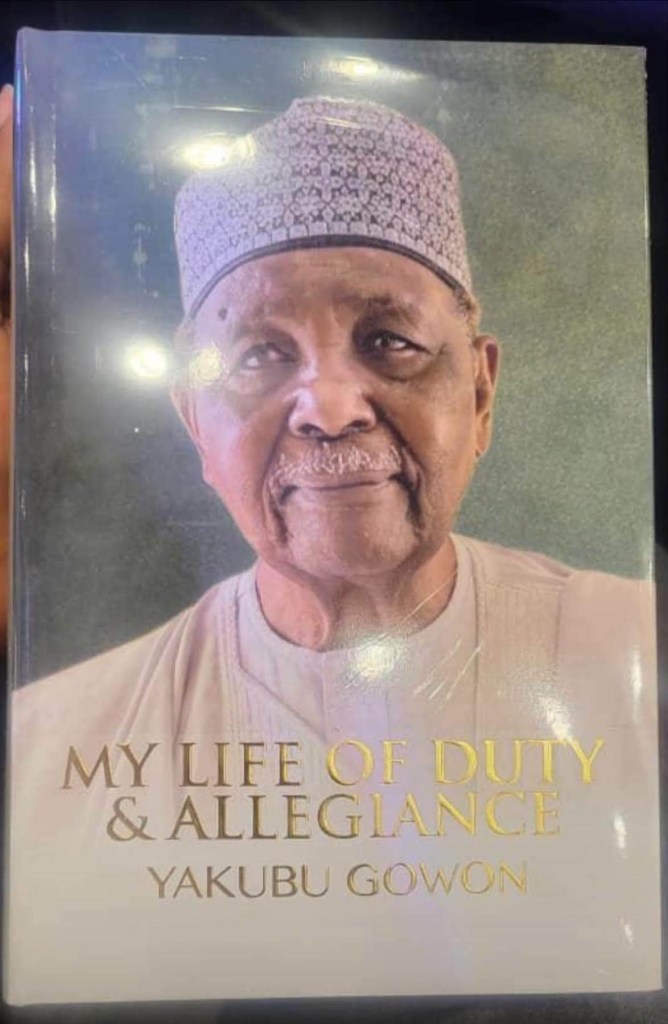
I took my time to read through the book written by our revered national hero, General Yakubu Gowon, titled My Life of Duty & Allegiance. I also reflected on his famous post-war declaration, “No Victor, No Vanquished” a statement made at the end of the Nigerian Civil War as a deliberate step towards reconciliation, healing, and national rebuilding.
Having read his account, I searched for any place where General Gowon expressed regret for defending the unity of Nigeria or admitted that Plateau people were “deceived” into fighting the war. I found none.
On the contrary, Gowon consistently explains that the Federal Government fought the war because it believed Nigeria’s unity and territorial integrity had to be preserved following Biafra’s declaration of secession. While he acknowledges the immense human suffering and describes the Civil War as one of the most painful periods in Nigeria’s history, he does not renounce his decision to lead the Federal side. His distinction is clear: he regrets the tragedy of the war, but not the duty he believed he had to keep Nigeria together.
More importantly, General Gowon’s words after the war were backed by deliberate actions. Rather than pursue revenge, he introduced policies aimed at national healing. His famous declaration of “No Victor, No Vanquished” became the foundation for the policy of Reconciliation, Rehabilitation and Reconstruction (the 3Rs). His administration encouraged the reintegration of former Biafrans into national life, embarked on rebuilding war-affected communities, restored essential infrastructure, and sought to reassure all Nigerians that the war had ended and the nation had to move forward as one people. Whether one believes those policies fully achieved their objectives is open to debate, but their intention was unmistakable—to heal a divided nation rather than deepen old wounds.
This is why Governor Caleb Mutfwang’s apology raises important historical questions. In apologising to the Igbo community, he stated that Plateau people were “deceived” into participating in the Civil War. That is a serious historical claim. Yet it does not reflect the account presented by General Gowon the very man who led the Federal Government throughout the conflict and has now documented his perspective in My Life of Duty & Allegiance.
It is also important to remember a basic historical fact. The Nigerian Civil War began in 1967, while Governor Caleb Mutfwang was born in 1965. He was only two years old when the war started. Today, more than half a century later, a man who was merely a toddler during that defining period has chosen to apologise on behalf of the entire Plateau people for decisions made by a generation that witnessed the events firsthand.
It should also be clearly stated that General Yakubu Gowon being a Plateau man did not mean he used Plateau people alone to prosecute the Civil War. The Federal side was made up of Nigerians from virtually every region and ethnic group in the country. Hausa, Fulani, Yoruba, Tiv, Idoma, Nupe, Kanuri, Ijaw, Efik, Ibibio, and many others fought alongside officers and soldiers from the then Benue-Plateau. Thousands paid the ultimate price because they believed they were defending the sovereignty of Nigeria and the stability of the Federal Government. To reduce that collective national effort to a claim that “Plateau people were deceived” oversimplifies history and diminishes the sacrifices made by countless Nigerians who fought under the same conviction.
Even more troubling is the unintended consequence of that apology. By claiming that Plateau people were “deceived” into fighting the war, Governor Mutfwang has inadvertently exposed General Yakubu Gowon to unnecessary insults and name-calling. His statement creates the impression that Gowon either fought a war he did not understand or spent decades defending a cause that was based on deception. That is not the position Gowon himself has taken in his book or in his public reflections over the years.
If Governor Mutfwang truly intended to promote reconciliation, he already had a timeless example before him the example set by General Yakubu Gowon himself. “No Victor, No Vanquished” was not merely a slogan; it was a profound call for forgiveness, national unity, and collective healing after one of the darkest periods in Nigeria’s history. It sought to unite Nigerians without rewriting history or assigning blame to one group on behalf of another.
Ironically, Governor Mutfwang still has unresolved issues within Plateau State that require the very reconciliation he preaches. Thousands of workers who were dismissed from the civil service have spent years pleading and fighting for their reinstatement. They pursued justice through the courts and secured judgments ordering their return to work, yet the Governor has consistently refused to comply with those court orders. Rather than embracing peace through the rule of law, he has chosen a path that continues to deepen resentment and division.
The same pattern is evident in his political conduct. He defected from the PDP to the APC in the name of peace and unity, yet he entered the party with an agenda that has only deepened internal divisions. Instead of honouring understandings reached in the interest of party cohesion, his leadership has coincided with the emergence of two rival camps within the Plateau APC, the Governor’s camp and the Legacy Group. If he is truly committed to peace and reconciliation, and as the leader of the APC in Plateau State, such deep divisions should not still define the party today.
Peace begins at home. Before apologising for events that occurred nearly six decades ago on behalf of an entire generation, Governor Mutfwang should first demonstrate the principles of reconciliation in matters directly under his authority today by obeying valid court judgments, restoring justice to aggrieved workers, and genuinely uniting the political family he now leads. Reconciliation is not achieved through symbolic apologies alone; it is demonstrated by the courage to resolve present-day injustices. If we truly seek healing, then we must tell history faithfully, respect the documented accounts of those who lived through it, and practise the peace we so readily preach.
26 July 2026.