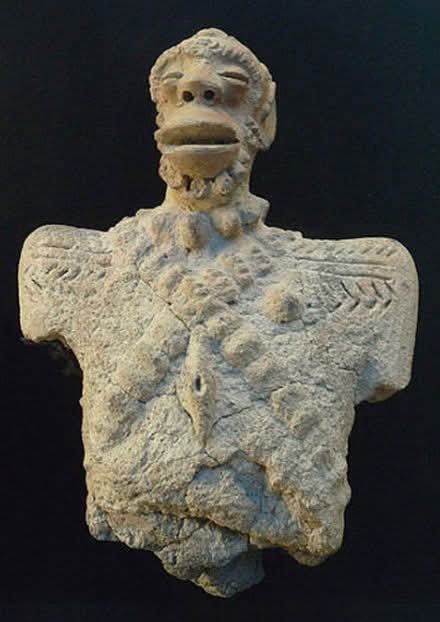
THE KANEM-BORNU EMPIRE: THE THOUSAND-YEAR AFRICAN SUPERSTATE THAT TRADED WITH OTTOMAN TURKEY, OUTWITTED THE FULANI JIHAD, AND LEFT ITS DNA ACROSS FOUR COUNTRIES
THE KANEM-BORNU EMPIRE: THE THOUSAND-YEAR AFRICAN SUPERSTATE THAT TRADED WITH OTTOMAN TURKEY, OUTWITTED THE FULANI JIHAD, AND LEFT ITS DNA ACROSS FOUR COUNTRIES
Excerpt…”When England was still a feudal patchwork of warring barons and France had not yet discovered what it wanted to be, the Sayfawa dynasty of Kanem-Bornu was already on its eight hundredth year of continuous rule around Lake Chad. They had Muslim scholars, Ottoman military advisors, a written legal code, a navy on the lake, and a postal messenger system. The world simply was not paying attention.”
The Kanem-Bornu Empire, centred around Lake Chad in what is today northeastern Nigeria, Niger, Chad, and northern Cameroon, stands as one of the longest-lasting political entities in documented human history. From its founding around 700 CE under the Sayfawa dynasty through its eventual collapse at the hands of the Sudanese warlord Rabih az-Zubayr in 1893, it endured for approximately twelve centuries under essentially one dynastic lineage, outlasting the Roman Empire, the Byzantine successor states, the Abbasid Caliphate, and every European monarchy that existed during its prime. It controlled the Central Sudan’s trans-Saharan trade, produced some of West Africa’s most sophisticated Islamic jurisprudence, deployed Ottoman-trained musketeers against fortified Hausa city-states, and exchanged diplomatic correspondence with Morocco, Ottoman Turkey, and the courts of North Africa. Yet most Nigerians learn more about the Roman Empire in school than about this civilisation that sat on their own soil.
The Sayfawa Dynasty: Twelve Centuries of One Family
The Sayfawa were not simply a royal house. They were a civilisational institution. Their dynastic legitimacy derived from a founding tradition connecting them to Sef, a figure whose Yemeni origin story almost certainly reflects later Islamic theological interpolation rather than literal genealogy, but whose mythological function within Kanuri political culture was to anchor the ruling family’s authority in a trans-regional religious legitimacy that commanded respect from Muslim trading partners across the Saharan world. The dynasty’s early rulers were pagan. It was not until around 1085 CE, under Mai Hummay, that Islam became the official religion of the court, a conversion that transformed Kanem from a regional power into a node in the global Islamic civilisational network spanning from Andalusia to Central Asia.
The significance of that conversion was immediately practical as much as theological. Islamic law provided Kanem with a commercial legal framework recognised across the entire Saharan and North African trading world, enabling merchants from Tripoli, Fezzan, and Egypt to conduct business in Kanem with enforceable contractual guarantees. The Arabic script provided a written administrative language capable of sustaining a bureaucratic state whose complexity would otherwise have exceeded the capacity of oral governance. The Hajj pilgrimage created a diplomatic highway connecting Kanem’s rulers directly to the political and religious centres of the Muslim world. Within a century of conversion, Kanem had a madrasa at the Al-Azhar mosque complex in Cairo, established by Mai Dunama Dibalemi in the thirteenth century, for the training of Kanuri scholars. That is not the behaviour of a peripheral state. That is the behaviour of an empire that understood the geopolitics of religious legitimacy.
The Trans-Saharan Highway: What Actually Moved Across the Desert
The trans-Saharan trade route that Kanem-Bornu controlled was not a road. It was a living system of oases, wells, caravan staging points, and political agreements that made the crossing of 1,500 kilometres of Saharan desert commercially viable across more than a millennium. The Fezzan route, connecting Lake Chad to Tripoli via the oases of the Libyan interior, was the commercial artery that Kanem’s geographic position allowed it to tax, protect, and dominate. Between Lake Chad and Fezzan lay a sequence of wells and oases spaced precisely enough to sustain loaded camel caravans, making this the most commercially convenient of all central Saharan crossings.
What moved along this route tells you everything about the economic architecture of the empire. Moving northward into North Africa and the Mediterranean: natron, the sodium carbonate mineral extracted from deposits around Lake Chad and essential to ancient preservation and textile processing; raw cotton and cotton cloth; kola nuts, whose stimulant properties made them prized across the Islamic world where alcohol was prohibited; ivory; ostrich feathers for the luxury goods markets of Cairo and Tripoli; wax; hides and tanned leather; and, most lucratively and most brutally, enslaved human beings captured in military raids against non-Muslim populations at the empire’s southern and eastern frontiers. Moving southward into the empire: salt from the Saharan salt mines of Bilma, without which the sub-Saharan diet was nutritionally compromised; horses, the central military technology of the Sahelian battlefield and the primary instrument of Kanem’s cavalry power; copper; glass beads; silk; and, by the sixteenth century, firearms from the Ottoman arsenals of North Africa.
The horses-for-slaves exchange deserves particular attention because it drove both the military capacity and the moral economy of the empire simultaneously. Horses died quickly in the tsetse fly belts of the equatorial south. Maintaining a cavalry force in the Sahel required constant replacement of horses from northern breeding grounds. The purchasing currency for those horses was enslaved people captured in frontier raids, which in turn required the cavalry to conduct those raids effectively. The empire’s military machine and its slave economy were not separate systems. They were the same system, operating in a closed loop that sustained Kanem-Bornu’s power for centuries while perpetually devastating the communities on its southern and eastern frontiers.
Mai Idris Alooma: The Lawmaker, the General, and the Diplomat
Of all the rulers who sat on the Bornu throne across twelve centuries, Mai Idris Alooma, who reigned from approximately 1571 to 1603, stands as the figure whose reforms most decisively shaped what the empire became in its mature period. His chronicler Ahmad ibn Fartuwa recorded his reign in Arabic in a text of sustained historical detail remarkable for its period, giving historians primary source access to a West African ruler’s methods and thinking that is rare before the nineteenth century.
Alooma’s legal reforms were systematic and deliberate. He separated the judiciary from the executive bureaucracy, creating an independent court system with appointed judges trained in Islamic jurisprudence rather than dependent on the political favour of the Mai. He established a court of appeals to review the judgments of lower courts, a structural innovation that built proportionality and review into the legal system rather than leaving final authority to arbitrary personal decision. He codified the existing mixture of Sharia and Kanuri customary law into a written framework that could be applied consistently across the empire’s diverse ethnic and geographic range. He appointed qualified Islamic legal scholars as judges, replacing politically convenient appointees with technically competent ones.
His military reforms were equally decisive. He recognised that the traditional cavalry charge was becoming tactically obsolete against fortified cities and disciplined infantry. Through his diplomatic relationship with the Ottoman Empire, he imported firearms, specifically muskets, and hired Turkish military advisors to train his forces in their use. His chronicler describes iron-helmeted musketeers, armoured horses and riders, Berber camelry units, and Kotoko boatmen for Lake Chad naval operations, all deployed together in coordinated military campaigns that combined traditional Sahelian cavalry tactics with Ottoman-influenced firepower. He fought, by one account, 330 wars and more than a thousand individual battles during his reign. He besieged Hausa city-states including Kano and Katsina into tributary status. He secured the trans-Saharan route against Tuareg raids by coordinating with the Ottoman governor of Tripoli.
His diplomatic record is extraordinary by any standard. He sent emissaries to the Ottoman court in Istanbul who extracted from the Sultan a formal guarantee of safety and property rights for all Bornu subjects traveling in Ottoman territory. He forged an alliance with Ahmad al-Mansur of Morocco. He established a permanent hostel in Mecca for Bornu pilgrims, funded from imperial revenue, which served as both a diplomatic mission and a religious facility simultaneously. A continental African ruler of the sixteenth century was maintaining standing diplomatic representation in the Ottoman Empire, Morocco, and Mecca while reforming his judiciary and modernising his military. The comparison that emerges, had European historians been paying consistent attention, would have complicated several centuries of convenient assumptions about African statecraft.
Kanem-Bornu vs the Sokoto Caliphate: Two Islams, Two Political Philosophies
The distinction between Kanem-Bornu and the Sokoto Caliphate established by Usman dan Fodio after 1804 is not merely chronological. It is civilisational. Kanem-Bornu was a Nilo-Saharan Kanuri state that adopted Islam as a legitimating framework for an existing political and commercial civilisation. The Sayfawa dynasty’s Islam was instrumentally integrated into a state whose essential character remained rooted in Kanuri ethnic identity, customary law, and the commercial requirements of the Saharan trade system. The Magira queens who held genuine political influence alongside the Mai, the council of clan heads whose advice Alooma formally institutionalised as a governance requirement, the mixture of Sharia and Kanuri customary law in the legal code, all reflect a political culture in which Islam was a powerful constituent element but not the exclusive organising principle.
The Sokoto Caliphate, by contrast, was founded as an explicitly reformist Islamic revolution against existing political orders that its founders deemed insufficiently Islamic, including, provocatively, the Bornu of its own time. When the Fulani jihad of Usman dan Fodio swept across the Hausa states beginning in 1804, it sent forces into Bornu as well, and Shehu Muhammad al-Amin al-Kanemi’s famous response, a series of written letters to the jihad’s leadership, is one of the most important documents in West African Islamic intellectual history. Al-Kanemi, an Islamic scholar and military commander who effectively saved Bornu from absorption into the Sokoto sphere, challenged the jihad’s theological justification for attacking Bornu on the grounds that Bornu was a Muslim state and that Muslims could not legitimately wage jihad against other Muslims. He won that argument in the letters, even as the political and military confrontation continued. Bornu survived as a distinct entity precisely because it had its own Islamic intellectual tradition robust enough to rebut the Sokoto caliphate’s theological claims on their own terms.
The DNA and the Diaspora: Who Are the Kanuri’s Closest Relations?
The genetic profile of the Kanuri, now established through genome-wide studies published in Science Advances, is one of the most complex in Nigeria. The Kanuri are Nilo-Saharan speakers whose ancestral base connects them most directly to the Kanembu, Zaghawa, and Toubou peoples of the central Saharan and Sahelian zone. Published genomic research has identified admixture events in the Kanuri dated to between 820 and 1760 CE involving three distinct ancestral sources: populations related to East Africans, populations related to West and Bantu-speaking southern Africans, and populations related to North Africans, Levantines, and Arabians. The dates of these admixture events overlap precisely with the period of the Kanem-Bornu Empire’s peak commercial and diplomatic activity, confirming that the empire’s trans-Saharan trade networks and slave trading left a measurable biological signature in the Kanuri gene pool as well as in the historical record.
Within Nigeria, the Kanuri’s closest ethnic and linguistic siblings are the Kanembu of Chad, the Manga subgroup in Niger, and, through the long history of commercial and political contact, the Hausa with whom they share significant vocabulary reflecting centuries of trade-driven bilingualism. The Nga people of Bauchi State in Nigeria trace their origin specifically to a Kanuri diaspora, representing one of the most clearly documented internal Nigerian diaspora traditions. The Kotoko of northeastern Nigeria and northern Cameroon, a Chadic-speaking people, show genetic admixture patterns that overlap with Kanuri historical absorption during the empire period, reflecting the biological reality of centuries of political incorporation.
Beyond Nigeria, the Kanuri diaspora extends into Sudan, where an estimated 381,000 Kanuri speakers live, and into the communities of enslaved Kanem-Bornu subjects dispersed northward across the Sahara into North Africa, the Middle East, and through the Ottoman slave trade into the eastern Mediterranean world. The genetic signature of West Central African ancestry found in populations across Libya, Tunisia, and southern Turkey carries within it the biological legacy of the Kanem-Bornu slave trade operating in reverse: the people the empire sold northward left descendants who still carry their ancestral markers in DNA databases that nobody has yet systematically mined for the Kanuri connection.
This History Demands the following urgent policies for immediate implementation.
The Nigerian Federal Ministry of Education must incorporate Kanem-Bornu’s legal, diplomatic, and administrative history as a mandatory, examination-assessed component of secondary school history across all states, not as a northern Nigerian regional history but as a core episode in African state formation that belongs equally to the national curriculum of a country that contains Borno State within its borders. A citizenry that knows more about the Magna Carta than about Mai Idris Alooma’s judicial reforms is a citizenry that has been miseducated about the origins of institutional governance on its own continent.
The University of Maiduguri, as the premier institution within the geographic heartland of the former Bornu Empire, must establish a dedicated Kanem-Bornu Civilisational Archive and Research Institute with a triple mandate: systematic digitisation and translation of the Arabic-language Diwan chronicles and historical records currently held in fragmentary form across Nigerian, Chadian, and international archives; active population genetics research investigating the Kanuri genetic diaspora and its connections to communities across North Africa and the Middle East; and a public-facing museum and educational programme housed within the Shehu’s Palace cultural complex in Maiduguri that makes this history physically accessible to the Nigerian public.
The African Union must formally recognise Kanem-Bornu’s twelve-century Sayfawa dynasty in the continental heritage register as one of Africa’s longest-documented governing institutions, and must commission a joint Nigeria-Niger-Chad-Cameroon diplomatic history initiative that treats Kanem-Bornu’s cross-border legacy as a shared regional civilisational inheritance rather than as a possession of whichever national government’s territory contains the largest remnant of its former geography. An empire that predates every national boundary in its region by more than a millennium belongs to the entire region, not to the administrative convenience of post-colonial borders drawn by Europeans who had never heard of the Sayfawa.
Kanem-Bornu did not fall because it was weak. It endured twelve centuries precisely because it was adaptable, institutionally creative, and intellectually serious about governance. It fell because the nineteenth century brought external military technologies and geopolitical forces that no Sahelian state, however sophisticated, had the structural capacity to absorb. That is not a failure of African civilisation. It is the consequence of colonialism meeting one of Africa’s most durable political achievements at the precise historical moment when that achievement had no time left to adapt.
Ire ooo
References
- Ibn Fartuwa, Ahmad. History of the First Twelve Years of the Reign of Mai Idris Alooma of Bornu, 1571-1583. Translated by H.R. Palmer. Lagos Government Printer, Lagos, 1926. Reprinted Frank Cass, London, 1970.
- Palmer, H.R. Sudanese Memoirs: Being Mainly Translations of a Number of Arabic Manuscripts Relating to the Central and Western Sudan. 3 vols. Government Printer, Lagos, 1928.
- Urvoy, Y. Histoire de l’Empire du Bornou. Institut Français d’Afrique Noire, Dakar, 1949.
- Brenner, Louis. The Shehus of Kukawa: A History of the al-Kanemi Dynasty of Bornu. Clarendon Press, Oxford, 1973.
- Cohen, Ronald. The Kanuri of Bornu. Holt, Rinehart and Winston, New York, 1967.
- Lange, Dierk. A Sudanic Chronicle: The Borno Expeditions of Idris Alauma. Franz Steiner Verlag, Wiesbaden, 1987.
- Trimingham, J. Spencer. A History of Islam in West Africa. Oxford University Press, London, 1962.
- Lavers, John E. “Islam in the Bornu Caliphate: A Survey.” Odu: A Journal of West African Studies, No. 5, 1971.
- Fage, J.D., and Roland Oliver, eds. The Cambridge History of Africa. Vol. 3. Cambridge University Press, Cambridge, 1977.
- Isichei, Elizabeth. A History of Nigeria. Longman, London, 1983.