General Hassan Usman Katsina remains one of the most influential military figures in Nigeria’s
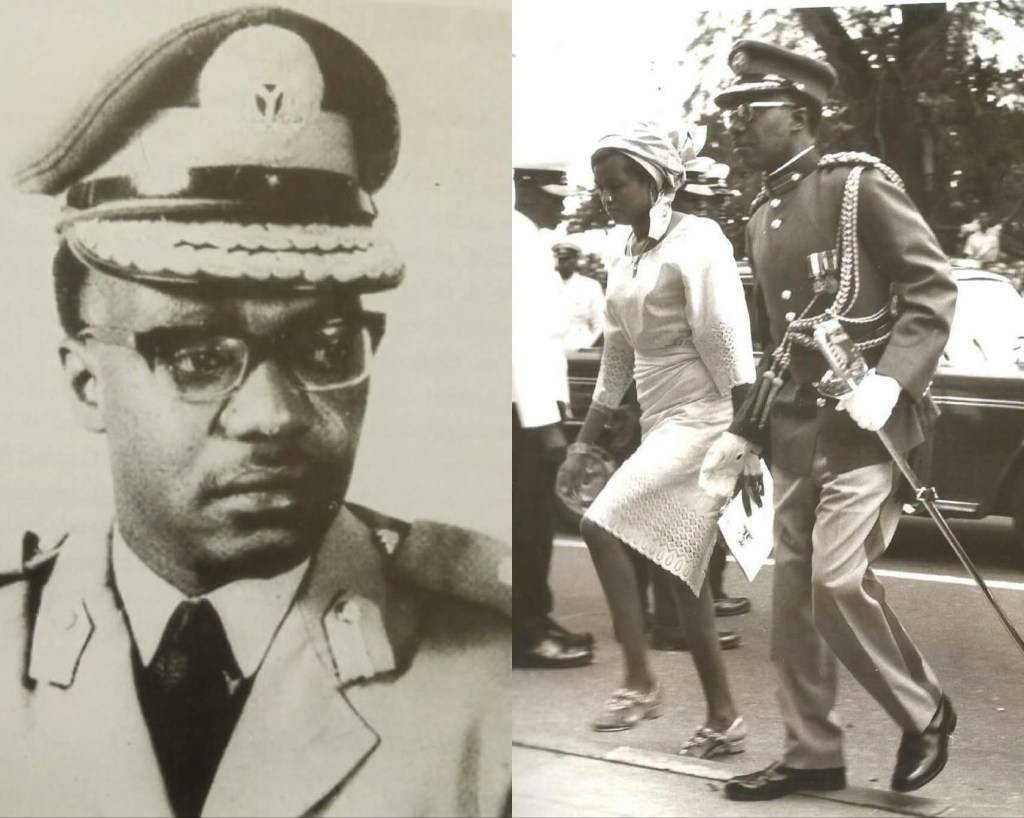
General Hassan Usman Katsina remains one of the most influential military figures in Nigeria’s postcolonial history. As the last Governor of Northern Nigeria, Chief of Army Staff during the Nigerian Civil War, and a senior member of the Supreme Military Council, he occupied a central position during one of the most turbulent periods in the country’s development. His career intersected with the collapse of the First Republic, the military coups of 1966, the constitutional crisis that culminated in the Nigerian Civil War, and the reconstruction of the Nigerian Army. This article examines his life, military career, political leadership, and historical legacy through existing scholarly literature and primary historical accounts.
The history of modern Nigeria cannot be fully understood without examining the careers of the military officers who shaped the country’s political direction after independence. Among these officers, General Hassan Usman Katsina occupies a unique place. Unlike many of his contemporaries, Katsina combined aristocratic heritage with professional military training and political pragmatism. His leadership during the crises of 1966 and throughout the Nigerian Civil War significantly influenced the survival of the Nigerian federation.
Although his public image has often been overshadowed by more widely discussed figures such as Yakubu Gowon, Murtala Mohammed, and Olusegun Obasanjo, historical evidence demonstrates that Katsina was one of the principal actors behind several of the most consequential decisions made between 1966 and 1970.
Early Life and Family Background
Hassan Usman Katsina was born on 31 March 1933 in Katsina into one of Northern Nigeria’s most distinguished royal families. He belonged to the Sullubawa branch of the Fulani ruling dynasty that had governed the Katsina Emirate for generations.
His father, Emir Usman Nagogo, served as the forty eighth Emir of Katsina from 1944 until 1981, while his grandfather, Muhammadu Dikko, ruled as the forty seventh Emir from 1906 to 1944. Through this lineage, Hassan Usman Katsina inherited close ties to the traditional political institutions that continued to exercise considerable influence during the colonial and postcolonial periods.
As the holder of the traditional title of Chiroman Katsina, he occupied an important position within the emirate hierarchy even before his rise in national politics.
Education and Military Formation
Katsina received his secondary education at Barewa College in Zaria, one of the most prestigious schools established by the colonial administration for Northern Nigeria’s future leaders. Barewa College produced numerous politicians, administrators, diplomats, and military officers who later dominated Nigerian public life.
He later attended the Nigerian College of Arts, Science and Technology in Zaria before joining the Nigerian Army in 1956.
His military education reflected Britain’s continuing influence over the Nigerian armed forces before independence. He trained at the Mons Officer Cadet School and subsequently at the Royal Military Academy Sandhurst in the United Kingdom. Sandhurst was the premier institution for training British and Commonwealth officers and produced many African military leaders during the decolonisation era.
These experiences exposed Katsina to professional military doctrine while also introducing him to officers who would later become influential across Africa.
Early Military Career
Following his commissioning, Katsina steadily advanced through the Nigerian Army. Before Nigeria’s independence in 1960, the army remained largely under British command, and Nigerian officers were gradually assuming greater responsibilities.
Katsina commanded troops stationed in Kano and Kaduna and later served with Nigerian forces deployed to the United Nations peacekeeping mission during the Congo Crisis of the early 1960s. His service earned him the Congo Medal and strengthened his reputation as a capable officer.
By the mid 1960s, he had emerged as one of the most senior Northern officers and enjoyed close relationships with Northern political leaders, particularly those associated with the Northern People’s Congress.
The January 1966 Coup and Appointment as Military Governor
Nigeria’s First Republic collapsed on 15 January 1966 following the military coup led principally by Major Chukwuma Kaduna Nzeogwu and other young officers.
At the time, Major Hassan Katsina commanded the First Reconnaissance Squadron based in Kaduna. Reports of gunfire near the residence of Premier Sir Ahmadu Bello prompted him to dispatch reconnaissance personnel to investigate. His men discovered the bodies of Bello’s security personnel as well as Brigadier Samuel Ademulegun and his wife, confirming that the coup had claimed several senior political and military figures.
After Major General Johnson Aguiyi Ironsi suppressed the coup and assumed power as Nigeria’s first military Head of State, he appointed Hassan Katsina Military Governor of Northern Nigeria.
This appointment has been described by historian Max Siollun as politically strategic. Because Katsina belonged to the Northern establishment and possessed strong ties with traditional rulers, he was considered capable of calming widespread anger across Northern Nigeria after the assassination of its most prominent political leaders.
One of his earliest responsibilities as governor was accepting the surrender of Major Nzeogwu, who had established effective control over Kaduna during the failed coup.
Governing Northern Nigeria During National Crisis
As Military Governor, Katsina automatically became a member of the Supreme Military Council, the highest governing authority in Nigeria.
His tenure coincided with increasing ethnic tension following the introduction of the Unification Decree No. 34, which sought to abolish Nigeria’s federal structure in favour of a unitary system.
Years later, Katsina admitted that although he publicly supported the decree, he privately anticipated widespread resistance in Northern Nigeria. The decree intensified fears among many Northerners that federal safeguards protecting regional autonomy were being dismantled.
Compounding these concerns were rumours and misinformation, including false claims that the federal government intended to prevent Muslims from performing the Hajj pilgrimage. Katsina personally toured parts of Northern Nigeria to counter these rumours and reduce growing public anxiety.
Despite these efforts, anti Igbo violence spread across the region during 1966. Historians continue to debate the extent of responsibility borne by senior military authorities. Evidence suggests that Katsina attempted to halt violence in several instances, personally intervening alongside the Emir of Kano to stop killings and looting. He also organised the evacuation of vulnerable Southern military officers, including the future President Olusegun Obasanjo.
At the same time, scholars have noted that certain decisions made by Northern military authorities, including permissive rules allowing soldiers to defend themselves and the dissemination of inflammatory broadcasts, contributed to the conditions that enabled widespread violence. Katsina’s historical legacy therefore reflects both efforts at reconciliation and his association with a military administration unable to prevent one of Nigeria’s darkest episodes.
The July 1966 Counter Coup
The deteriorating political climate culminated in the military counter coup of July 1966, during which General Aguiyi Ironsi and numerous Southern officers were killed.
Although Katsina did not participate directly in planning the coup, he accepted the resulting political transition and joined negotiations with Northern officers advocating secession.
Together with senior civil servants, foreign diplomats, and moderate military officers, he helped persuade radical elements to abandon plans for an independent Northern state. These negotiations ultimately produced the compromise that elevated Lieutenant Colonel Yakubu Gowon to the position of Head of State.
This decision preserved Nigeria’s territorial unity, although the country remained deeply divided.
Administrative Leadership in Northern Nigeria
Beyond managing political crises, Katsina sought to preserve the administrative achievements established under Sir Ahmadu Bello.
He retained experienced civil servants who ensured continuity in governance and relied upon respected officials such as Ibrahim Dasuki, who later became Sultan of Sokoto, Ali Akilu, and Sunday Awoniyi.
His administration also coincided with the emergence of what later became known as the Kaduna Mafia, a network of highly educated Northern civil servants, academics, technocrats, and military officers who exercised considerable influence over national policy for decades.
Katsina also chaired the Interim Common Services Agency, which coordinated the distribution of regional assets following constitutional changes affecting Northern Nigeria.
Recognising the enduring legitimacy of traditional institutions, he strengthened cooperation between his government and the emirate councils and considered restoring aspects of the Native Authority system that had operated during colonial rule.
The Aburi Conference and Constitutional Negotiations
In January 1967, Katsina participated in the historic Aburi Conference in Ghana alongside other members of the Supreme Military Council and Lieutenant Colonel Chukwuemeka Odumegwu Ojukwu.
The conference sought to resolve Nigeria’s constitutional crisis through negotiation.
According to historical accounts, Katsina viewed the conflict largely as a political dispute driven by competing personalities rather than irreconcilable national interests. Nevertheless, he supported proposals granting greater regional autonomy, believing that decentralisation could ease political tensions.
Despite the agreements reached at Aburi, disagreements over implementation soon emerged. Their collapse directly contributed to Eastern Nigeria’s declaration of independence as the Republic of Biafra and the outbreak of civil war.
Chief of Army Staff During the Nigerian Civil War
In 1968, following the death of Major General Joseph Akahan, Hassan Katsina became Chief of Army Staff.
He inherited responsibility for coordinating the Nigerian Army during the most decisive phase of the Civil War.
Under his leadership, the army expanded substantially in size, improving Nigeria’s operational capacity against Biafran forces. Military strategy also included tightening the blockade around Biafra and increasing air support, including assistance provided by the United Arab Republic, today’s Egypt.
These measures contributed significantly to the federal military campaign that culminated in the surrender of Biafra on 15 January 1970.
Katsina personally witnessed the formal surrender, marking the end of nearly three years of devastating conflict.
Retirement and Public Service
Following the military coup that removed General Yakubu Gowon in July 1975, General Hassan Katsina retired from military service as one of Nigeria’s most senior and experienced officers.
Unlike many retired military leaders, he declined numerous government appointments and maintained a relatively low political profile.
Nevertheless, he remained active in public affairs. He participated in establishing the National Party of Nigeria during the Second Republic and later became associated with the Committee of Concerned Citizens, which advocated democratic reforms.
Outside politics, Katsina played an important role in Nigerian polo. He served as President of the Nigerian Polo Association, continuing a family tradition established by his father, Emir Usman Nagogo, who was recognised as one of the pioneers of polo in Nigeria.
Death and Historical Legacy
General Hassan Usman Katsina died in Kaduna on 24 July 1995 at the age of sixty two.
His legacy remains both significant and complex. He is remembered as the last Governor of Northern Nigeria before the creation of states, a senior architect of the Nigerian Army during the Civil War, and a respected member of the country’s traditional aristocracy.
Historians continue to debate aspects of his role during the violence of 1966, particularly concerning the anti Igbo massacres in Northern Nigeria. While evidence demonstrates that he undertook several actions to rescue civilians and military officers, it also indicates that he operated within a military system whose failures contributed to widespread atrocities.
Viewed in historical perspective, Katsina represents the contradictions of Nigeria’s first generation of military leaders. He combined professionalism with political influence, traditional authority with modern military leadership, and national service with difficult moral and political choices made during an era of extraordinary national crisis.
General Hassan Usman Katsina occupies an important place in Nigerian history because of his contributions to military professionalism, national administration, and the preservation of Nigeria during one of its gravest challenges. His leadership during the collapse of the First Republic, the constitutional crisis of 1966, the Aburi negotiations, and the Nigerian Civil War demonstrates both the opportunities and limitations faced by military leaders in postcolonial Africa.
Modern scholarship increasingly recognises that his historical significance extends beyond the battlefield. His career illustrates the interaction between traditional authority, military power, and state formation in post independence Nigeria, making him an indispensable figure in understanding the evolution of the Nigerian state.
 Hi welcome to my website