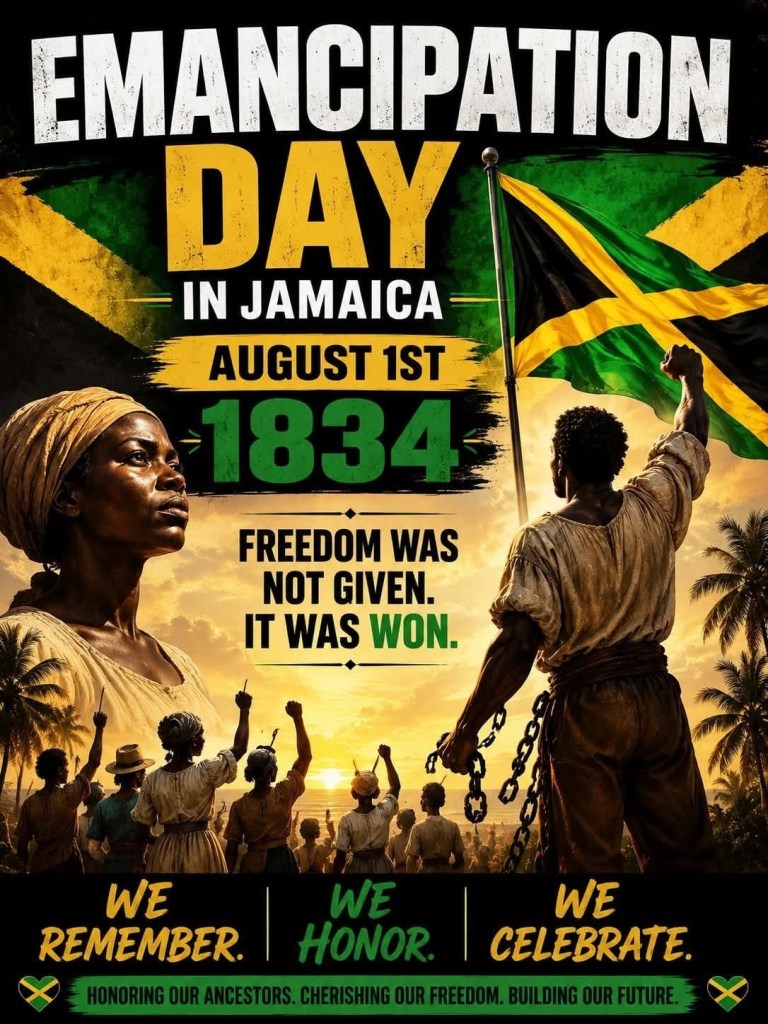
On August 1, 1834, the British Slavery Abolition Act took effect, changing the legal status of 311,000 African people enslaved in Jamaica.
On August 1, 1834, the British Slavery Abolition Act took effect, changing the legal status of 311,000 African people enslaved in Jamaica. However, this date did not grant immediate total freedom; instead, it launched a forced “apprenticeship” system that required formerly enslaved people to continue unpaid labor for their old masters.
The passage of this bill in the British Parliament in England enabled approximately 311,000 enslaved Africans in Jamaica and hundreds of thousands more across the colonies the freedom for which many of their predecessors had fought and died. However, the Africans did not receive full freedom until four years later, as all slaves over six years old were subjected to a mandatory six-year period of apprenticeship. The ex-slaves would work without pay for their former masters for three-quarters of the week (40 hours), in exchange for lodging, food, clothing. medical attendance and grounds on which they could grow their own provisions. They could also, if they chose, hire themselves out for additional wages during the remaining quarter of the week. With this money, an ex-slave could then buy his freedom.