General Domkat Bali: The Soldier Who Resigned Over His Own Rank
General Domkat Bali: The Soldier Who Resigned Over His Own Rank
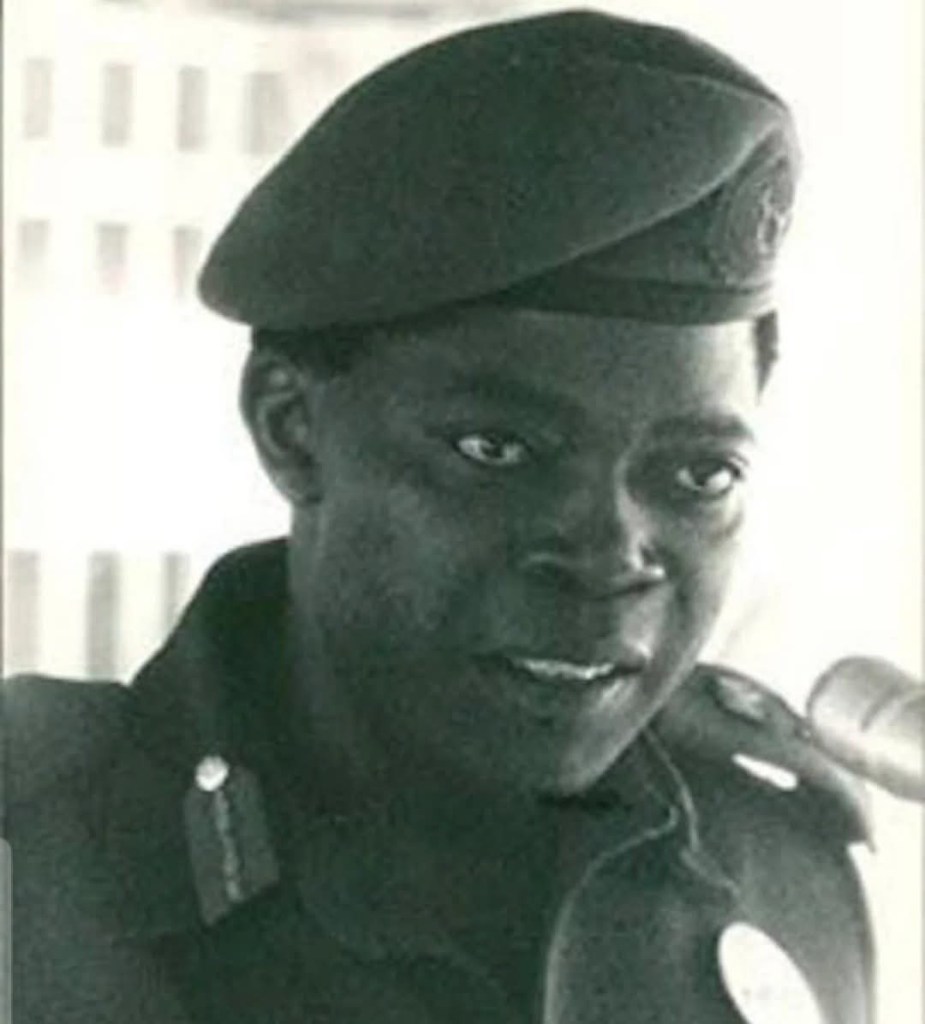
General Domkat Yah Bali stands out among Nigeria’s military-era power brokers for an unusual reason — he ended his own celebrated career not through scandal or defeat, but through a principled protest rooted entirely in military hierarchy and professional honor.
Born February 27, 1940, in Zamko, Langtang, Plateau State, Bali attended elementary school in Mban and Langtang before continuing at Provincial Secondary School, Kuru, from 1955 to 1960 — his formative years unfolding as Nigeria approached its own independence. He entered the Nigerian Military Training College in Kaduna in April 1961, the same year he attended the Royal Military Academy Sandhurst in England, later completing further training at the Gunnery Staff Course in Larkhill, the Staff College in Camberley, and the Royal College of Defence Studies — an education that placed him firmly among the British-trained officer class shaping the post-independence Nigerian military.
Bali fought on the federal side during the Nigerian Civil War as a regimental commander, and his career advanced steadily afterward: battery commander in 1966, promoted to major in 1968, commander of the Corps of Artillery from 1970, colonel in the Second Infantry Division in Ibadan, and General Officer Commanding the First Infantry Division in Kaduna by 1978. He served as Commandant of the Nigerian Armed Forces Command and Staff College from 1981 to 1983 and Director of Army Training and Operations before reaching the peak of his military career.
Bali was one of the arrowheads of the December 31, 1983 coup led by General Muhammadu Buhari, which toppled the Second Republic government of Shehu Shagari, and he served as Minister of Defence and Chief of Defence Staff under Buhari from 1984. He also played an active role in the August 27, 1985 coup that replaced Buhari with Ibrahim Babangida — remaining in his defence posts through the transition, continuing as Minister of Defence and member first of the Supreme Military Council (1984–1985) and then the Armed Forces Ruling Council (1985–1990).
One of the more troubling episodes of his career involved the 1985 Mamman Vatsa coup plot — Bali, as Chief of Defence Staff, publicly announced the guilt and subsequent execution of General Mamman Vatsa and several other officers. Years later, in a 2006 interview, Bali expressed genuine doubt about that decision, admitting he was never certain the execution had been justified given how weak the evidence against Vatsa ultimately seemed — a rare instance of a senior military figure publicly second-guessing a lethal decision he’d helped carry out.
His military career ended in January 1990, when General Babangida reshuffled his cabinet and effectively demoted Bali by removing him from his defence positions. Bali resigned in protest, explaining later that his objection was rooted purely in matters of seniority: he had been senior in rank to both Babangida and Buhari, yet had served under both of them as their subordinate defence minister — a situation he could tolerate as long as they held the position of head of state, but not once that arrangement was altered in a way he considered a demotion beneath his actual rank. That principled stand ended a 29-year military career.
After leaving the army, Bali became Chairman of HFP Engineering, the construction firm behind Lagos’s iconic Victoria Garden City development. In 2010, two decades after retiring, he was selected as the Ponzhi Tarok, paramount ruler of the Tarok people of Plateau State — a traditional leadership role he held until his death, giving him a second significant chapter of public service rooted in his own community rather than national military politics. Notably, in 2011, Bali rejected a national honour offered by President Goodluck Jonathan, objecting that it made no sense to him — a final display of the same stubborn personal principle that had ended his military career two decades earlier.
General Domkat Bali died on December 4, 2020, at age 80, remembered by colleagues and historians alike as a soldier’s soldier — a man whose 29-year career sat at the very center of Nigeria’s military governance era, and whose defining moment came not from a battlefield victory, but from walking away rather than accepting what he saw as an affront to his own hard-earned rank.
 Hi welcome to my website