IN HISTORY: ON THIS DAY, AUGUST 28, 1993 — NIGERIAN WORKERS STR1K€ FOR DEMO#CRACY.
IN HISTORY: ON THIS DAY, AUGUST 28, 1993 — NIGERIAN WORKERS STR1K€ FOR DEMO#CRACY.
On this day, August 28, 1993, Nigerian workers began a major str1ke demanding an end to milit@ry rule and the restoration of d€mocr@cy, deepening the politic@l cr1sis that had followed the @nnulment of the June 12 pres1dential election.
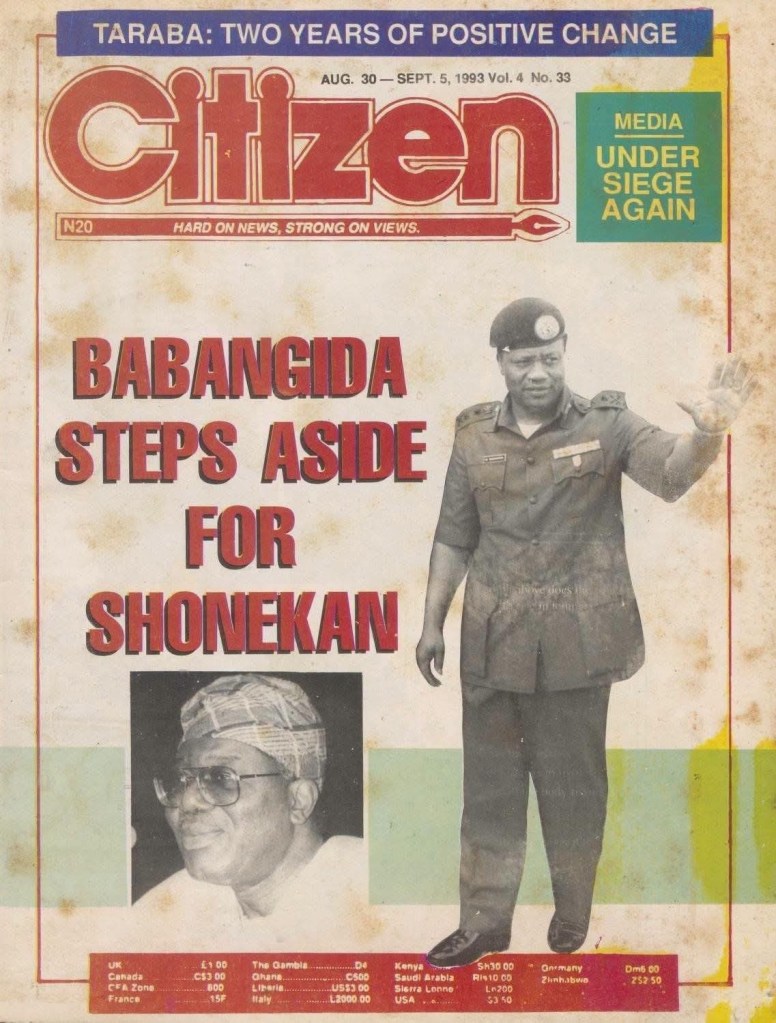
Just two days earlier, on August 26, General Ibrahim Babangida had stepped aside as m1lit@ry pres1dent, handing pow€r to an Interim National Govern^ment headed by Chief Ernest Shonekan.
But Babangida’s departure did not bring an end to the cr1sis.
Oil workers, led by the National Union of Petroleum and Natural Gas Workers (NUPENG), joined the industrial action, putting further pressure on the new government.
The strike affected important sectors of the €conomy, while the country remained tense over the unresolved June 12 election cr1sis.
Many Nigerians regarded the Shonekan administration as l@cking a genuine democr@tic mandate, particularly because it emerged after the milit@ry @nnulled the €lection widely believed to have been won by Chief M.K.O. Abiola.
The events of August 28 became another important chapter in Nigeria’s tur^bul€nt journey toward democr@cy.
And the cr1sis was far from over. Only months later, on November 17, 1993, General Sani Abacha r€moved Shonekan and took control of the govern^ment.
📰 The contemporary Citizens magazine headline, “BABANGIDA STEPS DOWN FOR SHONEKAN,” captures the extraordinary politic@l transition taking place in Nigeria at the time.
A day when Nigeria’s struggle for democr@cy entered another dr@matic chapter. 🇳🇬
 Hi welcome to my website