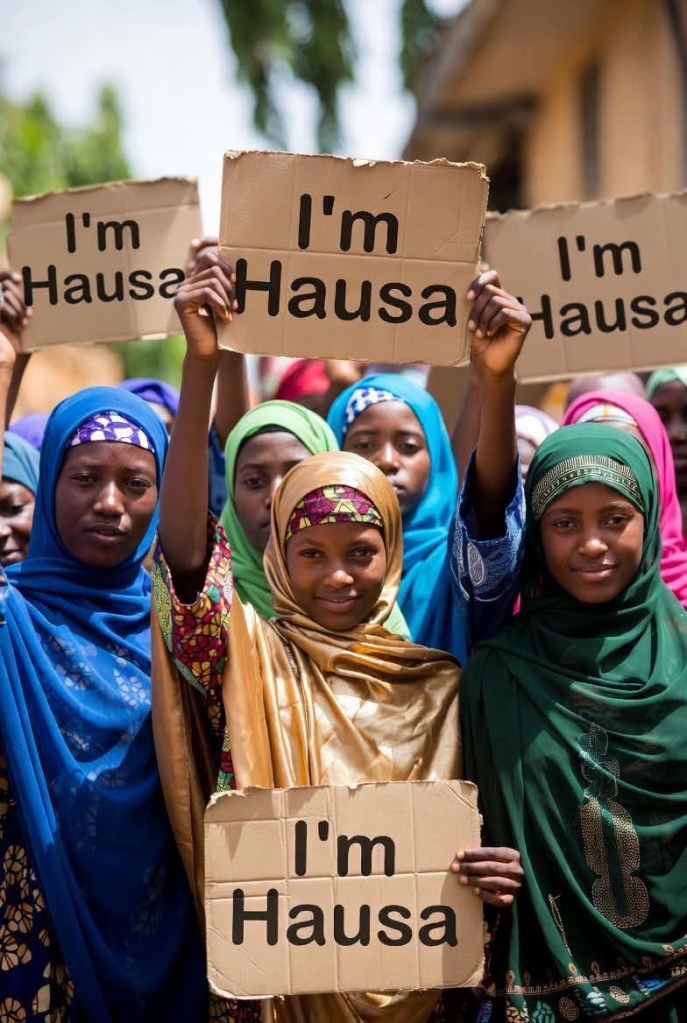
The Hausa language is better than Arabic, English, Portuguese, Spanish, German, and French. I am saying this as a matter of reality, not because I am Hausa.
The Hausa language is better than Arabic, English, Portuguese, Spanish, German, and French. I am saying this as a matter of reality, not because I am Hausa.
Among the world major languages that are widely spoken around the world such as Arabic, English, Portuguese, Spanish, German, and French many spread and gained global reach through conquest, force, colonialism, and the domination of other peoples.
But Hausa language is different. The Hausa people did not conquer or colonize other nations and force them to learn or speak Hausa as second language. If you see someone speaking Hausa, they generally learned it voluntarily, because of its simplicity, beauty, and the admirable character of the Hausa people in their interactions with others.
Let me quote what Engr.Abdurrazak Nakore Once Wrote:
”Many people fail to understand the role of the Hausa language in Northern Nigeria and indeed the greater part of West and Central Africa. Hausa language is like Arabic and English to the World. Hausa is today the most widely spoken language in sub- Saharan Africa. So the Hausa people have given their language to serve as a lingua franca for Africa. Two factors are responsible for this. First the language is so simple to learn and second, the Hausawa are ever ready to share their language with the outside World by their insistence that they use their language as a means of communicating wherever they found themselves. Hausawa, even in foreign lands, don’t adopt the local languages, rather they insist on using their own.
So who soever wants to interact with them should do so in their own language.
These have really promoted the Hausa language in such a way that even the imperial powers of the Europeans could not contain it.”
We speak our language wherever we find ourselves. We are not ashamed of it, nor do we hide it. Instead, we teach Hausa to anyone who develops an interest in learning it.
This is one of the secrets behind the widespread influence and popularity of the Hausa language across Africa. Today, Hausa is among the world’s major languages, spoken by millions of people across the continent.
The story of Hausa is therefore not simply a story of a language; it is a story of cultural influence without imperial coercion. Hausa spread across West and Central Africa through trade, migration, scholarship, religion, intermarriage, marketing, and peaceful social interaction.
For centuries, Hausa-speaking traders, scholars, artisans, and communities travelled far beyond Hausaland, carrying their language and culture with them. In many places, people adopted Hausa because it became useful as a language of commerce, communication, education, and social interaction.
Hausa has also shown remarkable resilience. Despite the rise of colonial languages and other dominant languages, it continues to serve as a major lingua franca across large parts of West Africa. Its continued growth demonstrates that a language does not always need political domination to become influential it can spread through culture, commerce, community, and voluntary adoption.
That is the beauty of Hausa: a language that travelled not by conquest, but through connection.