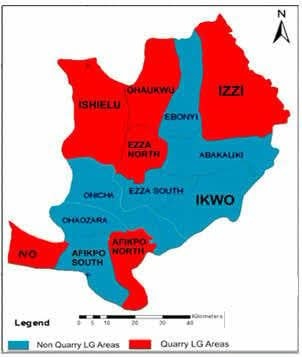
TRUTH THAT ABAKALIKI DIDN’T COME FROM IGBOLAND? THE STORY BEHIND EZZA, IZZI, IKWO & NGBO
TRUTH THAT ABAKALIKI DIDN’T COME FROM IGBOLAND? THE STORY BEHIND EZZA, IZZI, IKWO & NGBO
A striking historical account is challenging the popular narrative about Abakaliki and the people who built the area.
According to the account, Ezza, Izzi, Ikwo and Ngbo are the indigenous peoples who developed the land, with traditions tracing their ancestry to Abejukolo in present-day Kogi State, Igala country.
One of the strongest pieces of claimed evidence is found in the titles of traditional rulers, including the Izzi traditional ruler, Agabaidu Enyi.
The story says Enyi had three sons, whom he sent out to find food. One returned with a large yam and farm produce, another with a large fish, while the first returned carrying a human head.
As Enyi approached death, he named and blessed his sons based on what they brought home:
🔹 Ezza — associated with warfare, enterprise and expansion.
🔹 Izzi — associated with land, farming and abundant harvest.
🔹 Ikwo — associated with fishing, water and farming.
From what you read above, check the below history.
The Ikwo, Ezza, and Izzi people originate from a shared legendary ancestor named Ekumenyi (or sometimes traced through Enyi Nwegu), making them closely related sibling clans known collectively as Umuekumenyi.
The Ancestral Lineage Ekumenyi: Oral tradition identifies him as the foundational father figure who populated the area that is now Ebonyi State.Ezekuna: Tradition regards Ezza as the eldest son of Ekumenyi (with his wife, Anyingor), settling first in Onueke, which remains the historic ancestral home of the Ezza people (Okpoku Ezekuna).
Izzi and Ikwo: Alongside Ezza, the lineage includes Izzi and Ikwo as co-descendants or brothers from the same ancestral root, who eventually spread out to occupy distinct territories across present-day Ebonyi State.
Migration and Settlement Ezza: As the eldest, the Ezza group expanded extensively across the region, establishing powerful communities rooted around Onueke and spreading into multiple local government areas.Ikwo: Descendants moved into fertile, river-surrounded areas well-suited for farming, fishing, and hunting, eventually forming the largest local government area by landmass in Ebonyi State.
Izzi: Settled further north and east, with historic ties to areas that encompass modern-day Abakaliki (whose name itself derives from Aba Nkaleke, an old Izzi community).Shared Identity Umuekumenyi: Though they speak distinct local dialects with slight tonal variations, all three groups share deep cultural, traditional, and linguistic ties under the Umuekumenyi identity.
Occupational Traditions: Over generations, their environments shaped their traditional ways of life—Ikwo centered heavily around rivers and agriculture, Izzi around land cultivation, and Ezza as wide-ranging pioneers and settlers.
The account argues that these traditions can still be seen today: Ikwo around fishing, water and rice; Izzi around farming; and Ezza spreading widely across different areas.
It further claims that modern Abakaliki grew from Aba-Nkelenke, described as an old Izzi settlement. The British later made Abakaliki the headquarters of Ogoja Province, before it eventually became the capital of Ebonyi State in 1996.
Even the name Ebonyi, according to the account, comes from the Ebonyi River.
The bigger argument is simple:
A state may be created by governments, boundaries may be redrawn and places may be renamed — but the history and identity of the people who occupied and developed the land existed long before those modern borders.
A STATE HAS A DATE. A PEOPLE HAVE A HISTORY.
But for me I am from Ebonyi and I am pure IGBO