
𝗧𝗛𝗘 𝗦𝗧𝗔𝗧𝗘𝗦𝗠𝗔𝗡’𝗦 𝗖𝗢𝗠𝗣𝗔𝗦𝗦
𝗧𝗛𝗘 𝗦𝗧𝗔𝗧𝗘𝗦𝗠𝗔𝗡’𝗦 𝗖𝗢𝗠𝗣𝗔𝗦𝗦
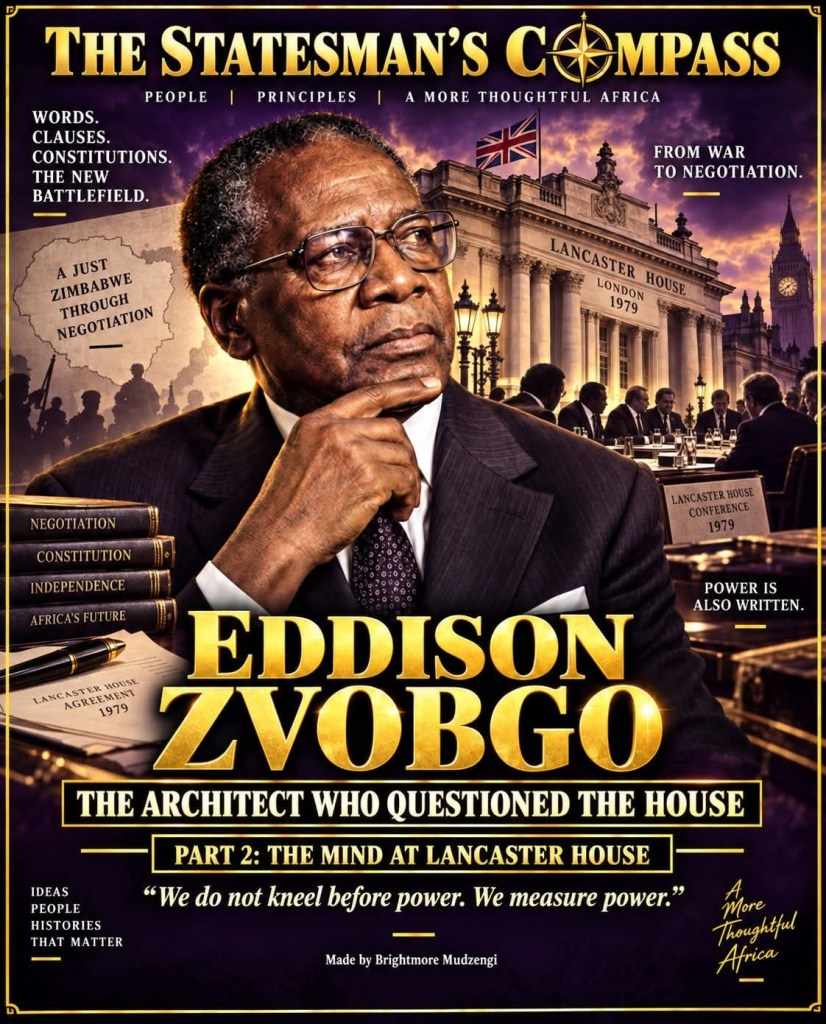
𝗘𝗗𝗗𝗜𝗦𝗢𝗡 𝗭𝗩𝗢𝗕𝗚𝗢 — 𝗧𝗛𝗘 𝗔𝗥𝗖𝗛𝗜𝗧𝗘𝗖𝗧 𝗪𝗛𝗢 𝗤𝗨𝗘𝗦𝗧𝗜𝗢𝗡𝗘𝗗 𝗧𝗛𝗘 𝗛𝗢𝗨𝗦𝗘
𝙏𝙝𝙚 𝙜𝙪𝙣𝙨 𝙝𝙖𝙙 𝙣𝙤𝙩 𝙮𝙚𝙩 𝙛𝙖𝙡𝙡𝙚𝙣 𝙨𝙞𝙡𝙚𝙣𝙩.
But another battle had already begun.
In September 1979, representatives of Rhodesia’s competing forces arrived at Lancaster House in London. The liberation war had reached the negotiating table, where rifles gave way to words, clauses and constitutional design.
This was precisely the kind of battlefield on which Eddison Zvobgo could become useful. Legally trained and politically experienced, he served as a ZANU-PF representative and spokesman during the negotiations. Contemporary accounts and later recollections describe him as a forceful advocate whose quick responses and legal-political analysis attracted international journalistic attention. The precise extent of his role in drafting particular provisions is less clear, however, and should not be overstated.
Zvobgo did not single-handedly negotiate Zimbabwe’s independence. Robert Mugabe and Joshua Nkomo led the Patriotic Front delegations; Britain, under Foreign Secretary Lord Carrington, convened the conference; and Bishop Abel Muzorewa represented the Zimbabwe-Rhodesia government. Zvobgo operated within this larger contest over how the war would end, who would control the transition, how elections would be held, what would happen to land, and what constitution the new Zimbabwe would inherit.
Lancaster House was therefore a negotiated compromise, not simply independence being “won” in London. The liberation movements brought military and political pressure; Britain retained the legal authority and international recognition needed to transfer sovereignty; and the existing Rhodesian order still controlled important institutions and economic assets. Each side possessed something the others needed.
One of the settlement’s most consequential compromises concerned land and property. The independence constitution included strong protections for property rights and required compensation for compulsory acquisition, subject to the constitutional rules then in force. Land acquisition generally followed a willing-seller, willing-buyer principle, with Britain undertaking to assist financially with resettlement. These protections were entrenched for a transitional period, commonly described as the first ten years, although later constitutional amendments changed the legal position.
The constitution also created a 100-seat House of Assembly, with 20 seats initially reserved for members elected from separate white electoral rolls. This was a constitutional arrangement intended to reassure the white minority and secure the settlement, with the seats scheduled to lapse after the transitional period, subject to the constitutional text and subsequent amendments.
Independence therefore brought political majority rule without immediately dismantling every economic structure inherited from colonial Rhodesia. Political power had changed hands, but economic transformation was far more complicated. That tension would shape Zimbabwean politics for decades.
Lancaster House ended one political order, established the constitutional path to internationally recognised independence and helped terminate a devastating war. Its compromises also preserved institutions and protections that could later be repurposed. A settlement designed to restrain conflict could, in time, provide the legal framework through which authority was consolidated.
Zvobgo — lawyer, nationalist and political communicator — witnessed how constitutions are actually born: not from philosophy alone, but from power, fear, pressure, compromise and political calculation. He also saw the paradox at the heart of constitutional compromise: rules negotiated to distribute power and secure peace could later be amended, narrowed or redirected to concentrate power at the centre.
That experience helps explain the Zvobgo who emerged after independence. A constitution is not merely a legal document; it is a map of power. It determines who governs, what government may do, what citizens can challenge and how difficult it becomes to change rules that protect those already in power.
The transition from Lancaster House to independence was therefore not the end of constitutional politics. It was the moment its central tension moved inside the state. The liberation movement had inherited a negotiated framework designed to balance competing interests; after 1980, it possessed the political authority to revise that framework. The question was no longer only how to end a war, but how to govern the country that victory had created.
Between 1980 and 1987, that question would become a struggle over the architecture of the state. Constitutional amendments, institutional redesign and the pursuit of unity would steadily shift authority toward the executive presidency. The restraints negotiated at Lancaster House would be tested, reinterpreted and, in crucial respects, transformed.
Zvobgo now stood at the intersection of those two moments: the negotiated birth of Zimbabwe and the post-independence expansion of executive power. The lawyer who had helped articulate nationalist positions in constitutional negotiations would move closer to the machinery that could rewrite the balance between parliament, president and citizen.
𝗧𝗛𝗘 𝗦𝗧𝗔𝗧𝗘𝗦𝗠𝗔𝗡’𝗦 𝗖𝗢𝗠𝗣𝗔𝗦𝗦 𝗤𝗨𝗘𝗦𝗧𝗜𝗢𝗡
𝙄𝙛 𝙞𝙣𝙙𝙚𝙥𝙚𝙣𝙙𝙚𝙣𝙘𝙚 𝙩𝙧𝙖𝙣𝙨𝙛𝙚𝙧𝙨 𝙥𝙤𝙬𝙚𝙧, 𝙬𝙝𝙖𝙩 𝙥𝙧𝙚𝙫𝙚𝙣𝙩𝙨 𝙫𝙞𝙘𝙩𝙤𝙧𝙮 𝙛𝙧𝙤𝙢 𝙧𝙚𝙬𝙧𝙞𝙩𝙞𝙣𝙜 𝙩𝙝𝙚 𝙧𝙪𝙡𝙚𝙨?
That is not merely a Zimbabwean question.
It is an African question.
𝗡𝗘𝗫𝗧: 𝗣𝗔𝗥𝗧 𝟯 — 𝗕𝗨𝗜𝗟𝗗𝗜𝗡𝗚 𝗧𝗛𝗘 𝗘𝗫𝗘𝗖𝗨𝗧𝗜𝗩𝗘 𝗣𝗥𝗘𝗦𝗜𝗗𝗘𝗡𝗖𝗬
The struggle had produced majority rule.
But between 1980 and 1987, Zimbabwe’s constitutional architecture would change dramatically.
And Eddison Zvobgo would be standing much closer to the machinery of power.
𝙒𝙝𝙖𝙩 𝙝𝙖𝙥𝙥𝙚𝙣𝙨 𝙬𝙝𝙚𝙣 𝙩𝙝𝙚 𝙡𝙞𝙗𝙚𝙧𝙖𝙩𝙤𝙧𝙨 𝙨𝙩𝙤𝙥 𝙣𝙚𝙜𝙤𝙩𝙞𝙖𝙩𝙞𝙣𝙜 𝙥𝙤𝙬𝙚𝙧 — 𝙖𝙣𝙙 𝙨𝙩𝙖𝙧𝙩 𝙧𝙚𝙙𝙚𝙨𝙞𝙜𝙣𝙞𝙣𝙜 𝙞𝙩?
— 𝗧𝗵𝗲 𝗦𝘁𝗮𝘁𝗲𝘀𝗺𝗮𝗻’𝘀 𝗖𝗼𝗺𝗽𝗮𝘀𝘀
𝙒𝙚 𝙙𝙤 𝙣𝙤𝙩 𝙠𝙣𝙚𝙚𝙡 𝙗𝙚𝙛𝙤𝙧𝙚 𝙥𝙤𝙬𝙚𝙧. 𝙒𝙚 𝙢𝙚𝙖𝙨𝙪𝙧𝙚 𝙥𝙤𝙬𝙚𝙧.
 Hi welcome to my website