Before Ghana had its first president…
Before Ghana had its first president…
And before Nigeria had its first president…
Two men were already crossing paths.
One would go on to lead Ghana.
The other would eventually become Nigeria’s first President.
But here’s the part that makes their story unusual…
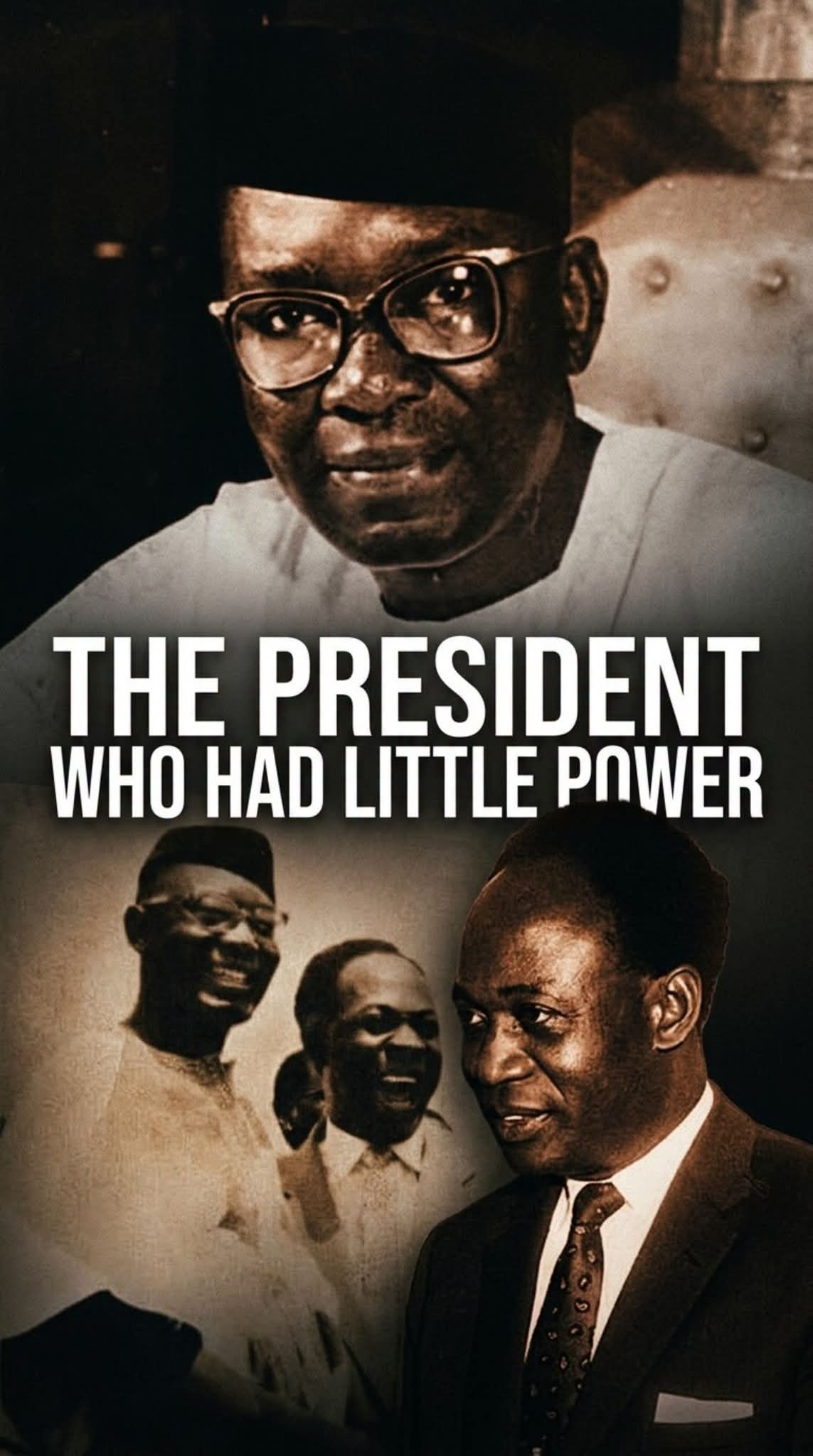
The man who helped inspire one of Africa’s future presidents would later become a president himself — yet hold far less executive power than many people imagine.
So which man are we talking about?
And how did a man who helped inspire a future president end up becoming a president whose office could not truly control the government?
To understand that…
We have to go back to the beginning.
His name was Nnamdi Azikiwe.
Born on 16 November 1904 in Zungeru, Northern Nigeria, Azikiwe would become one of the most influential nationalist figures in the struggle for African self-government.
But his journey did not begin in a presidential palace.
It began with newspapers, politics and an ambition that stretched far beyond Nigeria.
Azikiwe travelled to the United States, where he studied and developed the political ideas that would shape his career.
And while he was there…
A young man from the Gold Coast was beginning to search for his own path.
His name was Kwame Nkrumah.
Their paths would eventually cross.
Azikiwe became an important influence on the younger Nkrumah, encouraging his education and strengthening his belief that Africans could govern themselves.
Years later, Nkrumah would return to the Gold Coast and rise to become one of the most important figures in the struggle for independence.
In 1957…
The Gold Coast became independent as Ghana.
And Nkrumah became its first Prime Minister, later becoming its first President when Ghana became a republic.
But while Nkrumah was rising in Ghana…
Azikiwe was building his own political empire in Nigeria.
Through newspapers such as the West African Pilot, he helped popularise nationalist ideas and challenge colonial rule.
In 1944, he became one of the leading figures behind the National Council of Nigeria and the Cameroons, the NCNC.
By 1954…
He had become Premier of the Eastern Region.
Then came independence.
On 1 October 1960, Nigeria became independent.
And Azikiwe became Governor-General.
At first glance, it looked like the perfect ending.
The nationalist.
The journalist.
The man who had helped inspire another future African president.
Now standing at the top of a newly independent country.
But there was a problem.
He wasn’t the man actually running the government.
Nigeria had adopted a parliamentary system.
The real executive authority rested largely with the Prime Minister and his government.
That man was Abubakar Tafawa Balewa.
Azikiwe was Governor-General…
And after Nigeria became a republic in 1963, he became its first President.
But the title could be misleading.
He was President of Nigeria…
Yet he did not possess the kind of executive power associated with many modern presidents.
The Prime Minister and cabinet exercised the central powers of government.
And that created one of the strangest ironies in Azikiwe’s story.
**The man who had spent his life fighting for African self-government had reached the presidency…
But the presidency itself did not give him control of the government.**
There was another woman whose story was closely connected to his rise.
Flora Azikiwe.
She became Nigeria’s inaugural First Lady when the country became a republic in 1963.
She had also been involved in the NCNC women’s organisation, helping build the political movement alongside other prominent women such as Margaret Ekpo.
So while Azikiwe represented the new Nigeria at the highest constitutional level…
The country around him was becoming increasingly divided.
Regional rivalry was growing.
Political tensions were deepening.
And by January 1966…
The system Azikiwe had helped build was about to collapse.
The military coup of 15 January 1966 ended the First Republic.
Prime Minister Balewa was killed.
Northern Premier Ahmadu Bello was killed.
Western Premier Samuel Akintola was killed.
Senior military officers were also killed.
Azikiwe himself was outside the country at the time.
The coup brought an end to his presidency.
But his story did not end there.
When the crisis eventually developed into the Nigerian Civil War…
Azikiwe initially supported the Biafran cause.
But as the war continued, he broke with the secessionist leadership and increasingly argued for a negotiated settlement and national reconciliation.
It was another complicated chapter in the life of a man who had spent decades trying to build a united Nigeria.
The same man who had once inspired a future African president…
Had now lived through independence, regional political rivalry, military coups and civil war.
And eventually…
He became an elder statesman.
Azikiwe died on 11 May 1996 at the University of Nigeria Teaching Hospital in Enugu.
He was 91.
But perhaps the most fascinating part of his story is not simply that he became Nigeria’s first President.
It is the irony behind the title.
He helped inspire a man who became President of Ghana.
Then he became President of Nigeria himself.
But while the man he had influenced eventually governed Ghana with enormous executive authority…
Azikiwe occupied a presidency that, under Nigeria’s parliamentary system, was largely constitutional and ceremonial.
Two men.
Two countries.
Two presidencies.
And a strange twist in history…
The man who helped inspire a future president would become a president who did not truly control the government.
That is the story of Nnamdi Azikiwe.
Did you know Nigeria’s first President had far less executive power than most people assume?
 Hi welcome to my website