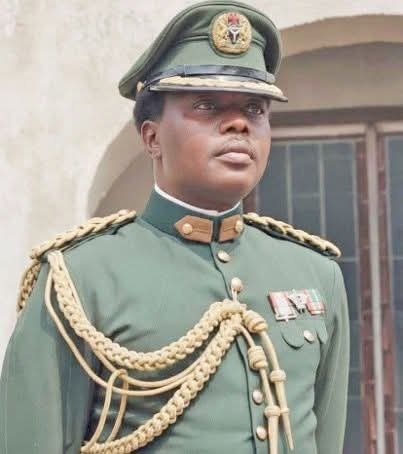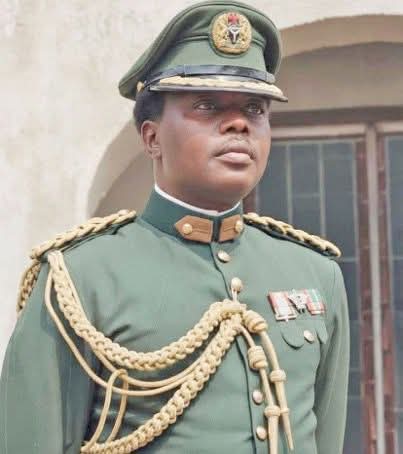
THE MAN BEHIND NIGERIA’S ₦20 NOTE: THE UNTOLD STORY OF MURTALA MOHAMMED
THE MAN BEHIND NIGERIA’S ₦20 NOTE: THE UNTOLD STORY OF MURTALA MOHAMMED
U are reading what you might have not thought about 😃😃😃
Every time you held the old ₦20 note in your hand, you were looking at the face of a man whose life was deeply connected to some of the most turbulent moments in Nigerian history.
His name was General Murtala Ramat Mohammed.
Born in Kano in 1938, Murtala joined the Nigerian Army and rose through the ranks. But his name became nationally significant during the military coups and the Nigerian Civil W9r of the 1960s.
In July 1966, he was one of the prominent Northern military officers involved in the counter-coup that overthrew the government of General Aguiyi-Ironsi. The coup changed the direction of Nigeria’s political history and brought Yakubu Gowon to power.
Then came the Civil W9r.
Murtala became the first commander of Nigeria’s 2nd Infantry Division. His troops played a major role in pushing Biafran forces out of the Mid-Western Region and eventually back toward the River Niger.
But this chapter of his history also carries a painful legacy.
In October 1967, federal troops entered Asaba, an Igbo-speaking community on the western bank of the Niger. Hundreds of civilians were k!l_ed in what historians Elizabeth Bird and Fraser Ottanelli have documented as one of the most serious civilian atrocities of the Nigerian Civil War. Murtala was the commander of the Second Division at the time. The exact number of victims remains disputed, but scholarly research documents ki_l-!ngs, looting and sexual violence.
Murtala later became one of the most powerful figures in the Nigerian military.
On 29 July 1975, he participated in the military coup that removed General Yakubu Gowon from power and became Nigeria’s Head of State.
His government lasted only about seven months.
Yet, in those few months, he introduced changes that would influence Nigeria for decades.
His administration began the process of creating seven new states, reformed major government institutions, established a programme for returning Nigeria to civilian rule, and appointed a committee to investigate a new Federal Capital. That process eventually led to Abuja replacing Lagos as Nigeria’s capital.
His government also pursued a more assertive African foreign policy, particularly during the Angolan cr!s!s.
But Murtala’s story ended suddenly.
On 13 February 1976, he was assassinated in Lagos during an attempted military coup.
He was only 37 years old.
His deputy, General Olusegun Obasanjo, succeeded him and continued many of the programmes his government had started.
Then came the tribute that made his face familiar to virtually every Nigerian.
On 11 February 1977, exactly one year after his assassination, the Central Bank of Nigeria introduced the ₦20 note, making Murtala Mohammed the first Nigerian citizen to appear on a Nigerian banknote. The CBN described it as a tribute to him and later noted that he was declared a National Hero on 1 October 1978.
So, behind that familiar face on the ₦20 note was a much larger story:
A soldier.
A coup participant.
A Civil War commander.
A military ruler.
A reformer.
A controversial wartime figure.
A man who began the process that led to Abuja becoming Nigeria’s capital.
And a Head of State whose life was cut short by another coup.
History is rarely one-sided.
To understand Murtala Mohammed, you have to remember both the achievements associated with his government and the painful controversies surrounding his wartime command.
That is the man behind the ₦20 note.
What part of Murtala Mohammed’s story did you know before today?