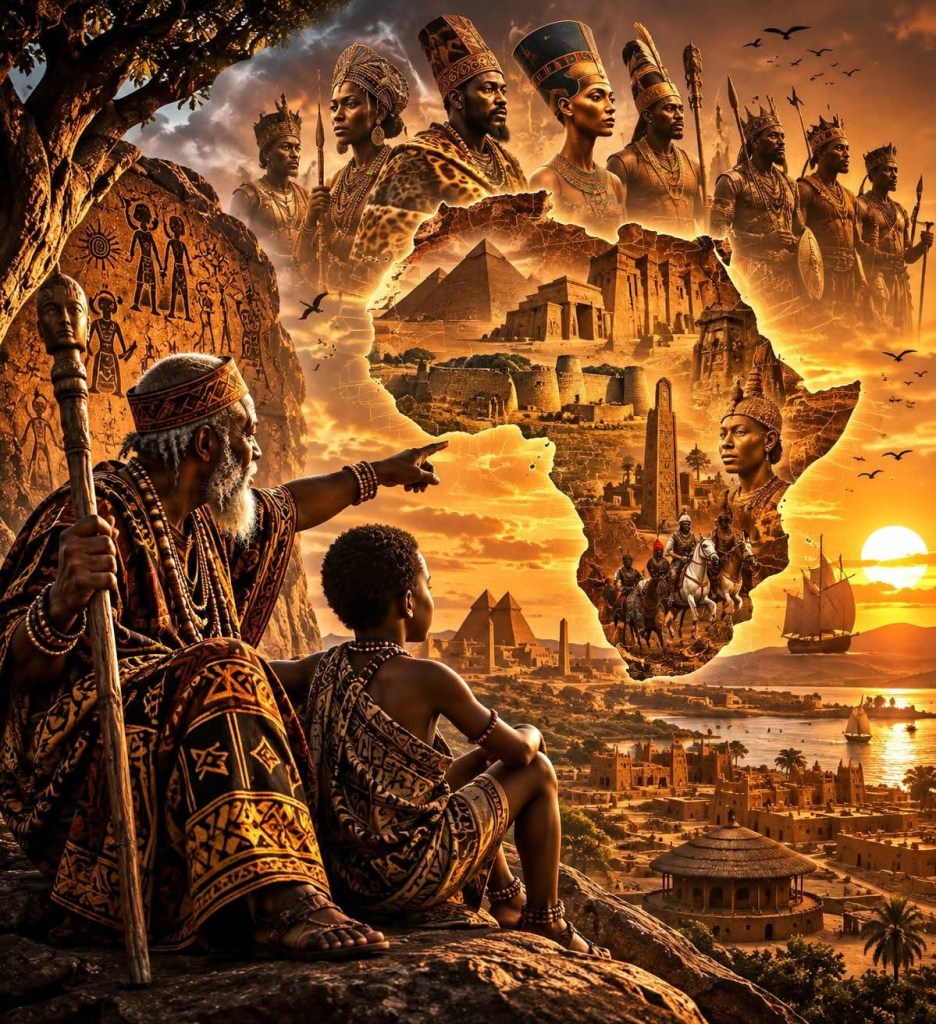
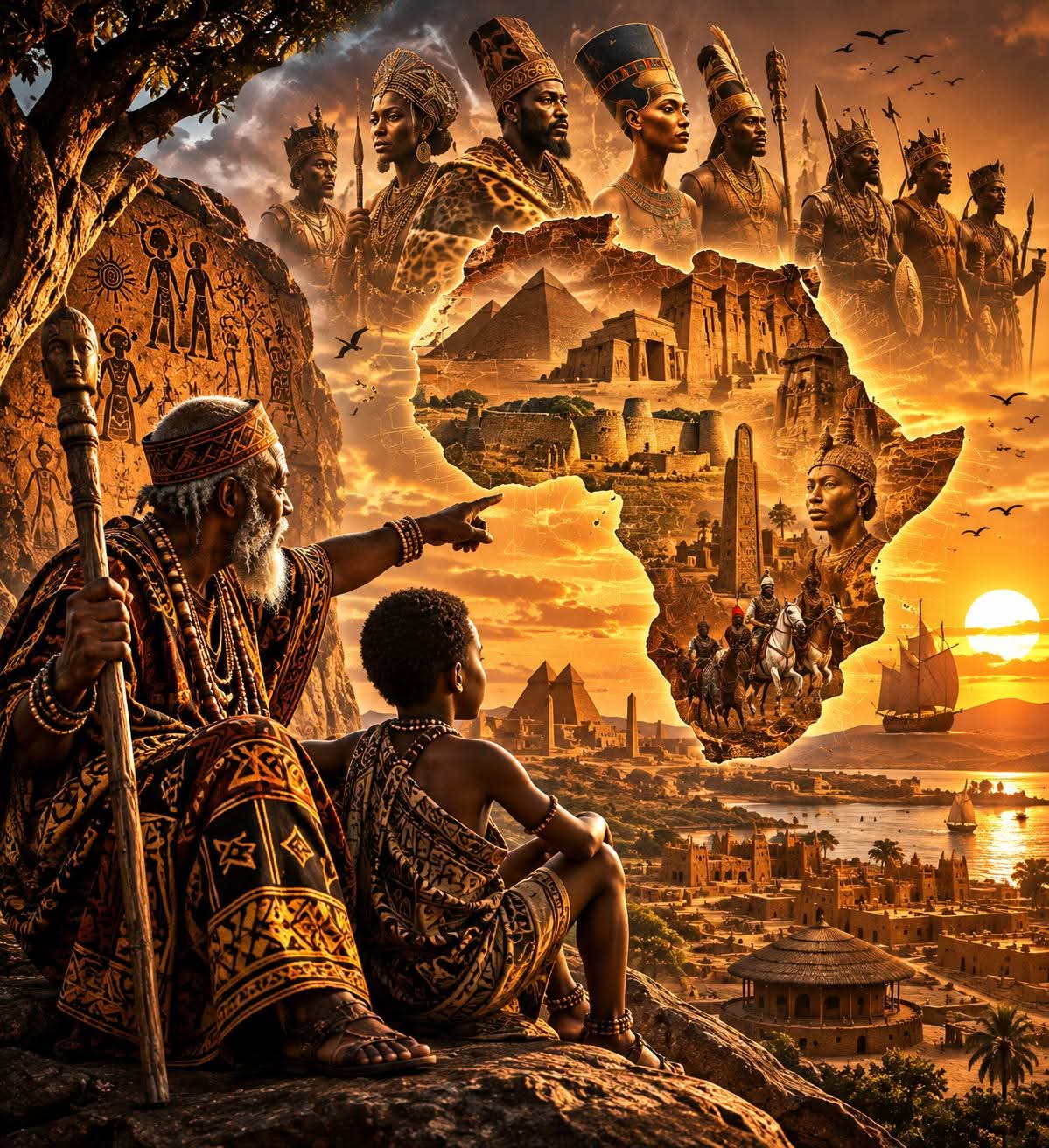
BEFORE THEY CAME, WE WERE NOT SAVAGES — WE WERE A CIVILIZATION.
BEFORE THEY CAME, WE WERE NOT SAVAGES — WE WERE A CIVILIZATION.
They taught us in school that Africa was darkness before the white man brought light. That is one of the biggest lies ever told.
YES, WE FOUGHT EACH OTHER. BUT WE HAD HUMANITY.
Before the colonial era, Africa was not paradise. Kingdoms fought kingdoms.
The Zulu fought the Ndwandwe. The Oyo fought the Dahomey. The Ashanti fought the Fante.
But there is a difference between AFRICAN WAR and EUROPEAN WAR.
When we fought, there were rules:
- Elders Settled Disputes, Not Just Swords:
We had systems that Europe never had. The Gacaca of Rwanda, the Palaver Hut of West Africa, and the Kgotla of Botswana — elders would sit under the big tree until peace returned. A war could end with marriage, with kola nuts, with compensation — not necessarily with the wiping out of an entire village. We believed in Ubuntu — “I am because you are.” You cannot erase your neighbor completely, because tomorrow you may need him. - We Respected Nature Because Nature Was Sacred:
Our spirituality was strong because it was practical. You could not cut the sacred Iroko tree. You could not fish in the river on certain days. You could leave a piece of farmland unused for years to allow the soil to recover. That was not “juju” — that was environmental conservation centuries before the modern world popularized the term.
That is why, when Europeans arrived, they encountered forests filled with wildlife, rivers rich with fish, and land capable of producing abundant food.
- We Shared With Our Neighbors:
The trade routes were working. Gold and salt from Mali and Songhai traveled across the Sahara. Kola from Asante traveled to Hausaland. The great cities of Timbuktu, with its vast manuscript collections; Benin City, renowned for its sophisticated urban infrastructure; and Great Zimbabwe, with stone walls reaching approximately 11 meters high — all demonstrate that we were not isolated villages.
We were part of interconnected economies and societies.
Mansa Musa was so wealthy that, during his pilgrimage to Mecca in 1324, his extensive distribution of gold in Egypt was reported to have affected the local economy for years. That was a reflection of the immense wealth and resources of the Mali Empire.
EVERYTHING WAS WORKING FINE UNTIL THEY CAME.
When they landed on our shores, sick and hungry, we showed them kindness. We offered them water, land to rest, and food to eat. That is African culture — a stranger is treated with hospitality.
But they were not simply looking at our kindness. They were studying our weaknesses.
They sat in our palaces and wrote in their diaries:
“This land is full of abundance.”
The Portuguese, upon establishing their presence at the Gold Coast in the late fifteenth century, encountered a region rich in gold. The European records of the Congo likewise described enormous natural wealth, including rubber.
“They fight each other.”
They observed that the Asante and Fante were rivals. That the Yoruba kingdoms were competing. They documented these divisions — and such rivalries could later be exploited.
Because of greed, they found people willing to betray others.
It was not their guns that conquered us first. It was betrayal.
They gave one chief a mirror, a gun, and gin to bring his brother. They promised one kingdom protection in order to destroy another kingdom.
That was the “Divide and Rule” system.
Then came the master plan: THE BERLIN CONFERENCE OF 1884–1885.
In a room in Germany, European powers gathered and negotiated spheres of influence and territorial claims in Africa. They drew boundaries across a continent whose peoples had not been represented at the conference. These colonial borders later contributed to the creation of territories that became countries such as Nigeria, Ghana, and the Congo, often cutting across existing ethnic, linguistic, and cultural communities.
And they trapped us in a state of submission that continues to shape our continent today:
They trapped our mind — by telling us our spirituality was evil and our languages were “vernacular.”
They trapped our economy — by taking our raw materials and selling us back finished products.
They trapped our borders — so that we fight each other over colonial boundaries instead of building together.
We offered them water. They wanted the whole river.
We showed them hospitality. They wanted the whole house.
But the chain they put on our bodies is not stronger than the one they put on our minds.
The physical chains have been broken. The mental chains are what we are breaking today by remembering:
WE WERE NOT SAVAGES BEFORE THEY CAME.
WE WERE A CIVILIZATION — WITH JUSTICE, WITH SPIRITUALITY, WITH ABUNDANCE.
AND WE CAN BE AGAIN.