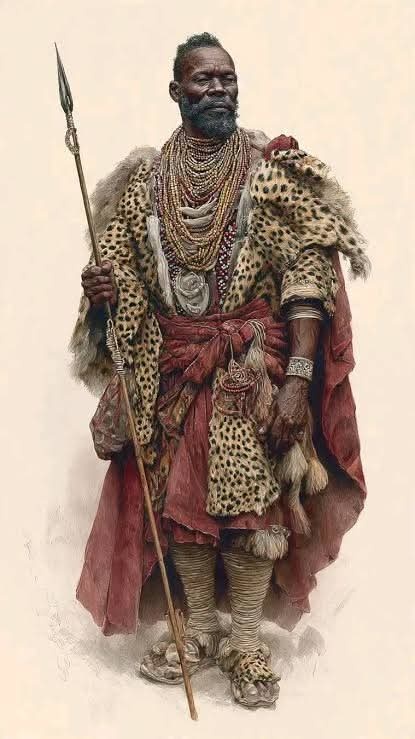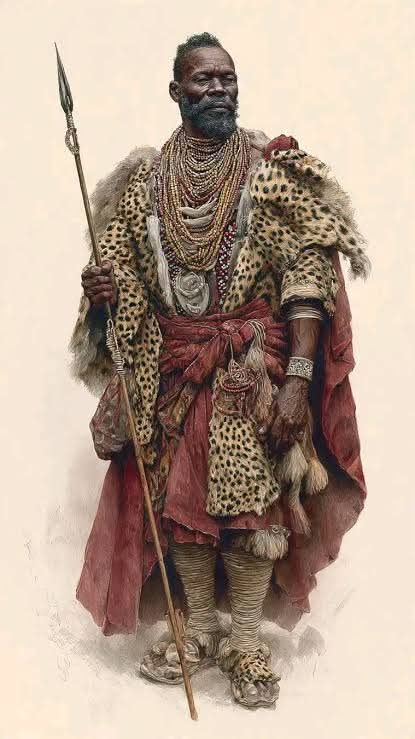
The Defeated Commander Who Built an Empire
SOSHANGANE
The Defeated Commander Who Built an Empire
In around 1819, the armies of Shaka helped destroy one of the most powerful kingdoms in southeastern Africa.
The defeated state was not Zulu.
It was Ndwandwe.
Its king was Zwide kaLanga.
And among the commanders forced north by the collapse of Ndwandwe power was a man named Soshangane.
He had lost his homeland.
His king’s power had been broken.
His people were scattering.
By almost every measure…
Soshangane had lost.
But defeat did not end his story.
He kept moving north.
Into what is today Mozambique.
There, he defeated other migrating commanders.
Conquered and incorporated communities that had lived in the region long before his arrival.
Challenged Portuguese settlements.
Built a military and tributary state whose influence eventually extended across an enormous part of southeastern Africa.
And established a kingdom that would survive him for decades.
It became known as Gaza.
And there is something important to understand before we go any further.
Soshangane was not Zulu.
He was not one of Shaka’s generals.
There is no reliable evidence that Soshangane and Shaka were friends.
They may never even have met personally.
Soshangane and Shaka belong in the same story…
but not on the same side.
Soshangane was Ndwandwe — one of the people whose political world was shattered by the rise of Shaka’s Zulu kingdom.
And from that defeat…
he built an empire of his own.
This is the story of Soshangane.
Welcome to Peak World. If you’re new, please like this video and subscribe to our channel.
Soshangane, also known as Manukosi, was born around 1780 in the region that is today northern KwaZulu-Natal.
He belonged to the Nxumalo clan and formed part of the Ndwandwe political world.
At the beginning of the nineteenth century, the Ndwandwe were one of the most formidable powers in southeastern Africa.
Their ruler was Zwide kaLanga.
And Zwide was ambitious.
To the south lay another growing political network associated with the Mthethwa, led by Dingiswayo.
Among the chiefs connected to that political world was a young Zulu ruler whose name would eventually overshadow almost everyone else from the period.
Shaka kaSenzangakhona.
But Shaka did not begin this story as the dominant ruler.
Zwide was already powerful.
The Ndwandwe expanded aggressively.
Dingiswayo was eventually captured and killed by Zwide’s forces.
The destruction of the Mthethwa leadership helped create the conditions for Shaka to emerge as the principal leader among the surviving allied groups.
Two expanding political systems were now heading toward confrontation.
Zulu and Ndwandwe.
This is important because later popular history sometimes absorbs almost every powerful Nguni-speaking leader of this period into the Zulu story.
But speaking related languages did not make these people members of one kingdom.
The Ndwandwe had their own rulers.
Their own political interests.
Their own military organisation.
Their own identity.
And during Soshangane’s lifetime…
the Ndwandwe and Zulu were enemies.
Soshangane served within Zwide’s political and military establishment.
Exactly how his rank should be described varies across later accounts, but he emerged as one of the important Ndwandwe leaders whose followers would survive the destruction of Zwide’s power.
The struggle between Zwide and Shaka unfolded through several confrontations.
One of the famous early engagements was Gqokli Hill, generally associated with 1818.
But the decisive shift came around 1819, at the Mhlathuze River.
Shaka’s forces inflicted a devastating defeat on the Ndwandwe.
Subsequent Zulu offensives shattered Zwide’s remaining political power.
And then…
the Ndwandwe world fragmented.
Some communities remained in the region and were eventually incorporated into the expanding Zulu kingdom.
Others became connected to Swati society or other Nguni political communities.
And some leaders did something that would transform the history of half a continent.
They moved north.
Soshangane was one.
Zwangendaba was another.
Nxaba another.
They emerged from related upheavals.
But they did not remain one people marching under one leader.
They separated.
Competed.
Fought.
Built new communities.
And carried political and military traditions from southeastern Africa into regions stretching far beyond their original homeland.
Zwangendaba and his followers eventually travelled through territories that are today Zimbabwe, Zambia and Malawi, with descendants and associated Ngoni communities extending into Tanzania.
Nxaba moved into central Mozambique.
And Soshangane…
headed toward the world around Delagoa Bay and farther north.
This period is traditionally associated with what became known as the Mfecane.
But even that word needs caution.
Older accounts often explained enormous regional upheaval almost entirely through the rise of Shaka.
Modern historians have challenged that simple picture.
Warfare mattered.
The expansion of powerful African states mattered.
But so did struggles over trade.
Environmental pressures.
Competition for cattle and land.
Slave trading.
Portuguese and other commercial networks.
And growing colonial pressure from the Cape.
Southern Africa was not being transformed by one man.
It was experiencing a much larger regional upheaval.
Soshangane was both a product of that upheaval…
and someone who would spread it farther north.
When Soshangane crossed into what is today Mozambique, he did not enter an empty land.
That point matters.
The region already contained numerous African societies with their own rulers, economies, languages and political traditions.
Tsonga-speaking communities.
Chopi communities.
Ronga.
Ndau.
Tonga.
Shona-speaking societies farther inland.
And many others.
Soshangane arrived as an outsider.
And he intended to become a ruler.
At first, survival itself was the challenge.
Other displaced Nguni leaders were attempting to establish power in the same broad region.
Among them was Nxaba.
Another was Zwangendaba.
What followed was not simply a migration.
It was a competition over who would control territory, cattle, trade routes, people and political allegiance.
Soshangane proved extraordinarily successful.
His followers defeated rivals.
Communities were conquered.
Others negotiated.
Some rulers submitted and retained positions beneath the new authority.
Captives were incorporated.
Young men entered military formations.
Cattle and agricultural production became tribute.
Gradually…
the refugee commander stopped being a refugee.
He became a king.
The state he created became known as Gaza, or Gasa, a name associated with an ancestor in Soshangane’s Nxumalo lineage.
And Gaza grew.
At its height, Soshangane’s sphere of authority extended from around the Limpopo northward toward the Zambezi region, while also reaching inland toward areas of what are today eastern Zimbabwe and northeastern South Africa.
But we need to understand what a nineteenth-century African empire like Gaza actually looked like.
This was not a modern country.
There were no surveyed national borders stretching neatly across a map.
Soshangane did not administer every village from one bureaucracy.
Gaza functioned through different levels of control.
In the political heartland, royal authority could be much more direct.
Farther away, existing rulers could remain in place.
But they were expected to recognise Gaza supremacy.
That could mean sending cattle.
Grain.
Ivory.
Labour.
And warriors.
A chief who cooperated might remain in authority.
A chief who refused could face military punishment.
That made Gaza a kingdom…
but also an empire of incorporation.
And sometimes…
an empire of violence.
Soshangane’s armies raided resistant communities.
Cattle were seized.
People were displaced.
Captives were absorbed into the state.
Young men from incorporated populations could become soldiers.
The same man remembered by some traditions as a founder and nation-builder could therefore be remembered by others as a conqueror.
Those memories do not necessarily contradict one another.
Empires look different depending on where you’re standing.
Soshangane organised his growing kingdom using political and military institutions rooted in the wider Nguni world from which the Ndwandwe themselves had emerged.
And another misconception needs correcting here.
It is tempting to describe every regimented military system of this period as something copied from Shaka.
But the transformation of military organisation was occurring across several southeastern African states.
The Ndwandwe had their own political and military traditions.
The Mthethwa had theirs.
Shaka developed and intensified institutions within the Zulu kingdom.
Soshangane carried traditions from his own Ndwandwe-Nguni political world northward…
and then adapted them to completely different circumstances.
Age-based military formations became important.
Young men from incorporated communities could be reorganised into regiments under Gaza authority.
Military service became one method of turning conquered populations into participants in the new state.
But conquest did not simply transform the people Soshangane ruled.
Something else happened.
They transformed his followers too.
The original Ndwandwe-Nguni migrants were a minority among much larger local populations.
They could conquer people militarily.
They could demand tribute.
They could impose political authority.
But they could not live among millions of people without being changed themselves.
Languages mixed.
Families intermarried.
Customs travelled in both directions.
Religious practices interacted.
Political traditions adapted.
And over generations…
the identity associated with Soshangane’s kingdom became something different from the identity that had originally left the Ndwandwe homeland.
This is where the history of the Shangaan becomes important.
The name Shangaan is generally connected to Soshangane.
His Gaza followers were also associated with the name AmaGasa.
But saying “Shangaan” simply means “Zulu people who moved to Mozambique” would be historically misleading.
Soshangane was not Zulu.
His core followers had Ndwandwe-Nguni origins.
And the communities incorporated into Gaza were overwhelmingly people who had already lived across Mozambique and neighbouring regions.
Tsonga.
Ndau.
Chopi.
Ronga.
And others.
Through conquest, incorporation, intermarriage and generations of cultural exchange, the Gaza state contributed to identities later associated with the Shangaan name.
And that means Shangaan and Tsonga are related historical categories, but they are not perfectly interchangeable.
Tsonga-speaking communities existed long before Soshangane arrived.
Not every Tsonga person descends from Soshangane’s followers.
Not every Tsonga community understands its history through Gaza.
And the Shangaan identity itself developed through interaction between migrants and populations already living in the region.
Soshangane attempted to transform the people he conquered.
But they transformed Gaza too.
That may be one of the most important parts of his legacy.
Then came a threat from the south.
The kingdom that had helped drive Soshangane from his homeland had not forgotten the north.
In 1828, during the final year of Shaka’s reign, a major Zulu expedition moved toward the Delagoa Bay region.
Once again…
the expanding power of the Zulu kingdom was approaching the world Soshangane was trying to build.
But geography was now on Soshangane’s side.
The distances were enormous.
Zulu regiments had to march hundreds of kilometres through difficult terrain.
Supplies became a problem.
Disease posed a serious threat.
An army that could move with devastating speed closer to home faced very different conditions far to the north.
The expedition failed to destroy Soshangane’s growing power.
And before the struggle could develop further…
events inside the Zulu kingdom intervened.
In September 1828, Shaka was assassinated at Dukuza by conspirators that included his half-brothers Dingane and Mhlangana.
The man whose rise had helped shatter the Ndwandwe world was dead.
Soshangane remained.
And now…
there would be no return to his old homeland.
He had already begun creating another.
As Gaza expanded, Soshangane’s political centres shifted according to military, environmental and strategic conditions.
The kingdom’s geography was enormous.
Disease could devastate cattle and people.
Rivals could threaten particular regions.
Trade routes changed in importance.
And the lower Limpopo eventually became particularly significant within the Gaza political world.
But another power was watching Soshangane’s expansion.
Portugal.
Portuguese traders and settlements had existed along parts of the Mozambican coast for centuries.
European maps might colour enormous areas as Portuguese territory.
But maps were not the same thing as control.
Portugal’s effective authority inland was often weak.
Even along portions of the coast, Portuguese officials depended heavily on negotiation with African rulers.
Soshangane exploited that reality.
During the 1830s and following years, Gaza forces placed enormous pressure on Portuguese positions and commercial networks.
Areas connected to Delagoa Bay, Inhambane, Sofala and Sena all existed within the broader zone affected by Gaza expansion.
Some Portuguese communities and traders had to negotiate.
Some paid tribute or made accommodations.
Movement through areas under Gaza influence could depend upon African political permission.
Think about what that means.
Portugal claimed Mozambique.
But over large areas…
Soshangane possessed more immediate military power than Portugal did.
The Europeans had ships.
Trading networks.
Firearms.
Connections across the Indian Ocean.
But Soshangane had armies.
People.
Cattle.
Tributary rulers.
And control over the interior.
For much of his reign, Gaza was one of the dominant African powers in southern Mozambique.
Yet the relationship with Portugal was not simply permanent warfare.
There could be trade.
Negotiation.
Accommodation.
Threats.
Tribute.
And conflict.
Both sides understood that power could change.
And after Soshangane’s death…
it would.
By the 1850s, Soshangane had ruled for decades.
The commander who had fled the collapse of Zwide’s kingdom had become the centre of an entirely new political order.
He died around 1858.
And almost immediately…
Gaza faced the question that has destroyed countless kingdoms.
Who comes next?
Two of Soshangane’s sons emerged as the principal rivals.
Mawewe.
And Mzila.
Royal succession in societies of this period was more complicated than simply asking which son was oldest.
The status of different royal houses mattered.
Maternal lineage could matter.
Designation could matter.
Support among political and military elites mattered.
And power itself mattered.
Both Mawewe and Mzila could construct claims to legitimacy.
But Mawewe initially gained the advantage.
Mzila was forced from the Gaza heartland.
For a moment…
it appeared the succession had been settled.
It hadn’t.
Mzila went into exile and began searching for allies.
And now the Portuguese saw an opportunity.
For decades, they had confronted a powerful Gaza kingdom.
Now Gaza was fighting itself.
The succession struggle became more than a dispute between brothers.
It became internationalised.
Mzila developed relationships with Portuguese interests and other regional allies hostile to Mawewe.
Firearms and external assistance strengthened his position.
And in 1861, Mzila returned.
The balance shifted.
Mawewe was defeated.
Mzila took the Gaza throne.
And Mawewe fled toward the region of present-day Eswatini.
The irony is difficult to miss.
Under Soshangane, Portuguese settlements had sometimes been forced to accommodate Gaza power.
After Soshangane…
a contender for the Gaza throne had turned to Portuguese assistance to defeat his own brother.
The balance was beginning to change.
But Gaza was not finished.
Not yet.
Mzila ruled the kingdom for more than two decades.
And after his death, the throne eventually passed to his son:
Gungunyane, also known as Ngungunhana.
By then, Africa was entering a different political age.
European imperial powers were no longer content merely to maintain coastal trading posts.
The late nineteenth century brought the Scramble for Africa.
European governments increasingly demanded territorial occupation.
Borders.
Colonial administrations.
Direct political control.
And Portugal wanted to transform its old claims over Mozambique into something much more concrete.
That placed Gaza directly in its path.
Gungunyane became the final independent ruler of the Gaza state.
He attempted to manoeuvre between regional powers and Portuguese expansion.
But the military balance that had favoured his grandfather was disappearing.
Portugal could deploy resources and weaponry unavailable to earlier colonial settlements.
And in 1895, Portuguese forces defeated Gaza resistance and captured Gungunyane at Chaimite.
He was sent into exile.
The independent Gaza kingdom was dismantled.
A state created by a defeated Ndwandwe commander roughly three generations earlier…
had finally fallen to European colonial expansion.
But Gaza’s disappearance from the political map did not erase the people shaped by it.
There is another branch of Soshangane’s story worth remembering.
When Mawewe lost the succession struggle to Mzila and fled toward present-day Eswatini, his lineage did not simply disappear.
Descendants associated with Mawewe survived beyond the fall of the Gaza kingdom, preserving family traditions connected to Soshangane’s dynasty.
That history continues to appear in modern discussions surrounding descendants including Sinhle Mawewe.
But the significance of that survival is larger than any one modern descendant.
It reminds us that kingdoms can disappear from maps…
while families, identities and memories continue for generations.
And that brings us back to the misconception with which we began.
Soshangane is sometimes casually described as a Zulu general who fled north.
But that description changes the entire story.
Soshangane was Ndwandwe.
The Ndwandwe and Zulu belonged to the broader Nguni-speaking world.
Their societies interacted.
Their military institutions developed within related regional conditions.
And after conquest, some Ndwandwe communities would indeed become incorporated into Zulu society.
Others became connected to Swati society.
Others travelled north.
But during Soshangane’s formative years…
Ndwandwe and Zulu were separate political communities.
And enemies.
Soshangane did not go north carrying out Shaka’s mission.
He went north because the political world from which he came had been defeated by the rise of Shaka’s kingdom.
That distinction changes everything.
Because Soshangane’s story is not the story of Zulu expansion into Mozambique.
It is the story of what happened after one of Shaka’s enemies survived defeat.
And survival alone would have been remarkable.
Soshangane did much more.
He defeated competing migrant leaders.
He conquered and incorporated established communities.
He built a tributary empire.
He challenged Portuguese power.
He created a dynasty.
And he helped produce a political and cultural legacy that survived long after Gaza itself disappeared.
But his legacy remains complicated.
To some…
Soshangane can be remembered as a founder.
A ruler who took a displaced population and created a powerful kingdom.
A leader who confronted Portuguese colonial ambitions.
A figure whose name became connected to a lasting Shangaan identity.
But to communities conquered by Gaza…
the story can look very different.
His armies raided.
They seized cattle.
They demanded tribute.
They incorporated people by force.
They destroyed resistance.
Soshangane could be both a nation-builder…
and a conqueror.
Those descriptions do not cancel one another.
They are part of the same history.
And perhaps the greatest irony of Soshangane’s empire is what happened culturally.
He arrived with followers rooted in the Ndwandwe-Nguni world.
They possessed military power.
They conquered local societies.
They attempted to reorganise those societies around Gaza authority.
But conquest is rarely a one-way process.
The conquerors married the conquered.
They learned languages.
They absorbed customs.
Their descendants grew up in Mozambique rather than the Ndwandwe homeland.
Generation after generation…
the distinction between migrant and local became increasingly complicated.
Soshangane changed southern Mozambique.
And southern Mozambique changed Soshangane’s people.
The result was not simply another Ndwandwe kingdom transplanted hundreds of kilometres north.
It became Gaza.
Something created through migration.
War.
Conquest.
Assimilation.
Resistance.
Intermarriage.
And cultural exchange.
And that may be Soshangane’s most enduring legacy.
Around 1819, Soshangane stood on the losing side of one of the great political transformations of nineteenth-century southern Africa.
The kingdom he served was broken.
His homeland was no longer safe.
His king’s power collapsed.
His people scattered.
He went north as the leader of a defeated population.
But defeat became migration.
Migration became conquest.
Conquest became kingdom.
And kingdom became empire.
Shaka’s rise destroyed the political world Soshangane came from.
But it did not destroy Soshangane.
He crossed into territories where he was initially an outsider.
He conquered.
Incorporated.
Adapted.
And built again.
But the story didn’t end with the conqueror transforming the conquered.
The conquered transformed the conqueror too.
Gaza changed southern Mozambique.
And southern Mozambique changed Gaza.
The kingdom eventually disappeared.
The identities shaped through it survived.
Soshangane had lost his homeland.
Then he built another.
So how should Soshangane be remembered?
As the defeated Ndwandwe commander who rebuilt his power?
As the founder of Gaza?
As the conqueror of communities already living in Mozambique?
As an African ruler who challenged Portuguese colonial power?
Or as all of those things at the same time?
Let us know what you think in the comments below.