SPAIN LEFT, MACÍAS TOOK POWER. EQUATORIAL GUINEA ENTERED ONE OF THE DARKEST CHAPTERS IN ITS HISTORY.
SPAIN LEFT, MACÍAS TOOK POWER. EQUATORIAL GUINEA ENTERED ONE OF THE DARKEST CHAPTERS IN ITS HISTORY.
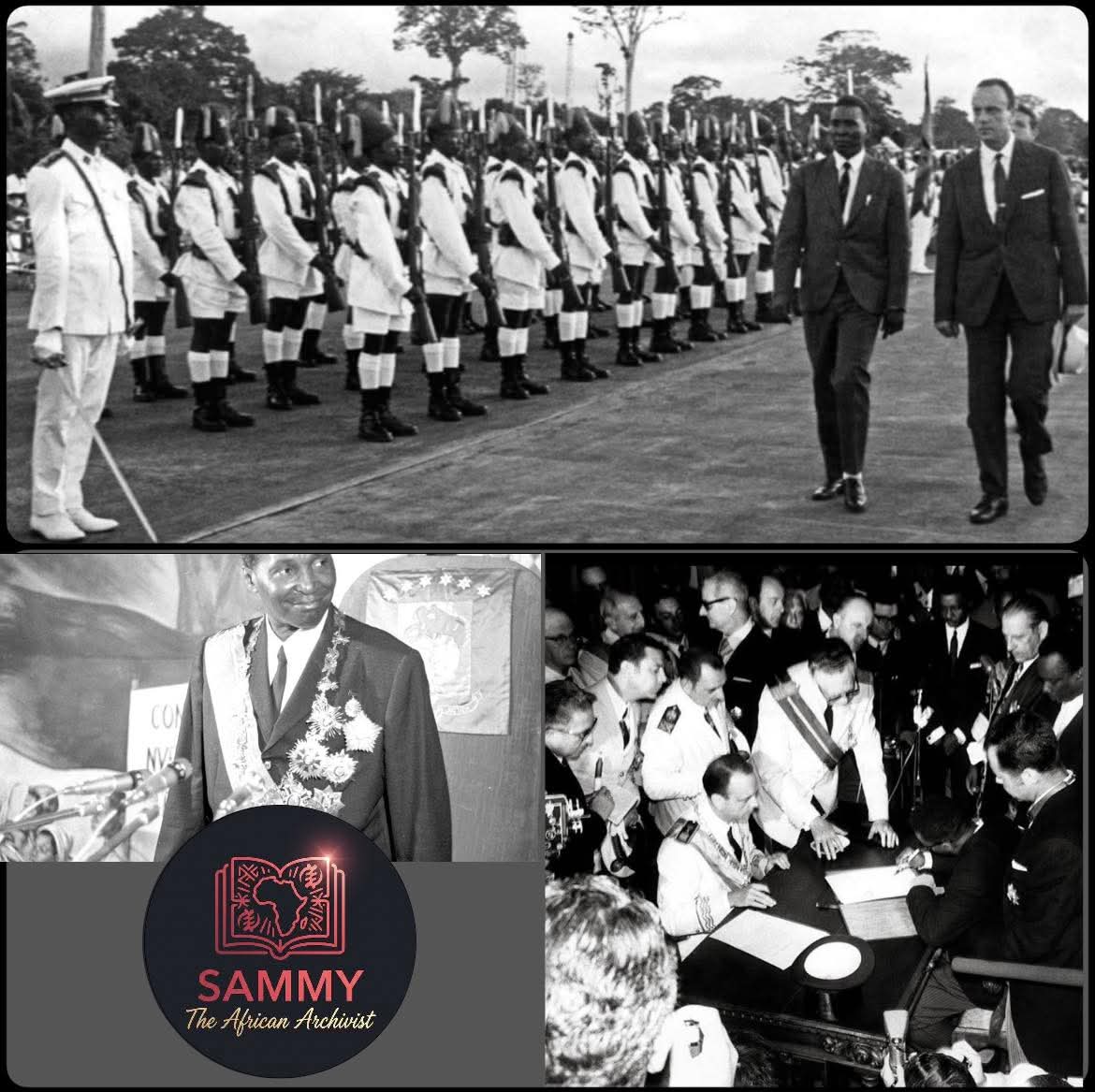
On October 12, 1968, a small African nation gained independence from Spain.
The celebrations marked the end of colonial rule, but the country’s journey towards freedom would soon take a terrifying turn.
This is the story of Equatorial Guinea, its first president, Francisco Macías Nguema, and how the promise of independence gave way to one of the most brutal dictatorships in modern African history.
Come, let me take you back.
Equatorial Guinea is a small country on the west coast of Central Africa.
Unlike many of its neighbours, it was colonised by Spain rather than Britain, France or Portugal.
Its territory includes the mainland region of Río Muni and several islands, including Bioko, where the capital, Malabo, is located today.
For decades, Spanish colonial rule shaped the country’s political institutions, economy and education system.
By the 1960s, pressure for self-government was growing, and the territory began moving towards independence.
In 1968, the process reached its conclusion.
On October 12, Equatorial Guinea officially became independent from Spain.
A new flag was raised, a new government took office, and the country began its life as a sovereign African nation.
But who would lead it?
The man who emerged as the country’s first president was Francisco Macías Nguema.
Macías had won the presidential election held before independence.
He presented himself as a nationalist leader at a time when the country was breaking away from colonial control.
However, the political future of Equatorial Guinea would become very different from the hopes many people had held.
After independence, Macías increasingly concentrated power in his own hands.
Political opposition was suppressed, opponents were persecuted, and fear became a defining feature of public life.
His government became notorious for violence, arbitrary arrests and the persecution of people considered threats to his authority.
Officials, intellectuals, political opponents and ordinary citizens were caught up in the repression.
Many people fled the country, while others were imprisoned or killed.
The country also suffered economically and institutionally as experienced professionals and educated citizens left or were targeted.
The independence celebrations of 1968 had promised a new beginning.
Under Macías, however, the state became an instrument of personal power and intimidation.
And the situation would become even more alarming.
Macías’s government developed an increasingly extreme cult of personality.
Political loyalty to the president became dangerous to question, and the institutions that should have restrained his authority were weakened.
The consequences were devastating.
Equatorial Guinea became internationally notorious for repression, and large numbers of its citizens fled into exile.
Estimates of the number killed or forced to flee vary, but the scale of the suffering was enormous relative to the country’s small population.
This is one reason the story of Equatorial Guinea deserves greater attention in African history.
Independence did not guarantee democracy, accountable leadership or the protection of citizens.
A country could escape colonial rule and still suffer terribly under its own government.
BUT MACÍAS’S RULE WOULD NOT LAST FOREVER.
On August 3, 1979, his nephew, Lieutenant Colonel Teodoro Obiang Nguema Mbasogo, led a military coup that removed him from power.
Macías was captured, tried and executed later that year.
The man who had become the symbol of his country’s independence-era leadership had fallen, bringing an end to his brutal rule.
Yet the end of Macías did not mean that Equatorial Guinea would immediately become a democratic country.
His successor, Teodoro Obiang, remained in power, beginning another long chapter in the country’s political history.
Equatorial Guinea’s independence remains an important moment in African history.
It marked the end of Spanish colonial rule and the birth of a sovereign state.
But its subsequent history also raises difficult questions about power, leadership and the meaning of freedom.
What does independence mean when citizens live in fear of their own government?
What happens when one man becomes more powerful than the institutions meant to protect the people?
And how can a country ensure that the freedom won from colonial rule does not become another form of oppression?
On October 12, 1968, Equatorial Guinea became independent.
Eleven years later, its first president was overthrown.
The story reminds us that independence is a beginning, not a guarantee of good governance.
History must remember both the day a nation became free and the people who suffered when that freedom failed to protect them.

