The Eurocentric Playbook for Explaining Ancient Egypt (Without Admitting It’s African)
The Eurocentric Playbook for Explaining Ancient Egypt (Without Admitting It’s African)
There exists a sacred scroll, hidden in the dusty vaults of denial, guarded by professors clutching Latin dictionaries and museum curators allergic to melanin. It’s the Eurocentric Playbook™—the ultimate guide to explaining Ancient Egypt without ever acknowledging that it was, in fact, African. It’s a fragile doctrine, a temple built on sand, but somehow still cited like gospel. Today, we unravel it—one contradiction at a time.
⸻
Rule #1: Geography Only Matters When It Doesn’t Help Africa
The playbook opens with a classic: “Egypt is in Africa, but it’s North Africa.” Ah yes, the magical line at the Sahara, drawn not by nature but by colonial anxiety. Because when Europeans are in the north, it’s “European.” When Africans are in the north? Suddenly they’re… something else. Not quite African. Not quite Mediterranean. Just mysteriously tan.
Meanwhile, Greece gets full credit for being European despite sitting a stone’s throw from Libya. But Egypt? Egypt gets cast out of the continental family reunion like a cousin with the wrong accent.
⸻
Rule #2: Skin Color Doesn’t Matter—Until You Think They’re Too Dark
This is where the playbook gets spicy. Eurocentrists love saying, “We don’t judge history by skin color.” Oh? Then why does their entire campaign revolve around denying Egypt’s Black identity? They’ll tell you it’s irrelevant, unscientific, and outdated… right before invoking artistic depictions where Egyptians “clearly weren’t dark enough” to be Sub-Saharan. Apparently, not being pitch black disqualifies you from being African now.
Yet these same scholars will point to white marble statues from Greece and insist they reflect true ethnic identity. So color matters… except when it doesn’t… unless it helps us claim Egypt wasn’t Black. Got it.
⸻
Rule #3: The Word “Black” is a Modern Construct—Except When It’s Not
Suddenly everyone’s a social anthropologist. “Black is a modern racial term!” they cry, wagging their fingers like they just invented sociology. But when the topic is Indo-Europeans or ancient Britons, these same scholars can’t wait to tell you about “White ancestry,” “Nordic features,” and “pale skin adaptation.” So let’s be clear: “White” is timeless and heroic, but “Black” is anachronistic and inappropriate—unless it refers to enslaved Africans, of course. Then it’s fair game.
⸻
Rule #4: Culture Matters More Than Genetics… Until the DNA Comes In
Before 2010, the chorus was: “We mustn’t judge civilizations by modern race science. Cultural achievements matter more than ancestry!” But once ancient DNA studies came out—limited, misinterpreted, and poorly contextualized—the entire choir flipped. Now it’s, “See? These mummies had West Asian affinity! Boom! Not Black!”
The fact that those mummies were from 1300 BCE to Roman times, during centuries of foreign occupation, doesn’t matter. The ancient Egyptians built pyramids between 2700–2200 BCE, but let’s ignore that. Why focus on founders when you can cherry-pick colonized corpses?
⸻
Rule #5: African Influence Must Be Coincidental, Never Foundational
Nabta Playa? “Coincidence.” Proto-hieroglyphs in Sudan? “Unrelated.” The fact that Egypt’s kings wore Nubian crowns, worshipped Nubian gods, and had mothers from the south? “Borrowed.” Even when Egypt gets its calendar, mathematics, and astronomical systems from Sub-Saharan and East African innovations—Eurocentrists claim Egypt was “influenced,” never “built by” Africans.
And yet, when Greece adopts everything from Egyptian temples to philosophical schools, suddenly that counts as the “Greek Miracle”; “Western Civilization.” African cultural borrowing is “diffusion.” European borrowing? “Innovation.” Helicopter delivered by Athena.
⸻
Rule #6: The Sahara is a Wall… Unless It’s a Bridge to Eurasia
This one is gold. Whenever you mention African connections, they say: “The Sahara was a barrier!” Yes, a completely impassable desert—unless people are migrating into Egypt from the Levant. Then the Sahara suddenly becomes a two-lane highway.
Newsflash: the Sahara was green and fertile during the Holocene, filled with rivers, lakes, and herders. Africans moved freely between Niger, Chad, Sudan, and the Nile. But to Eurocentrists, movement into Egypt is only realistic if it comes from the north. Anything from the south? Fantasy.
⸻
Rule #7: Migrations After 2000 BCE Changed Nothing—Except When Black Natufians Magically Made Egypt White in 15,000 BCE
This part of the playbook deserves an Oscar for creative fiction. Eurocentrists argue that the massive migrations after 2000 BCE—from Hyksos, Libyans, Assyrians, Persians, Greeks, Romans, and Arabs—somehow didn’t change the Egyptian population. Nope, Egyptians stayed totally consistent. Foreign occupation? Intermarriage? Centuries of colonization? Irrelevant.
But then they pull a magical switcheroo: suddenly, back around 15,000 BCE, when Black Natufians were in the Levant, that’s when Egypt apparently became white. Yes, you read that correctly—black people migrated north, and somehow their presence in Israel 12,000 years before the pyramids turned Egyptians white. Time travel? Albino mutation? Selective amnesia? The playbook doesn’t say.
It’s impressive how migrations after 2,000 BCE meant nothing, but a migration before agriculture even existed redefined Egypt’s entire ethnic composition. Truly, the laws of history and biology bend whenever Eurocentrism is under threat.
⸻
Rule #8: Africans Moving into Eurasia Became Eurasian—But Eurasians Moving into Africa Remained Eurasian
Here’s a fun trick from the Eurocentric survival kit: migration only changes identity in one direction. If Africans cross into the Levant or Southern Europe? Boom—they’re instantly rebranded as Eurasians. Black skin? African lineages? Doesn’t matter. One foot in Asia and they become honorary Indo-Europeans.
But when Eurasians move into Africa—through trade, colonization, or centuries of occupation—they somehow remain genetically pure, culturally distinct, and forever foreign. A Greek born in Alexandria is still Greek. But an African in Jericho? Sorry, he’s now a Mediterranean pioneer.
It’s colonial osmosis: Africa absorbs foreign identity, but never gives any back. A one-way genetic street, paved with double standards.
⸻
Rule #9: Modern Egyptians Don’t Look Sub-Saharan, So Ancient Ones Couldn’t Be Black
This one’s a crowd favorite. “Look at modern Egyptians! They’re Arab!” Yes. Now. After 2,000 years of conquest, colonization, and intermarriage—Hyksos, Hittites, Greeks, Romans, Arabs, Ayyubids, Turks, Albanians, French, British. But before all that? Egypt was founded over 5,000 years ago by Nilotic and Saharan Afroasiatic-speaking peoples, with lineages like E-M35 and E-M2, which still trace to East and Central Africa.
Imagine denying that Native Americans once ruled North America because most people there now are white. That’s exactly what this argument is.
⸻
Rule #10: Black Africans Can’t Build Monumental Architecture
The unspoken rule behind all of this? The belief that Sub-Saharan Africans just couldn’t have done it. Pyramids? Too complex. Astronomy? Too precise. Writing? Too abstract. So they float bizarre theories—aliens, lost white Atlanteans, or mystery Levantines with no archaeological footprint.
Yet the Sudanese built pyramids too—hundreds of them. The Dogon charted star systems. The Nok sculpted lifelike terracotta heads centuries before Rome. But none of that fits the narrative, so it gets conveniently forgotten.
⸻
Rule #11: Use the Word “Mediterranean” Until Everyone’s Confused
When things get really shaky, throw in “Mediterranean.” It’s the great racial laundering machine. No one knows what it means—sometimes it’s geographic, sometimes it’s genetic, sometimes it’s just a tan aesthetic. “Mediterranean people” becomes a vague blob that stretches from Portugal to Palestine… conveniently absorbing Egypt while excluding Sudan next door.
Suddenly, a coastline becomes a race. And people who never heard the term “Mediterranean” in their entire civilization are now honorary Romans.
⸻
Final Rule: Never Admit You Were Wrong—Just Move the Goalpost
When all arguments fail, don’t concede—just pivot. If Egypt’s African roots become undeniable, Eurocentrists retreat to:
“Well, being African doesn’t necessarily mean they were Black.”
“Oh, but they had Levantine contact later on, right?”
“Okay, maybe they were African, but not Sub-Saharan African.”
And finally:
“Why does race matter anyway?”
Suddenly, the thing they’ve obsessed over for decades becomes irrelevant—only after they lose the debate. That’s the beauty of the playbook: it’s not built to win. It’s built to never admit defeat.
⸻
The Way Forward? Burn the Playbook. Start Over.
Ancient Egypt was an African civilization—biologically, culturally, spiritually. The evidence is overwhelming:
• Indigenous African Y-DNA lineages
• Nubian roots of pharaonic kingship
• Proto-hieroglyphs in the southern Nile
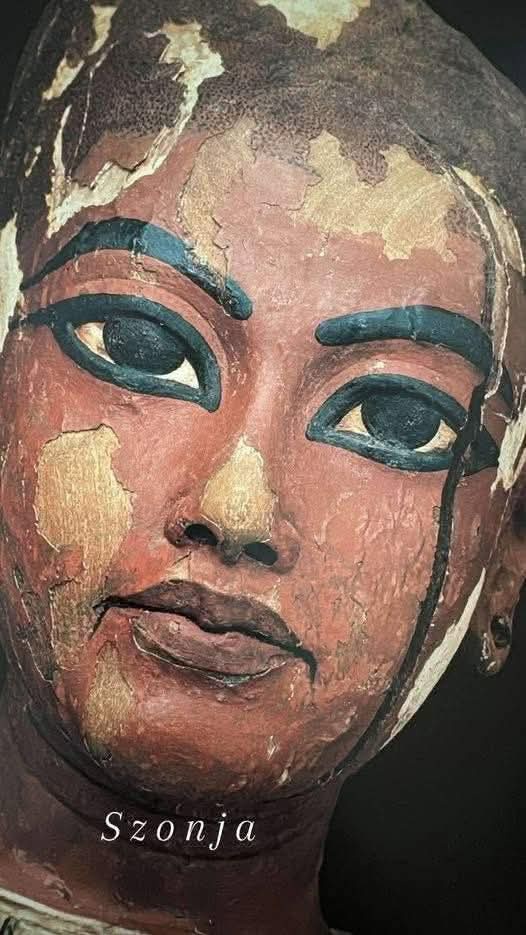
• Art depicting brown-skinned rulers
• Oral traditions and linguistic continuity
• Ancient authors stating it plainly
The only thing that’s foreign in Egypt’s history is the obsession with making it anything but African.
The Eurocentric Playbook is a relic. Outdated. Illogical. Desperate. It’s time to shelve it next to “Earth is flat” and “Phrenology is science.”
Because the truth is this: Africa didn’t borrow Egypt. Egypt is Africa’s masterpiece. And no amount of word games, DNA cherry-picking, or Mediterranean misdirection will erase that.
Africa #World