General Yakubu Gowon at Home in the UK (1981)
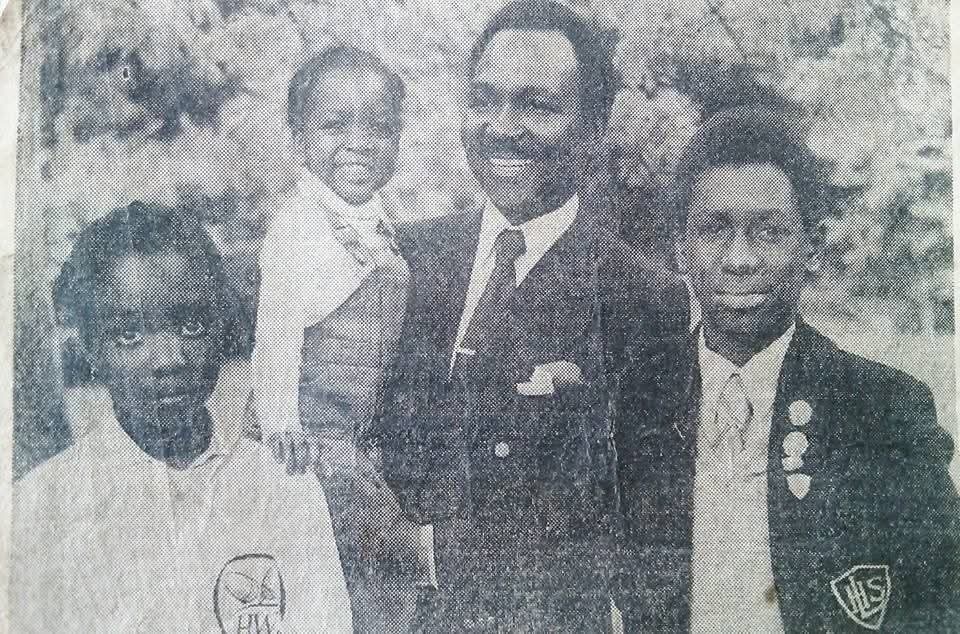
General Yakubu Gowon at Home in the UK (1981)
This image captures Yakubu Gowon in 1981 at his residence in the United Kingdom, alongside his children:
Saraju (aged 9)
Abraham (aged 11)
Rahlia (aged 2)
Photo credit: Peter Hopkirk, The Times (UK).
From Soldier to Head of State
Yakubu Gowon, often called “Jack” by friends, rose to power in the aftermath of the 1966 Nigerian coup, becoming Nigeria’s Head of State as a relatively young and previously little-known officer.
A trained officer at the prestigious Royal Military Academy Sandhurst, Gowon brought a disciplined military background into leadership during one of Nigeria’s most turbulent periods.
Leadership During the Civil War
Gowon is most remembered for leading Nigeria through the Nigerian Civil War, a devastating 30-month conflict.
After the war, his government pursued a policy of:
Reconciliation
Reconstruction
Reintegration
particularly aimed at healing divisions with the Igbo population after the Biafran secession.
A notable anecdote reflects the complex respect between wartime opponents: when asked if he would shoot Gowon if given the chance, Chukwuemeka Odumegwu Ojukwu reportedly responded, “Shoot Jack? Good God, no!”
Overthrow in 1975
Despite his earlier achievements, Gowon’s administration later faced criticism for:
Delays in returning to civilian rule
Perceived government inefficiency
He was eventually removed in a bloodless coup in July 1975 while attending an African leaders’ summit in Kampala.
Life in Exile and Personal Image
Following his removal, Yakubu Gowon spent time abroad, including in the UK, where this 1981 photo was taken.
Shortly before his overthrow, he had received an honorary Doctor of Laws degree from University of Cambridge, where he was described in Latin oration as:
“a soldier of unusual modesty, a man of muscular Christianity.”
Character and Legacy
Despite political criticisms, Gowon has often been remembered for:
✔️ Personal humility and calm demeanour
✔️ Commitment to national unity after the civil war
✔️ A reputation that even critics rarely attack on a personal level
Historical Significance of the Image
This 1981 photograph offers a rare glimpse of:
Gowon in private family life after power
The transition from military ruler to reflective elder statesman
A quieter chapter following one of Nigeria’s most defining eras
Sources
The Times (UK), Peter Hopkirk archives (1981)
Nigerian Civil War historical records
Biographical accounts of Yakubu Gowon
University of Cambridge honorary degree records