
THE SHEIKH GUMI CONTROVERSY: REFORMER OR DIVIDER? (PART 1)
THE SHEIKH GUMI CONTROVERSY: REFORMER OR DIVIDER? (PART 1)
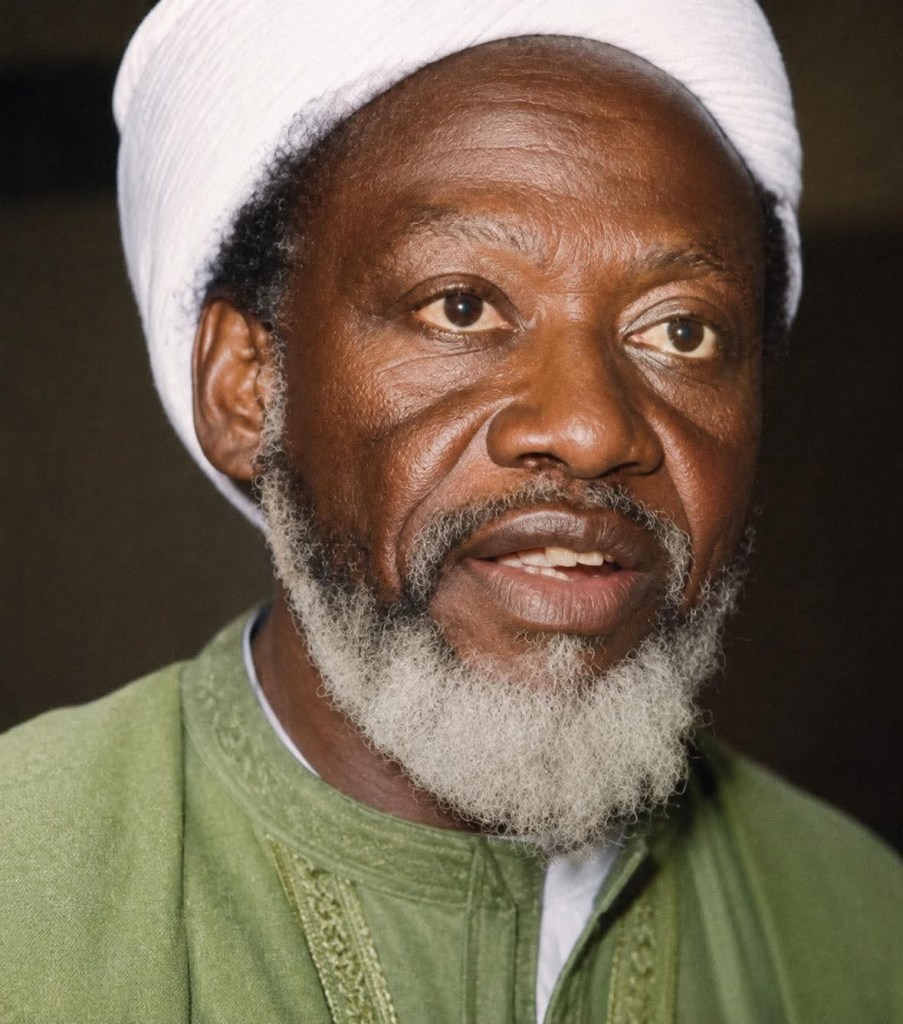
Few religious figures in Nigeria’s modern history shaped Northern public life as deeply and controversially as Sheikh Abubakar Mahmoud Gumi. To supporters, he was a courageous reformer who challenged religious practices he believed had drifted away from original Islamic teachings. To critics, he became a deeply polarizing figure whose ideas intensified religious division and altered the balance of Islamic authority across Northern Nigeria. Even decades after his death, debates about his legacy still trigger strong emotions because the arguments around Sheikh Gumi were never only about religion. They were also about power, politics, identity, and the future direction of Northern society itself.
Born in 1922 in Kano, Gumi grew up during a period when Islamic scholarship already held enormous influence across Northern Nigeria. He studied Arabic and Islamic sciences before later becoming connected to formal judicial and religious institutions during the colonial and post-colonial eras. Historical accounts show that he eventually rose to become Grand Khadi of Northern Nigeria, one of the region’s most important Islamic judicial positions. But what made Gumi especially influential was not simply his official title. It was his ability to move beyond the courtroom into mass public religious influence through preaching, writing, broadcasting, and political relationships.
One of the most important relationships in his rise was his closeness to Sir Ahmadu Bello, the Sardauna of Sokoto and Premier of Northern Nigeria. During the First Republic, religion and politics in the North were already deeply interconnected, and Gumi became associated with the intellectual and religious environment surrounding the Northern establishment. This connection increased both his influence and the suspicion surrounding him among critics who believed religion was becoming too closely tied to political authority. Supporters, however, saw him as part of an effort to strengthen Islamic scholarship and moral order during a period of rapid social change.
But the real controversy surrounding Gumi began with his criticism of dominant Sufi Islamic brotherhoods such as the Tijaniyya and Qadiriyya orders, which had shaped much of Northern Nigerian Islam for generations. Gumi argued that some practices associated with these groups represented religious innovations not rooted in what he considered authentic Islamic teachings. He openly challenged clerics, spiritual customs, saint veneration practices, and inherited traditions he believed lacked proper scriptural foundation. In Northern Nigeria, where Sufi brotherhoods were deeply woven into community life, these criticisms were explosive.
To supporters, Sheikh Gumi represented purification, reform, and a return to what they considered “true Islam.” To opponents, he represented confrontation and ideological division inside Muslim communities that had coexisted for generations. Through radio tafsir sessions, public sermons, books, and lectures, his influence spread rapidly. He was not speaking only to elites. Ordinary people across Northern Nigeria began listening to his teachings directly. And this changed something important. Religious authority was no longer controlled only by traditional structures and hereditary influence. A new era of mass religious debate had begun.
What made Gumi especially powerful was his communication style. Historical accounts describe him as direct, confident, intellectually combative, and unafraid of controversy. He challenged respected religious authorities publicly and criticized practices many people considered untouchable. In another environment, these might have remained theological disagreements. But inside a region where religion shaped politics, identity, and social order, the debates became much larger than doctrine. They became struggles over influence itself.
By the 1970s and 1980s, Northern Nigeria was already experiencing major social and political tension. Economic change, urbanization, military rule, corruption, and identity anxieties were reshaping society. In that atmosphere, Gumi’s reformist message gained even more attention, especially among younger Muslims searching for stronger religious direction and dissatisfied with older structures. Some historians and religious scholars later connected aspects of the Izala movement and wider reformist Islamic activism to intellectual spaces Gumi helped expand, although the movement itself developed through multiple actors and influences.
This is why Sheikh Gumi remains such a controversial historical figure today. To some Nigerians, he modernized Islamic debate and challenged inherited religious authority that had gone unquestioned for too long. To others, he opened the door to deeper religious polarization that later transformed Northern Nigeria in unpredictable ways. But almost everyone agrees on one thing: after Sheikh Gumi, the religious landscape of Northern Nigeria was never quite the same again.
Part 2 will examine Gumi’s direct clashes with Sufi brotherhoods, the rise of anti-bid‘ah preaching, the emergence of reform movements like Izala, and why theological arguments in Northern Nigeria eventually became social and political battles.
Do you think religious reform movements usually strengthen societies, or do they sometimes create deeper division than the problems they claim to solve?
 Hi welcome to my website
Interesting read.
LikeLiked by 1 person