
ULI ART IN IGBA MGBA (TRADITIONAL IGBO WRESTLING)
ULI ART IN IGBA MGBA (TRADITIONAL IGBO WRESTLING)
In traditional Igbo society, Igba Mgba was a cultural performance that combined strength, identity, beauty, spirituality, and community pride. Long before the wrestlers entered the arena, the preparation had already begun at home.
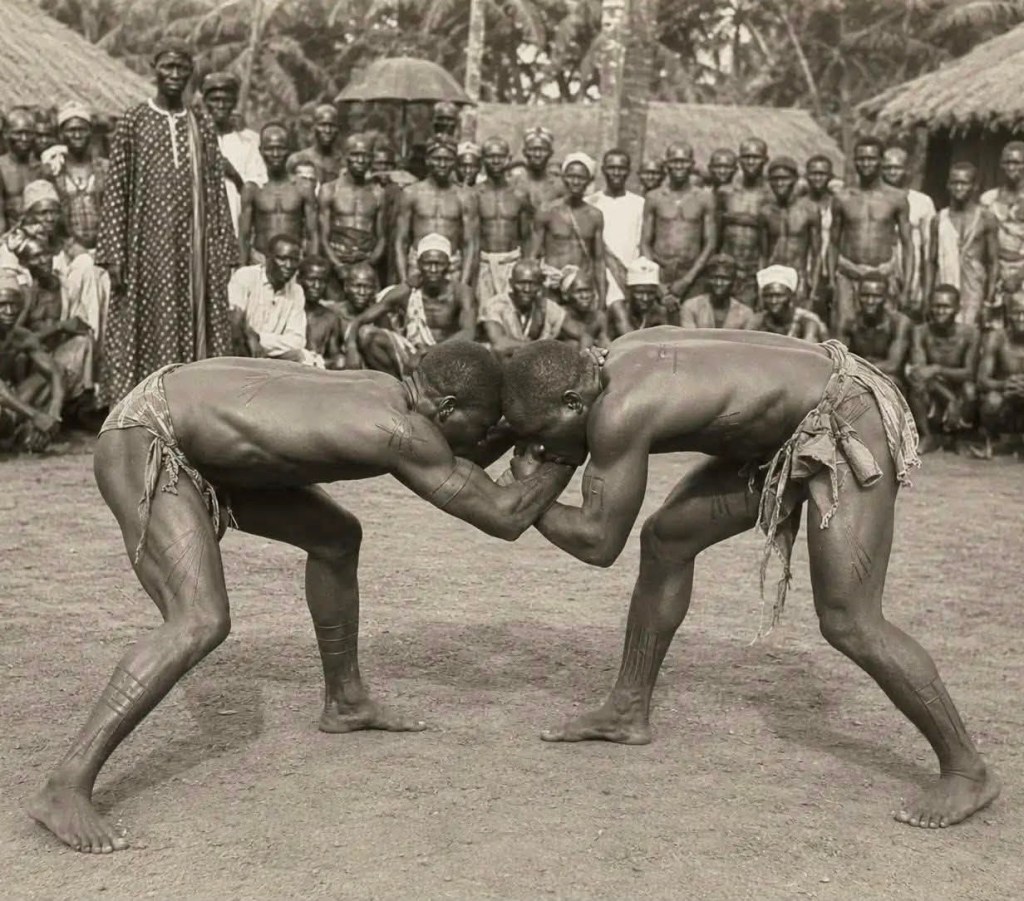
On the day of the contest, young men preparing for Igba Mgba would wake early to bathe and prepare their bodies. Family members, friends, and age-grade companions gathered around them with excitement and encouragement. After this preparation, women skilled in uli art began decorating the wrestlers’ bodies.
These women were often respected female artists known for their steady hands and knowledge of traditional motifs. Using natural uli dye made from plants, they painted the wrestler’s chest, back, arms, and legs with flowing designs that followed the movement of the body.
As the wrestler journeyed from his home to the village square or wrestling arena, his decorated body already announced his presence before the match even began. The uli designs made him stand out.
Some common uli motifs used during Igba Mgba included:
- Agwọ (Python motifs) — symbolising strength, flexibility, and fearlessness
- Agụ (Leopard spots) — representing bravery, power, and masculine authority
- line patterns — highlighting movement, agility, and physical beauty
- Lineage and community markings — showing identity, belonging, and honour.
Significance of Uli During Igba Mgba
- Enhanced the wrestler’s physical appearance and masculinity
- Highlighted muscles and movement during performance
- Connected the wrestler to his family, lineage, and community identity
- Offered spiritual protection and ancestral favour
- Linked the wrestler to Ala, the earth goddess, through natural dye and body symbolism
- Made the wrestling arena visually entertaining and culturally meaningful
Through uli, women became part of the wrestling performance itself. While men wrestled in the arena, women shaped how strength, identity, and honour were visually expressed on the body.
Today, traditional Igba Mgba has disappeared in many Igbo communities, replaced by modern entertainment and sports. Yet with its disappearance, we are also losing the body art, rituals, symbolism, and communal experiences that once gave life to village festivals.
Should traditional wrestling and its uli traditions be revived, or should modern entertainment continue to replace them?
 Hi welcome to my website