THE WOMEN’S WAR OF 1929
EPISODE 1 — “THE TAX THAT WOKE THE WOMEN”
🎬 THE WOMEN’S WAR OF 1929
EPISODE 1 — “THE TAX THAT WOKE THE WOMEN”
The year was 1929.
The British colonial officers believed the Igbo women were weak… silent… powerless.
They were wrong.
For years, the men had already been forced to pay taxes to the colonial government. Villagers complained, farms suffered, hunger increased… but nobody dared challenge the white administration openly.
Then one market morning… everything changed.
A rumor spread like wildfire through the villages of Oloko.
👉 “The British are planning to tax women too.”
At first, many women laughed in disbelief.
“How can they tax women who already suffer to feed their families?” one old woman asked angrily.
But before sunset, fear had entered every compound.
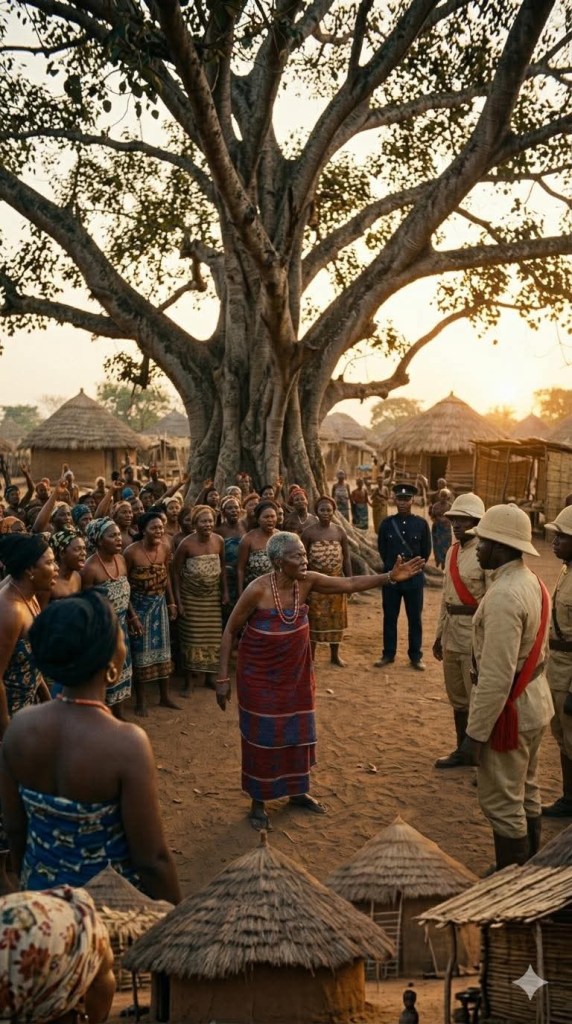
The women gathered beneath the nnukwu osisi tree at the village square. Mothers carrying babies. Widows. Young girls. Traders returning from the market.
Everybody was talking at once.
“If they tax us too, how will we survive?”
“They already collect from our husbands!”
“Do they want us to stop eating?”
Then suddenly…
An elderly widow named Nwanyeruwa stepped forward.
She was respected in the village because she feared nobody.
Not even the warrant chiefs appointed by the British.
Earlier that day, a messenger working for the colonial authorities had entered her compound and began counting her goats, barns, and food storage.
When she asked why, the man replied:
👉 “The government wants to know your property for taxation.”
Nwanyeruwa became furious.
Her voice shook with anger as she shouted:
👉 “Was your mother counted?”
Silence.
The women stared at her.
Then she said the words that would shake colonial Nigeria:
👉 “If the men can no longer fight… then the women will.”
The crowd erupted.
Some women beat their chests.
Others screamed war songs.
That night, no woman slept peacefully.
Across villages… drums echoed in the darkness.
Messages traveled from market to market.
From village to village.
From mothers to daughters.
Something was rising.
Not an ordinary protest.
Not a complaint.
👉 A rebellion.
And before the British realized what was happening…
Thousands of women were already preparing to move.
TO BE CONTINUED.