FORGOTTEN NIGERIAN POLITICAL HISTORY:
FORGOTTEN NIGERIAN POLITICAL HISTORY:
WAS THE DEATH OF BRIGADIER MAIMALARI THE MOMENT NIGERIA LOST ITS LAST CHANCE OF PREVENTING THE CIVIL WAR? (PART 3)
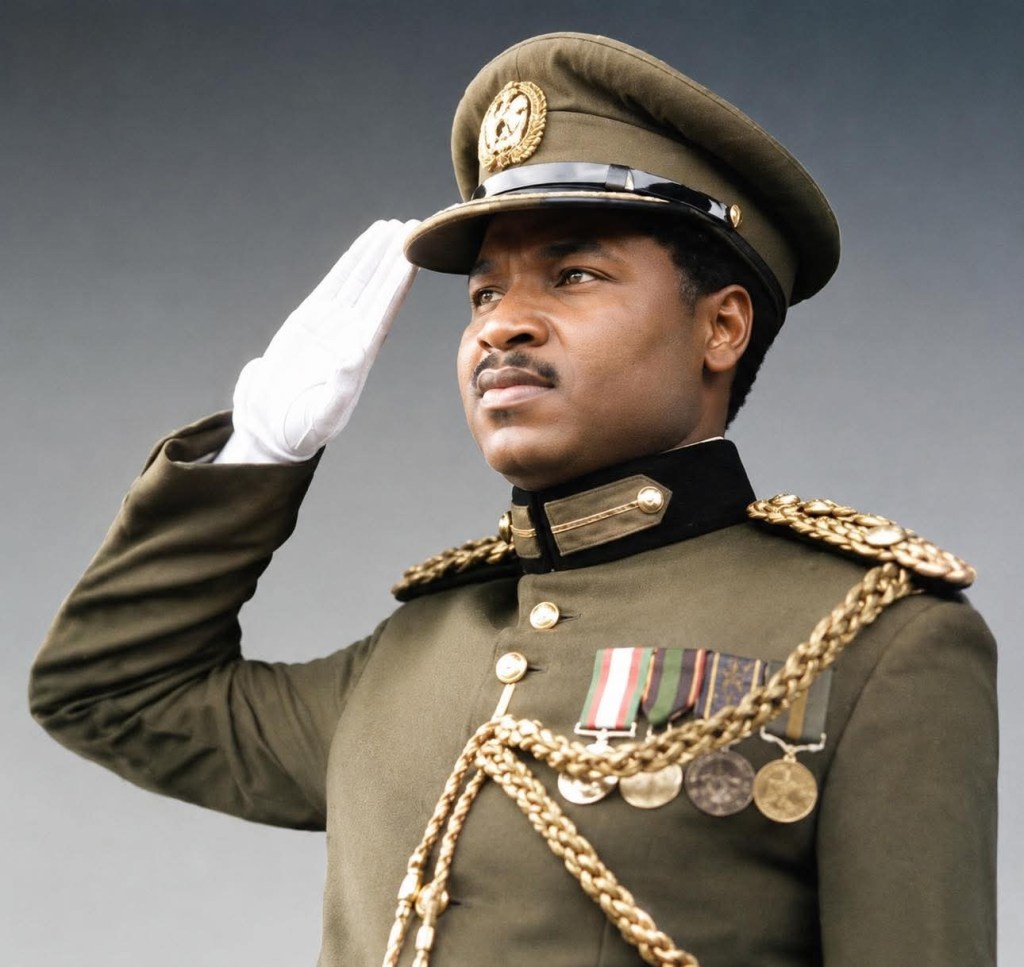
To understand why some military officers later wondered whether Brigadier Zakariya Maimalari’s death changed the course of Nigerian history, one must first understand who he was inside the army. Many officers were respected within their regions. Many commanded loyalty among their ethnic groups. Maimalari was different. He belonged to the first generation of Nigerian officers who came of age before the army became deeply divided by politics and ethnicity. He had trained with officers from every region of the country, served alongside them, and earned a reputation for professionalism that transcended tribal and political boundaries.
By the mid-1960s, Nigeria was already showing signs of serious strain. Political crises had erupted in the Western Region. Electoral controversies were becoming common. Regional leaders increasingly viewed one another with suspicion. These tensions inevitably found their way into the military. Yet even within this atmosphere, Maimalari remained one of the few senior officers who could pick up a telephone and be heard by commanders across regional lines. Younger officers respected his experience. Senior officers trusted his judgment. He was not merely a commander. He was one of the army’s natural mediators.
This is why his death carried consequences far beyond the loss of a single officer. The January 1966 coup did not simply remove politicians and military commanders. It removed many of the men capable of calming a rapidly deteriorating situation. Brigadier Samuel Ademulegun was dead. Colonel Kur Mohammed was dead. Brigadier Maimalari was dead. In a matter of hours, some of the most experienced figures in the Nigerian Army had disappeared. The institutional memory they carried disappeared with them.
Years later, Major General Alexander Madiebo, who would become the commander of the Biafran Army, reflected on this period. Madiebo believed that certain officers possessed the stature, credibility, and personal relationships necessary to hold the military together during moments of crisis. Among those names was Maimalari. Madiebo did not claim that Maimalari alone could have prevented the Civil War. History is far more complicated than that. But he suggested that the elimination of respected bridge-builders made compromise increasingly difficult and mistrust increasingly inevitable.
The months following Maimalari’s death seemed to support that concern. The January coup created fear in the North. The July counter-coup created fear in the East. Retaliatory violence spread. Trust collapsed. Rumours replaced dialogue. Officers who had once trained together now viewed each other with suspicion. Every attempt at reconciliation became more difficult than the last. By the time political leaders met in Aburi, Ghana, in early 1967 to search for a peaceful solution, the damage was already immense.
This is where the great historical question emerges. What if Maimalari had survived January 15, 1966? Could he have helped restore confidence among Northern officers? Could he have acted as a bridge between General Aguiyi-Ironsi and nervous military commanders in the North? Could he have slowed the drift toward revenge, retaliation, and eventual war? No historian can answer these questions with certainty. History does not allow us to run experiments. Yet the fact that experienced soldiers continued asking these questions years later demonstrates how highly Maimalari was regarded.
Perhaps that is why his story remains so important today. Most Nigerians know the names of those who seized power. Far fewer remember the names of those whose absence may have shaped what followed. Brigadier Zakariya Maimalari never became Head of State. He never ruled Nigeria. He never wrote memoirs explaining his vision for the country. Yet nearly sixty years after his death, historians and former soldiers are still debating what might have happened had he lived.
Sometimes history is shaped not only by the actions of great men, but also by the silence left behind when they are gone.
Do you think Nigeria’s descent into civil war became inevitable after January 1966, or were there still opportunities for peace that were ultimately lost?