FORGOTTEN NIGERIAN POLITICAL HISTORY:
FORGOTTEN NIGERIAN POLITICAL HISTORY:
WAS THE DEATH OF BRIGADIER MAIMALARI THE MOMENT NIGERIA LOST ITS LAST CHANCE OF PREVENTING THE CIVIL WAR? (PART 1)
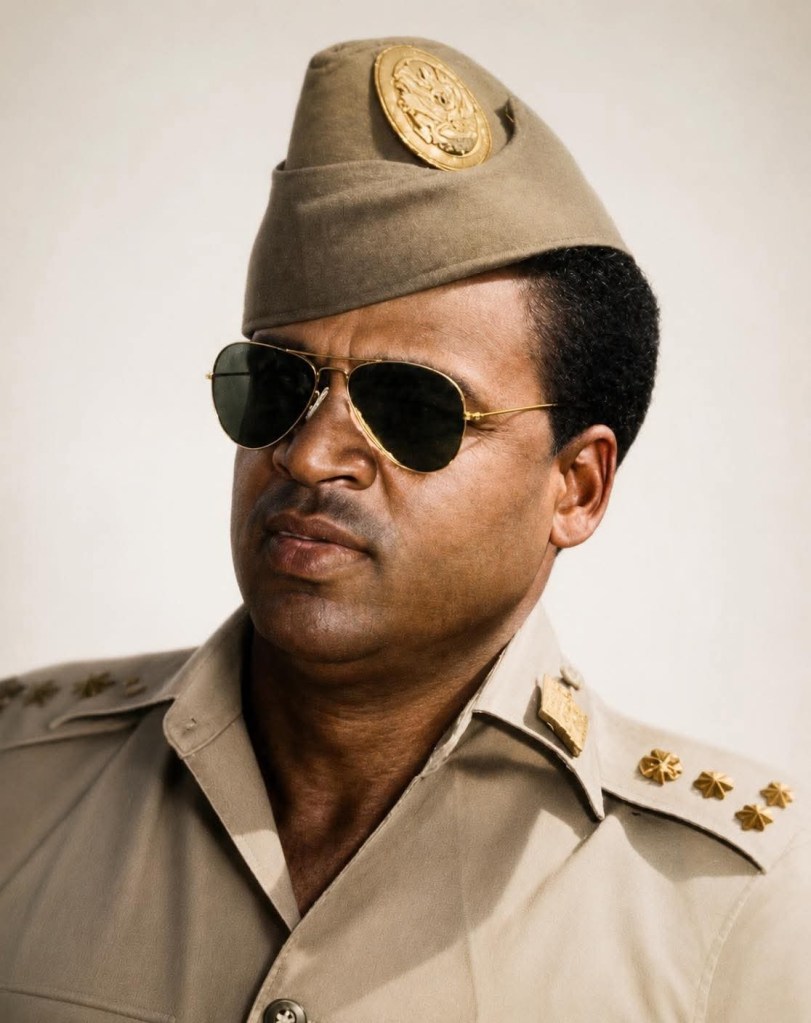
When Nigerians discuss the January 15, 1966 coup, attention usually focuses on Prime Minister Tafawa Balewa, Premier Ahmadu Bello, Brigadier Samuel Ademulegun, Major Chukwuma Kaduna Nzeogwu, and General Aguiyi-Ironsi. Yet among professional soldiers who lived through those events, another name often emerges in private conversations. It is the name of Brigadier Zakariya Maimalari, the first Nigerian officer to attain the rank of Brigadier and one of the most respected soldiers of his generation.
Long before military coups became part of Nigeria’s political vocabulary, Maimalari had already become a symbol of what many hoped the Nigerian Army would be. Born in present-day Borno State, he joined the military during the colonial era and rose steadily through the ranks. At a time when opportunities for Africans within the officer corps were limited, he distinguished himself through professionalism, discipline, and leadership. By the time Nigeria achieved independence in 1960, Maimalari had become one of the country’s most accomplished military officers.
What made him unique was not simply his rank. It was his relationships. He belonged to a generation of officers who knew one another before ethnic tensions hardened political loyalties. He worked with Northern officers, Eastern officers, Western officers, and colleagues from every region of the country. Many younger officers looked up to him. Senior officers trusted him. Politicians respected him. In a military increasingly affected by regional suspicion, Maimalari remained one of the few figures capable of commanding broad respect across different groups.
Then came the night of January 15, 1966. When the coup began, Brigadier Maimalari was one of the principal targets. The plotters understood his importance. Eliminating him would remove one of the most influential officers in the Nigerian Army. Yet unlike some of the other victims, Maimalari initially escaped. Historical accounts indicate that he became aware of the danger and fled from his residence. For a brief period, one of the most powerful soldiers in Nigeria was running for his life through the darkness of Kaduna.
What happened next remains one of the most dramatic episodes of the coup. Accounts differ in certain details, but the broad outline is clear. Maimalari was eventually located by mutinous soldiers. Despite his seniority, despite his experience, despite his service to the nation, he was killed. One of the architects of the Nigerian Army’s early development was gone.
Years later, Major General Alexander Madiebo, who would become the commander of the Biafran Army, reflected on Maimalari’s death. Madiebo suggested that the loss of respected officers such as Maimalari removed potential moderating influences who might have helped prevent the complete breakdown of trust within the military. He did not claim that Maimalari alone could have stopped the Civil War. No serious historian can prove such a thing. Yet the observation raises an intriguing question: what happens to a country when its most respected bridge-builders disappear during a crisis?
Within months of Maimalari’s death, the Nigerian Army fractured. Suspicion spread. The July 1966 counter-coup followed. Ethnic violence escalated. Political compromise became increasingly difficult. By 1967, Nigeria was at war with itself.
History cannot tell us what Maimalari would have done had he survived. It cannot tell us whether he could have persuaded younger officers to remain united. It cannot tell us whether he could have helped restore trust between Northern and Eastern soldiers. But it can tell us this: when one of the most respected officers in Nigeria was killed on January 15, 1966, the country lost a voice that many believed was capable of bringing people together.
Part 2 will examine Brigadier Maimalari’s final hours, how he escaped the first attack, who hunted him down, and why his death shocked officers across every region of Nigeria.