Is Witchcraft Real?An exposition of the Legend of Mwanambinyi the price of witchcraft and the Mysteries of Bulozi
Is Witchcraft Real?An exposition of the Legend of Mwanambinyi the price of witchcraft and the Mysteries of Bulozi
By Joseph Maonde
Is witchcraft real? For centuries, this question has divided societies across the world. While science often demands empirical evidence, many African communities continue to hold firm beliefs in supernatural powers, spiritual forces, and unexplained phenomena. Across the continent, stories abound of individuals said to possess extraordinary abilities that defy conventional understanding. One such story comes from the western part of Zambia and concerns a legendary figure whose memory remains vivid generations after his disappearance.
The story of Mwanambinyi presents a fascinating case study in the enduring relationship between history, mythology, spirituality, and cultural memory.
Mwanambinyi: The Warrior King of Lyambi
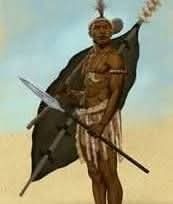
Historical traditions place Mwanambinyi in the mid-seventeenth century during the formative years of the Lozi Kingdom. He was a younger brother of Mboo Muyunda, who is remembered as the first male Litunga of the Lozi people. Mwanambinyi’s name means “one who moves with spears,” a title befitting a man renowned for his military prowess, courage, and extraordinary physical strength.
According to oral traditions, Mwanambinyi possessed abilities that were considered superhuman. His strength and skill in combat were said to be comparable only to those of the gods. Together with his elder brother Mboo Muyunda, he often engaged in contests that became legendary among the Lozi people. These included shooting arrows across the mighty Zambezi River and matching their powerful fighting bulls against one another.
In many of these competitions, Mwanambinyi emerged victorious. While these victories enhanced his reputation among the people, they are also said to have generated resentment and jealousy from Mboo Muyunda. Eventually, whether by choice or expulsion, Mwanambinyi left the royal establishment to seek his own destiny elsewhere.
Conqueror and Nation Builder
Far from fading into obscurity, Mwanambinyi embarked on a series of military campaigns that would cement his place in regional history. Oral accounts credit him as the first Lozi leader to subdue and unite various Lozi ethnic groups in the southern regions of Bulozi. His influence reportedly extended to the Mbukushu people on the right bank of the Zambezi in what is today known as the Caprivi Strip or Zambezi Region.
At the time, these communities were reportedly experiencing succession disputes and political fragmentation. Mwanambinyi’s campaigns brought them under a common authority. Some traditions even trace the origins of the Subia people to these expeditions and the social transformations that followed.
Yet it is not his military achievements alone that have secured his place in folklore. It is the supernatural dimension of his story that continues to captivate imaginations.
The Man Who Became a Bird
Throughout western Zambia, stories persist that Mwanambinyi was a powerful witch or spiritual practitioner who could transform himself into a bird. Elders recount tales of him soaring through the skies, observing distant territories, and possessing powers beyond those of ordinary men.
Whether understood literally or symbolically, these stories reflect the profound respect and fear he inspired. In many African societies, exceptional leaders were often attributed supernatural abilities, reinforcing both their authority and their mystique.
For believers, Mwanambinyi’s alleged ability to transform into a bird was evidence of mastery over powerful spiritual forces. For skeptics, it may represent a metaphor for his intelligence, mobility, and ability to gather information across vast territories. Regardless of interpretation, the legend remains deeply embedded in local consciousness.
The Great Sinking of Mwanambinyi’s Kingdom
The most dramatic episode in the Mwanambinyi legend concerns his disappearance.
According to oral tradition, Mwanambinyi observed Mboo Muyunda’s efforts to consolidate and unite the territories that had previously broken away from Lozi authority. Unwilling to submit or perhaps foreseeing the end of his own rule, Mwanambinyi is said to have performed an extraordinary act.
Before the eyes of his subjects, his kingdom, his people, and even his animals allegedly sank into the earth. Witnesses watched in amazement as the entire settlement disappeared beneath the soil. Mwanambinyi himself vanished with it.
To this day, the location where this event is believed to have occurred is regarded as a sacred place. Local communities treat the area with reverence and caution. Many residents claim that during the night they can hear mysterious sounds resembling people talking, cattle lowing, and other animals moving beneath the ground. Such accounts have been passed down from generation to generation, strengthening the site’s reputation as one of the most spiritually significant places in western Zambia.
Presidents, Travellers, and the Demand for Tribute
The influence of Mwanambinyi’s legacy extends beyond folklore into modern times.
A widely recounted story involves former Zambian President Frederick Chiluba. During one of his visits to western Zambia in the 1990s, local custodians of tradition reportedly advised members of his convoy that customary tributes should be paid before passing through the sacred area associated with Mwanambinyi.
The request was allegedly ignored.
According to the story, vehicles in the presidential convoy soon began experiencing unexplained mechanical failures. Some reportedly failed to start despite being in good condition. It was only after the requested tributes were offered that the journey was able to continue without further incident.
Another tale concerns a European traveller navigating nearby waters. He too is said to have dismissed local advice to pay respects at the sacred site. Shortly thereafter, his boat engine reportedly failed without explanation. Repeated attempts to restart it proved unsuccessful until the prescribed tribute was made. Once the obligation was honoured, the engine allegedly returned to normal operation.
Whether these events were supernatural occurrences, coincidences, or examples of the powerful influence of belief, they have become part of the growing body of stories surrounding Mwanambinyi’s enduring presence.
History, Myth, and Cultural Memory
The legend of Mwanambinyi illustrates how history and mythology often intertwine. While historians may focus on his role as a military leader and state builder, local traditions preserve another dimension: that of a man endowed with extraordinary powers whose influence transcended death.
For many people in western Zambia, Mwanambinyi is not merely a historical figure. He remains a living presence within cultural memory, a symbol of power, resistance, and spiritual authority. The sacred site associated with his disappearance continues to attract reverence and curiosity, ensuring that his story remains alive centuries after his alleged sinking into the earth.
The question posed at the beginning remains unanswered: Is witchcraft real?
The story of Mwanambinyi does not provide a definitive answer. Instead, it invites reflection on the power of belief, the endurance of oral traditions, and the mysteries that continue to shape human understanding. Whether viewed as history, legend, or a blend of both, Mwanambinyi’s story stands as one of the most remarkable narratives in the cultural heritage of western Zambia.
About the Author
The author holds a Bachelor’s Degree in Law, a Master’s Degree in Law, a Master’s Degree in Climate Change and Sustainable Development, and a Diploma in Art and Design. He is also a researcher in Political History, Constitutional Law, Humanitarian Law, Investment Law, Peace Studies, and Modern History.