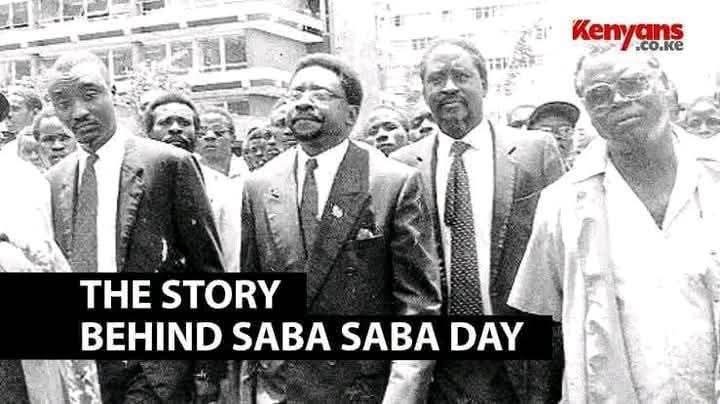
HISTORY OF SABA SABA
HISTORY OF SABA SABA
Saba Saba Day = “Seven Seven Day” in Swahili – July 7th
It’s one of Kenya’s most important protest dates in modern political history.
The History
- Saba Saba 1990 – The Big One
This is what “Saba Saba” refers to.
- Date: July 7, 1990
- What happened: Kenyans led by opposition leaders Kenneth Matiba, Charles Rubia, Martin Shikuku and others organized a mass rally at Kamukunji Grounds, Nairobi.
- Demand: End to one-party rule under KANU and President Daniel arap Moi. They wanted multi-party democracy and constitutional reforms.
- Government response: Police and army blocked roads, arrested leaders the night before. On the day, they used tear gas, water cannons, and live bullets. Several people were killed and hundreds injured.
- Impact: The repression was broadcast internationally. It put huge pressure on Moi’s government. In December 1991, KANU repealed Section 2A of the Constitution and Kenya became a multi-party state.
Saba Saba 1990 is seen as the turning point that forced Kenya back to multi-party politics.
- Saba Saba 1997
Another major protest to demand constitutional reforms before the 1997 elections. Again Kamukunji Grounds was the center. Police cracked down. - Saba Saba 2025 / 2024
In recent years, “Saba Saba” has been revived by activists and Gen Z protesters to demand economic reforms, lower cost of living, and accountability. July 7th is used as a day of national protests and remembrance of those killed in past demos.
Why “Saba Saba”?
“Saba” = Seven in Swahili. So 7/7 = Saba Saba. The date was chosen symbolically in 1990.
What it means today
For many Kenyans, Saba Saba Day represents:
- Courage – ordinary people standing up to an authoritarian state
- Push for democracy – the fight
that brought multi-partyism - Right to protest – even though it’s often met with police action
The government doesn’t officially recognize it as a public holiday, but it’s remembered every year