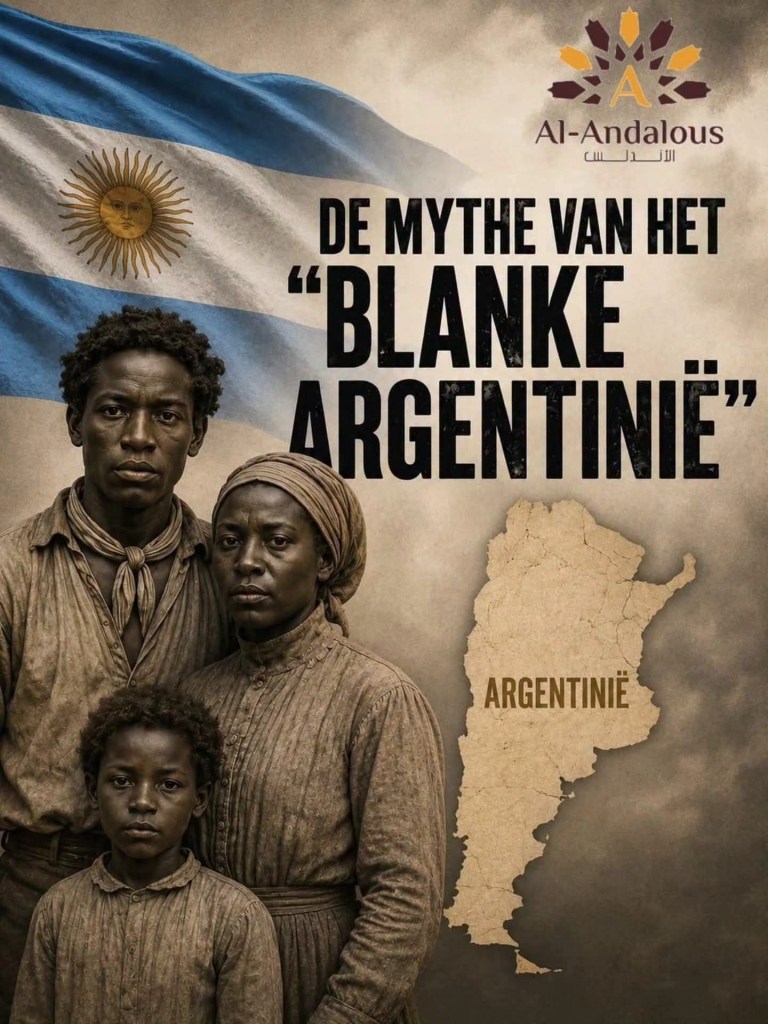
The myth of the “White Argentina”
The myth of the “White Argentina”
How a complete population group was made invisible
When we think of Argentina, we often think of a country with a familiar European culture and appearance. But did you know that in the early 19th century, more than a third of the population in Buenos Aires was of African descent? Today it seems that history has been almost completely erased. The question that history holds: how could an entire black community “disappear”?
The truth lies not in a single event, but in targeted processes that historians describe in activists as the ‘systematic extermination’ of Afro-Argentinians.
- Cannon feed on the front line
In the 19th century, Argentina fought bloody wars, including the War of Independence and the Triple Alliance against Paraguay. Black men were given the promise of freedom in exchange for military service. The reality was harsh: they were systematically placed in the most dangerous front lines. The death rate among Afro-Argentinian men was largely catastrophic, leading to massive demographic growth.
- Yellow fever in the neighborhoods
In 1871, there was an emergency in Buenos Aires with a devastating yellow fever epidemic. The Afro-Argentinian community, poverty and marginalization in the worst sanitary conditions they ever lived, was hit hardest. While the wealthy, white elite fled to healthier neighborhoods, the Black population was left behind in the fires of pollution.
- ‘Whitening’ in the European migration wave
Around the turn of the century, the Argentine government compared an active policy of bleaching. The structural one was decorated in such a way that European immigration was stimulated to the maximum. Millions of Italians and Spaniards flooded the country. Due to the massive shortage of black men and the massive influx of Europeans, the Afro-Argentinian population is forced to blend in. Within a few generations, African descent was genetically and visually printed into the background.
- Administrative eviction
Cover up mercy for black history was bureaucratic. The government repeatedly stops registering race and ethnicity in official records. Afro-Argentinians were administratively categorized as mesties (mixed) or even white. This is how the national myth was created that Argentina was a purely European country, without a black history.
History is not gone, but was put away. Today, the current Afro-Argentinian community is fighting hard for their identity. Since the early 2000s, activists have been demanding a place in the referendum. The culture – including the deep roots of Argentine Tango, which has originally strong African influences – is being rediscovered.
Argentina is not purely white; it has combined black blood. A history that has been hidden for far too long.