SWAHILI ORIGINS.
SWAHILI ORIGINS.
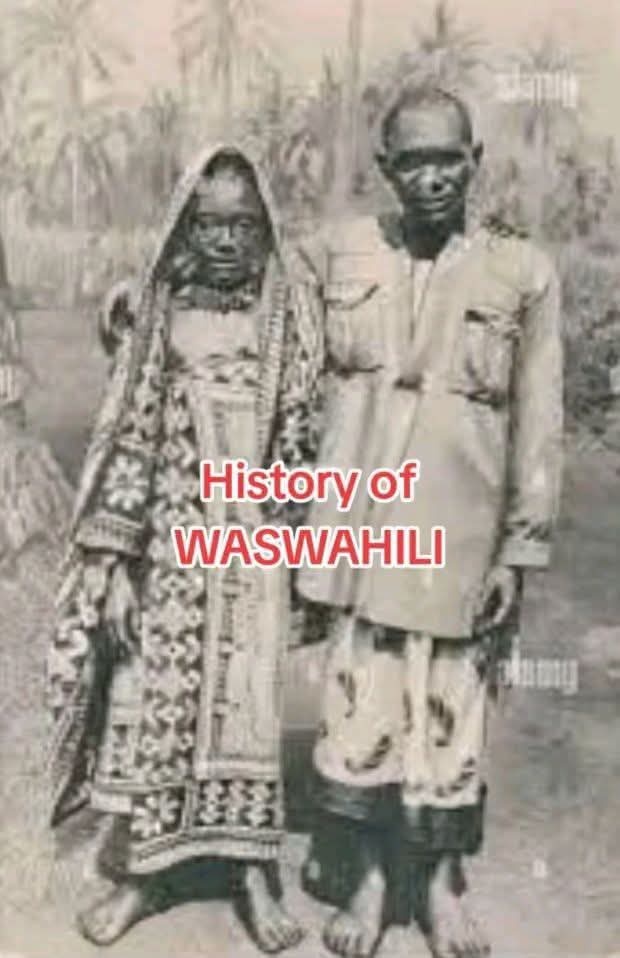
We were taught in school that Kiswahili came about by mixing Arabic with various Bantu languages. However, that was not true. When the Arabs and Europeans arrived at the East African coast they found the Swahili ie Wangozi people speaking Kimvita/Kiamu/Kitangana/Kiunguja etc . Kiswahili is an old language of an established group of people with many dialects.
Kiswahili is a local language that originated at the East African coast.
They were called Wangozi. They are organized in form of clans which they call ‘Mbari’. The clans and sub-clans are as follows:
**1. MBARI ZA WAKILINDINI
**
Mbari ya Mwinyi Nguti wa Mwinyi Mwinzagu ” Mwinyi Humzi ” Mwinyi Kombo wa Dani ” Mwinyi Kae wa Pembe ” Mwinyi Hudumzi
**
- MBARI ZA WATANGANA
**
Mbari ya Mwinyi Muli ” Mwinyi Mjaka ” Mwinyi Umbwi ” Mwinyi Ngwisa
** - MBARI ZA WACHANGAMWE
**
Mbari ya Mwinyi Kitue ” Mwinyi Mgosi ” Mwinyi Mfaki ” Mwinyi Koba ” Mwinyi Ngovo
** - MBARI ZA WAMVITA
**
Mbari ya Mwinyi Kutani ” Mwinyi Kae ” Mwinyi Hunziali
** - MBARI ZA WAMALINDI
**
Mbari ya Banu Shasha ” Banu Mbwana
** - MBARI ZA WAJOMVU (au WAJUNDA)
**
Mbari ya Mwinyi Faki ” Mwinyi Chande wa Shamaniya ” Mwinyi Usi Muhija ” Mwinyi Uledi wa Ndau ” Mwinyi Jaa wa Mwinyi Nguti
** - MBARI ZA WAMTWAPA
**
**Mbari ya Mwinyi Nyali (au Mbari ya Ng’ombeni)
” Mwinyi Jimve
” Mwinyi Goziadi
” Mwinyi Rakwe
” Banu Muyaka
” Banu Shemapwe
**
**8. MBARI ZA WAKILIFI
**
Mbari ya Mwinyi Shoka ” Mwinyi Kiwanda ” Mwinyi Mkomati ” Mwinyi Gome
** - MBARI ZA WAPATE
**
**Mbari ya Wa-Pate
” Wa-Amu
” Wa-Kitau
” Wa-Twaka
” Wa-Tikuu
” Wa-Kipungani
” Wa-Barawa
” Wa-Shela
**
**10. MBARI ZA WAGUNYA (au WABAJUNI)
**
**Mbari ya Washaka
” Wa-Uziwa
” Wa-Ungama
” Wa-Ozi
” Wa-Sada **
These clans speak different Kiswahili dialects depending on where they are found, especially in Kenya, Comoros, Mozambique, Somalia & Tanzania. The dialects are:
- Shikomor spoken Comoros
- Kiamu, Kipate & Kingozi are spoken in Lamu,
- Chijomvu, Kimvita, Kingare, Kimrima, Kiunguja, Mambrui, Chichifundi, Chwaka & Kivumba are spoken in Mombasa,
- Kipemba, Kitumbatu, Kimakunduchi, Mafia, Mbwera, Kilwa (extinct) & Kimgao are spoken in Pemba.
Oldest Kiswahili/Kingozi dialects include:
- Kimwani which is spoken in the Kerimba Islands and northern coastal Mozambique
- Chimwiini which is spoken by the ethnic minorities in and around the town of Barawa on the southern coast of Somalia.
- Kibajuni which is spoken by the Bajuni minority ethnic group on the coast and islands on both sides of the Somali–Kenyan border and in the Bajuni Islands (the northern part of the Lamu archipelago) and is also called Kitikuu and Kigunya
- Socotra Swahili (extinct) and
- Sidi in Gujarat, India (possibly extinct)
As speakers of Kiswahili language we are owed this information. We should not be speaking a language whose origin we don’t clearly know.
According to Worldpopulationreview, Kiswahili (Swahili) today has approximately 150–200 million speakers across Africa, mostly as a second language, with native speakers around 5–16 million mainly in Tanzania and Kenya.
It is used in over 10–14 countries, serving as an official language in Tanzania, Kenya, and Uganda, and widely spoken in the Democratic Republic of Congo, Rwanda, Burundi, Mozambique, and parts of Malawi, Zambia, and others in East, Central, and Southern Africa.