
The Vanishing: How Argentina Erased Its Black History
The Vanishing: How Argentina Erased Its Black History
Walk through Buenos Aires today and you’ll hear a phrase repeated with strange confidence: “There are no Black people in Argentina.” It’s said not as an insult, but as a simple statement of fact — the kind of thing locals genuinely believe about their own country. And on the surface, the numbers seem to back it up. Argentina is often called the “whitest” nation in Latin America, a place that markets itself as a transplanted slice of Europe at the bottom of the Americas.
But that image was built. It didn’t happen by accident, and it certainly wasn’t always true.
A Country That Was Once Far From White
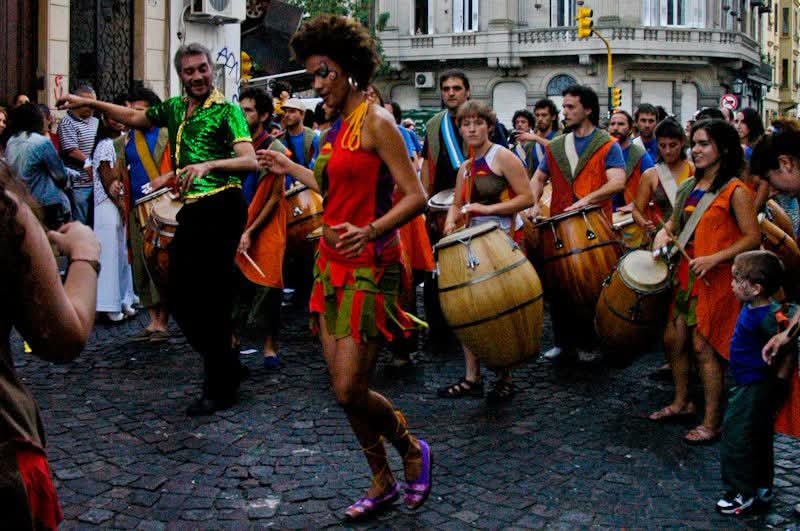
In the late 1700s, Argentina looked nothing like its modern self-image. Nearly half the population in the country’s interior was Black, and in Buenos Aires, Black and mixed-race residents made up roughly a third to nearly half of the city. Enslaved Africans had been forcibly brought through the port of Buenos Aires since the 1500s, and their descendants built entire neighborhoods — San Telmo and Monserrat among them — that became the cultural heartbeat of the city. Candombe, the drum-driven rhythm tradition of Afro-Argentines, is now understood by historians as a foundational influence on tango itself, arguably Argentina’s most famous cultural export.
In other words, Blackness wasn’t a footnote in Argentine history. It was central to it.
The “Whitening” Project
By the mid-1800s, Argentina’s ruling class had a vision for the country, and it didn’t include its Black citizens. Domingo Faustino Sarmiento — president from 1868 to 1874, and still celebrated today as a founding father of modern Argentina — was one of the most vocal architects of that vision. He was an open admirer of what he called European racial purity, and he viewed the country’s Afro-Argentine population as an obstacle to it. A diary entry from 1848 shows him fretting over the size of the Black population in the United States and openly wondering what should be “done” with people he described as “hated by the white race.”
Once in power, Sarmiento didn’t just hold these views quietly. His government is widely reported to have pursued policies that historians and journalists have since described as a “covert genocide” against Afro-Argentines:
- Forced military conscription funneled disproportionate numbers of Black men into the country’s wars, including the brutal Paraguayan War (1865–1870), where they were frequently placed on the front lines.
- Discriminatory policing saw Black Argentines imprisoned on minor or fabricated charges.
- Neglect during public health crises meant that when yellow fever tore through Buenos Aires in 1871, and cholera outbreaks followed, Black communities — already pushed into poorer, underserved neighborhoods — died in disproportionate numbers.
By 1875, the combined weight of war, disease, and state neglect had devastated the Afro-Argentine population so thoroughly that the government simply stopped counting. The 1887 census still recorded Black Argentines at 1.8% of the population — but after that, race was dropped from the census altogether for nearly a century.
Erasure by Omission
This is perhaps the most important part of the story: it wasn’t only that Black Argentines died in disproportionate numbers. It’s that the state then declined to keep track of who remained, and the culture built a mythology to explain the silence.
Two convenient narratives took hold. The first was that Argentina had simply never been part of the transatlantic slave trade — untrue, but useful for a country trying to picture itself as purely European. The second was that Black Argentines had somehow “disappeared naturally” — through disease, low birth rates, or intermarriage — as if history were a passive process rather than the result of policy choices. Both stories conveniently avoided the uncomfortable truth: that a government had actively worked to erase a population and then erased the paperwork proving it had ever existed.
Meanwhile, the government threw open its doors to European immigration, actively recruiting millions of Italian, Spanish, and other European migrants throughout the late 19th and early 20th centuries. This further diluted the visible Black population and gave the country’s “we are a European nation” narrative even more traction.
Living With the Aftermath
The consequences of this erasure didn’t stay in the past. For generations, Afro-Argentines who did remain faced a culture that had convinced itself they didn’t exist. Many stopped identifying as Black altogether, either because of the stigma attached to Blackness or because there was simply no historical framework left to describe their own family histories. Academics researching Afro-Argentine history have described being met with genuine disbelief from Argentines insisting the subject was a case of mistaken identity — that the person they were describing must have been Brazilian, or Uruguayan, or from somewhere else entirely.
It’s a strange kind of erasure: not just of people, but of the memory that they were ever erased.
The Reclamation
That silence is beginning to break. Since the early 2000s, Afro-Argentine advocacy groups — including the Forum of African Descent and Africans in Argentina, founded in 2006 — have pushed to bring the country’s Black history back into public consciousness. Race finally returned to the national census in 2010, and again in 2022, giving researchers real data for the first time in over a century. Genetic admixture studies have added further evidence, revealing African ancestry in the Argentine population far beyond what the “no Black people here” narrative would suggest. Buenos Aires’ Black communities today are concentrated heavily in the province and city itself — the same neighborhoods, in many cases, that their ancestors built generations ago.
None of this undoes what happened. But it does something almost as important: it makes the erasure itself part of the historical record, so it can no longer hide behind the myth of a country that was simply, naturally, always white.
Argentina’s story is not unique in Latin America, where many nations have constructed national identities that minimize or omit African heritage. But the scale and deliberateness of Argentina’s project — backed by state policy, wartime conscription, and a century of missing census data — make it one of the most thoroughly documented cases of demographic erasure in the region’s history.
 Hi welcome to my website